
|
Developed by 

|
Supported by 


|
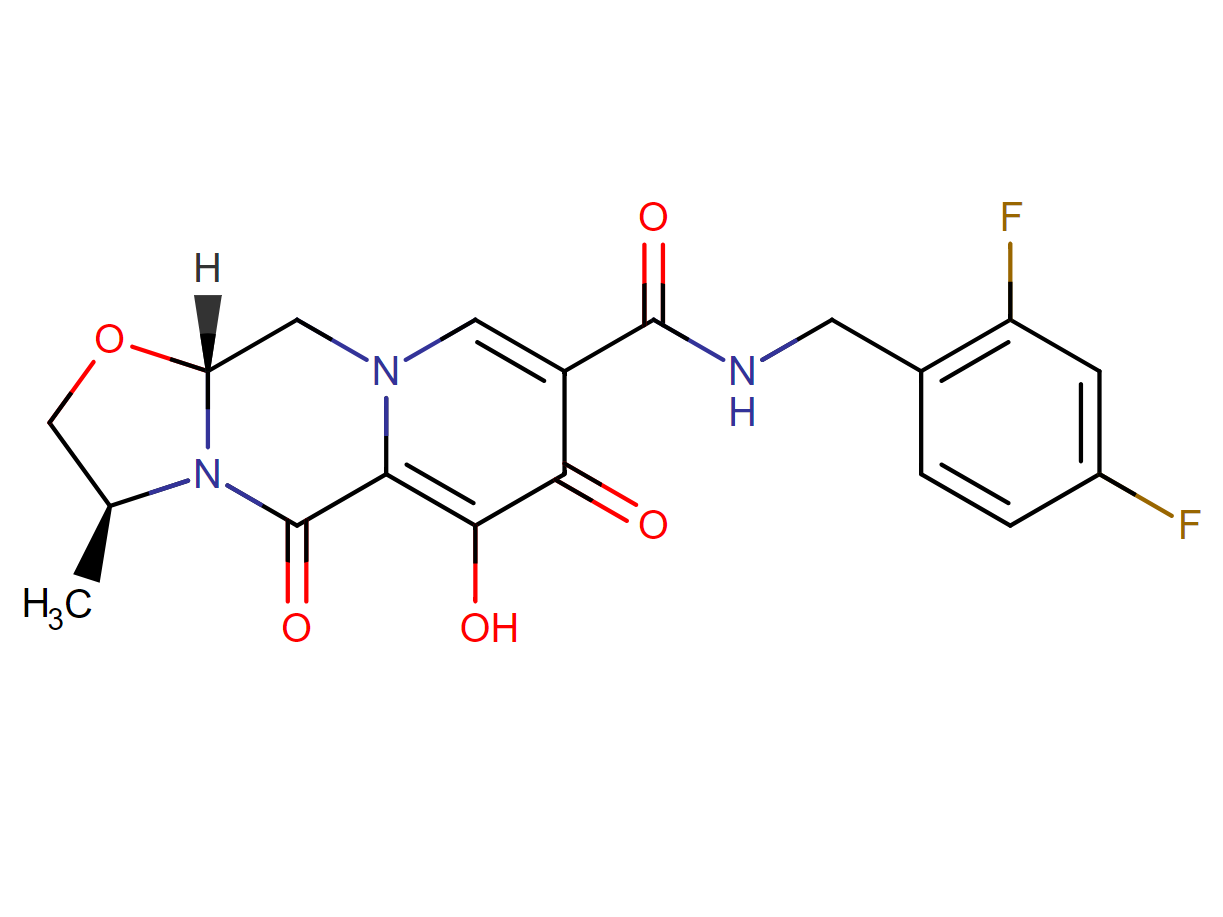
Cabotegravir (CAB)
Developer(s)

|
ViiV Healthcare Originator
https://viivhealthcare.com/
United Kingdom ViiV Healthcare is a pharmaceutical company that specializes in the development of therapies for HIV infection. The company is headquartered in Brentford in the United Kingdom and was initially formed in November 2009 as a part of a joint venture between GlaxoSmithKline and Pfizer. |
Drug structure
Cabotegravir Chemical Structure
Sourced from DrugBank
Drug information
Associated long-acting platforms
Aqueous drug particle suspension
Administration route
Oral, Intramuscular, Subcutaneous
Therapeutic area(s)
Use case(s)
Use of drug
Ease of administration
Frequency of administration
User acceptance
Dosage
Available dose and strength
Not provided
Maximum dose
Not provided
Recommended dosing regimen
Not provided
Additional comments
Not provided
Dosage link(s)
Not provided
Drug information
Drug's link(s)
Generic name
Brand name
Compound type
Drug class/category
Lifecycle status
Summary
Approval status
Regulatory authorities
Safety
Efficacy
Evidence Summary
Delivery device(s)
No delivery device
Scale-up and manufacturing prospects
Scale-up prospects
Not provided
Tentative equipment list for manufacturing
Not provided
Manufacturing
Not provided
Specific analytical instrument required for characterization of formulation
Not provided
Clinical trials
POLAR
Identifier
NCT03639311
Link
https://clinicaltrials.gov/study/NCT03639311
Phase
Phase II
Status
Completed
Sponsor
ViiV Healthcare
More details
Not provided
Purpose
Assess the antiviral activity and safety of CAB LA plus RPV LA, administered Q2M, in approximately 100 adult HIV-1 infected, antiretroviral therapy (ART) experienced participants.
Interventions
Intervention 1
Intervention 2
Intervention 3
Intervention 4
Countries
Sites / Institutions
Not provided
Trials dates
Anticipated Start Date
Not provided
Actual Start Date
2018-09-24
Anticipated Date of Last Follow-up
2024-05-13
Estimated Primary Completion Date
Not provided
Estimated Completion Date
Not provided
Actual Primary Completion Date
2019-12-11
Actual Completion Date
2023-01-30
Studied populations
Age Cohort
- Adults
- Older Adults
Genders
- All
Accepts pregnant individuals
No
Accepts lactating individuals
No
Accepts healthy individuals
No
Comments about the studied populations
Participants will rollover from the NCT01641809 (LATTE) study, who have completed minimum duration of Week 312 and with demonstrated HIV-1 ribonucleic acid (RNA) suppression (less than [<]50 copies (c) per milliliter [mL]), while receiving a two-drug regimen consisting of once-daily oral CAB at 30 milligram (mg) plus RPV at 25 mg. The participants will be offered the option to switch to the LA, intramuscular injections of CAB LA plus RPV LA, Q2M or the oral fixed dose combination (FDC) of dolutegravir (DTG) plus RPV, for the continued maintenance of HIV-1 RNA suppression, known as the Maintenance Phase (From Day 1 to Commercial Approval).
Health status
Study type
Interventional (clinical trial)
Enrollment
97
Allocation
Non-randomized
Intervention model
Parallel Assignment
Intervention model description
This is an Intervention Model, with parallel assignment, where the primary purpose of the study is, treatment, with 2 arms and no masking.
Masking
Open label
Masking description
This is an open-label study, thus no masking.
Frequency of administration
Studied LA-formulation(s)
Studied route(s) of administration
Use case
Treatment
Indication(s)
HIV
Key resources
| Type | Title | Content | Link |
|---|---|---|---|
| Link | Long-acting cabotegravir and rilpivirine for HIV-1 suppression: switch to 2-monthly dosing after 5 years of daily oral therapy | https://doi.org/10.1097/qad.0000000000003085 |
CUSTOMIZE
Identifier
NCT04001803
Link
https://clinicaltrials.gov/study/NCT04001803
Phase
Phase III
Status
Completed
Sponsor
ViiV Healthcare
More details
Not provided
Purpose
Identify and Evaluate Strategies for Successful Implementation of the Cabotegravir + Rilpivirine Long-acting Injectable Regimen in the US.
Interventions
Intervention 1
Intervention 2
Intervention 3
Intervention 4
Countries
Sites / Institutions
Not provided
Trials dates
Anticipated Start Date
Not provided
Actual Start Date
2019-07-08
Anticipated Date of Last Follow-up
2023-03-16
Estimated Primary Completion Date
Not provided
Estimated Completion Date
Not provided
Actual Primary Completion Date
2020-10-05
Actual Completion Date
2022-03-18
Studied populations
Age Cohort
- Adults
- Older Adults
Genders
- All
Accepts pregnant individuals
No
Accepts lactating individuals
No
Accepts healthy individuals
No
Comments about the studied populations
Inclusion Criteria: - Aged 18 years or older at the time of signing the informed consent. - HIV-1 infected and must be on an active highly active antiretroviral therapy (HAART) (2 or 3 drug) regimen for at least 6 months prior to Screening. - Be able to understand and comply with protocol requirements, instructions, and restrictions. - Understand the long-term commitment to the study and be likely to complete the study as planned. - Be considered appropriate candidates for participation in an investigative clinical trial with oral and intramuscularly injectable medications.
Health status
Study type
Interventional (clinical trial)
Enrollment
115
Allocation
Not provided
Intervention model
Single group assignment
Intervention model description
Not provided
Masking
Open label
Masking description
None (Open Label)
Frequency of administration
Studied LA-formulation(s)
Studied route(s) of administration
Use case
Treatment
Indication(s)
HIV
Key resources
| Type | Title | Content | Link |
|---|---|---|---|
| Link | Perspectives of people living with HIV-1 on implementation of long-acting cabotegravir plus rilpivirine in US healthcare settings | https://doi.org/10.1002/jia2.26006 | |
| Link | Perspectives of healthcare providers on implementation of long-acting cabotegravir plus rilpivirine in US healthcare settings from a Hybrid III Implementation-effectiveness study (CUSTOMIZE) | https://doi.org/10.1002/jia2.26003 |
CR109089
Identifier
NCT05112939
Link
https://clinicaltrials.gov/study/NCT05112939
Phase
Phase I
Status
Completed
Sponsor
Janssen Research & Development, LLC
More details
Not provided
Purpose
Characterize the single dose pharmacokinetics and evaluate the safety and tolerability of subcutaneous administration of RPV LA in combination with CAB LA in different conditions in healthy adults.
Interventions
Intervention 1
Intervention 2
Countries
Sites / Institutions
Not provided
Trials dates
Anticipated Start Date
Not provided
Actual Start Date
2021-11-16 00:00:00
Anticipated Date of Last Follow-up
2025-02-27 00:00:00
Estimated Primary Completion Date
2024-05-23 00:00:00
Estimated Completion Date
2024-05-23 00:00:00
Actual Primary Completion Date
2024-05-23 00:00:00
Actual Completion Date
2024-05-23 00:00:00
Studied populations
Age Cohort
- Adults
Genders
- All
Accepts pregnant individuals
No
Accepts lactating individuals
Unspecified
Accepts healthy individuals
Yes
Comments about the studied populations
Participant must be healthy on the basis of physical examination, clinical laboratory tests, medical history, vital signs, and 12-lead electrocardiogram (ECG).
Health status
Not provided
Study type
Interventional (clinical trial)
Enrollment
126
Allocation
Randomized
Intervention model
Parallel Assignment
Intervention model description
Not provided
Masking
Single blind masking
Masking description
Single (Participant)
Frequency of administration
Studied LA-formulation(s)
Studied route(s) of administration
Use case
Treatment
Indication(s)
HIV
Key resources
ATLAS-2M
Identifier
NCT03299049
Link
https://clinicaltrials.gov/study/NCT03299049
Phase
Phase III
Status
Active, not recruiting
Sponsor
ViiV Healthcare
More details
Not provided
Purpose
Evaluating the Efficacy, Safety, and Tolerability of Long-acting Cabotegravir Plus Long-acting Rilpivirine in HIV-1-infected Adults Who Are Virologically Suppressed.
Interventions
Intervention 1
Intervention 2
Intervention 3
Intervention 4
Countries
Sites / Institutions
Not provided
Trials dates
Anticipated Start Date
Not provided
Actual Start Date
2017-10-27
Anticipated Date of Last Follow-up
2024-12-10
Estimated Primary Completion Date
Not provided
Estimated Completion Date
2025-12-31
Actual Primary Completion Date
2019-06-06
Actual Completion Date
Not provided
Studied populations
Age Cohort
- Adults
- Older Adults
Genders
- All
Accepts pregnant individuals
No
Accepts lactating individuals
No
Accepts healthy individuals
No
Comments about the studied populations
Inclusion Criteria: - Subjects who will be able to understand and comply with protocol requirements, instructions, and restrictions. - Understand the long term commitment to the study and be likely to complete the study as planned. - Be considered as an appropriate candidate for participation in an investigative clinical trial with oral and intramuscularly injectable medications (e.g., no active substance use disorder, acute major organ disease, or planned long-term work assignments out of the country, etc.). - Aged 18 years or older (or >=19 where required by local regulatory agencies), at the time of signing the informed consent.
Health status
Study type
Interventional (clinical trial)
Enrollment
1049
Allocation
Randomized
Intervention model
Parallel Assignment
Intervention model description
Two groups of subjects will be randomized to receive CAB LA + RPV LA Q4W, or CAB LA + RPV LA Q8W regimen.
Masking
Open label
Masking description
This will be an open-label study and therefore no blinding is required.
Frequency of administration
Studied LA-formulation(s)
Studied route(s) of administration
Use case
Treatment
Indication(s)
HIV
Key resources
| Type | Title | Content | Link |
|---|---|---|---|
| Link | Indirect comparison of 48-week efficacy and safety of long-acting cabotegravir and rilpivirine maintenance every 8 weeks with daily oral standard of care antiretroviral therapy in participants | https://doi.org/10.1186/s12879-022-07243-3 | |
| Link | Long-acting cabotegravir and rilpivirine dosed every 2 months in adults with HIV-1 infection (ATLAS-2M), 96-week results: a randomised, multicentre, open-label, phase 3b, non-inferiority study | https://doi.org/10.1016/s2352-3018(21)00185-5 | |
| Link | Week 96 extension results of a Phase 3 study evaluating long-acting cabotegravir with rilpivirine for HIV-1 treatment | https://doi.org/10.1097/qad.0000000000003025 | |
| Link | Patient-Reported Outcomes Through 1 Year of an HIV-1 Clinical Trial Evaluating Long-Acting Cabotegravir and Rilpivirine Administered Every 4 or 8 Weeks (ATLAS-2M) | https://doi.org/10.1007/s40271-021-00524-0 | |
| Link | Long-acting cabotegravir and rilpivirine dosed every 2 months in adults with HIV-1 infection (ATLAS-2M), 48-week results: a randomised, multicentre, open-label, phase 3b, non-inferiority study | https://doi.org/10.1016/s0140-6736(20)32666-0 | |
| Publication | Oka S, Holohan V, Shirasaka T, et al. Asian participants' experience in phase 3/3b studies of long-acting cabotegravir and rilpivirine: Efficacy, safety, pharmacokinetic, and virological outcomes through week 96. HIV Med. 2024;25(3):381‐390. doi:10.1111/hiv.13588 | Objectives: Cabotegravir + rilpivirine (CAB + RPV) dosed monthly or every 2 months is the first complete long-acting (LA) regimen recommended by treatment guidelines for the maintenance of HIV-1 virological suppression. This post hoc analysis summarizes outcomes for Asian participants through week 96. Methods: Data from Asian participants naive to CAB + RPV randomized to receive dosing every 4 weeks (Q4W) or every 8 weeks (Q8W) in the FLAIR (NCT02938520) and ATLAS-2M (NCT03299049) phase 3/3b studies were pooled. The proportion of participants with plasma HIV-1 RNA ≥50 and <50 copies/mL (per FDA Snapshot algorithm), incidence of confirmed virological failure (CVF; two consecutive HIV-1 RNA ≥200 copies/mL), pharmacokinetics, safety, and tolerability through week 96 were assessed. Results: Overall, 41 Asian participants received CAB + RPV (Q8W, n = 17; Q4W, n = 24). At week 96, 83% (n = 34/41) of participants maintained HIV-1 RNA <50 copies/mL, none had HIV-1 RNA ≥50 copies/mL, and 17% (n = 7/41) had no virological data. No Asian participant met the CVF criterion. Drug-related adverse events occurred in 44% (n = 18/41) of participants; none were Grade ≥3. All injection site reactions were Grade 1 or 2; median duration was 2 days and most resolved within 7 days (90%, n = 390/435). CAB and RPV trough concentrations remained well above their respective proteinadjusted 90% inhibitory concentrations (CAB, 0.166 μg/mL; RPV, 12 ng/mL) through week 96. | |
| Publication | Oka S, et al. Asian participants' experience in phase 3/3b studies of long-acting cabotegravir and rilpivirine: Efficacy, safety, pharmacokinetic, and virological outcomes through week 96. HIV Med. 2024;25(3):381‐390. doi:10.1111/hiv.13588 | Overall, 41 Asian participants received CAB + RPV (Q8W, n = 17; Q4W, n = 24). At week 96, 83% (n = 34/41) of participants maintained HIV-1 RNA <50 copies/mL, none had HIV-1 RNA ≥50 copies/mL, and 17% (n = 7/41) had no virological data. No Asian participant met the CVF criterion. Drug-related adverse events occurred in 44% (n = 18/41) of participants; none were Grade ≥3. All injection site reactions were Grade 1 or 2; median duration was 2 days and most resolved within 7 days (90%, n = 390/435). CAB and RPV trough concentrations remained well above their respective protein-adjusted 90% inhibitory concentrations (CAB, 0.166 μg/mL; RPV, 12 ng/mL) through week 96. | https://pubmed.ncbi.nlm.nih.gov/38147871/ |
| Publication | Ford SL, Felizarta F, Han K, et al. Thigh Injections of Cabotegravir + Rilpivirine in Virally Suppressed Adults With Human Immunodeficiency Virus Type 1: A Substudy of the Phase 3b ATLAS-2M Study. Clin Infect Dis. Published online January 29, 2025. doi:10.1093/cid/ciae620 | Background: Cabotegravir + rilpivirine (CAB + RPV) administered via intramuscular gluteal injections is the first complete long-acting regimen for maintaining human immunodeficiency virus type 1 (HIV-1) virologic suppression. We present substudy results on short-term repeat intramuscular CAB + RPV long-acting thigh injections in participants with ≥3 years of experience with gluteal administration during the ATLAS-2M study.Methods: Substudy phases included screening, thigh injection (day 1-week 16), and return to gluteal injection (week 16-week 24). The injection schedule was unchanged from the main study. Outcomes included pharmacokinetics, safety, tolerability, efficacy, and patient-reported outcomes. Pharmacokinetic parameters were determined using noncompartmental analysis and mixed-effects modeling. Population pharmacokinetic simulations were performed.Results: There were 118 participants. In the arm that received injections every 2 months (Q2M), first CAB thigh injection including area under the concentration-time curve and maximum observed concentration (Cmax) and first RPV thigh injection Cmax and all last RPV thigh injection parameters were statistically higher vs gluteal injections (paired comparison). No significant differences occurred with once-monthly (QM) dosing. No participants had HIV-1 RNA ≥50 copies/mL after thigh injections. Overall, 4%-7% of injection site reactions (ISRs) were grade 3. Five participants withdrew due to an ISR or injection intolerability. Overall, 30% preferred thigh vs gluteal injections. Simulations demonstrated the potential for chronic/continuous QM or ≤2 consecutive Q2M thigh injections.Conclusions: These data demonstrate the potential use of chronic/continuous QM and rotational/short-term QM or Q2M (≤4 months of continuous dosing), CAB + RPV long-acting intramuscular thigh administration for HIV-1 treatment. | https://pubmed.ncbi.nlm.nih.gov/39878031/ |
SOLAR
Identifier
NCT04542070
Link
https://clinicaltrials.gov/study/NCT04542070
Phase
Phase III
Status
Completed
Sponsor
ViiV Healthcare
More details
This study is designed to assess the antiviral activity and safety of a two-drug regimen of CAB LA + RPV LA compared with maintenance of BIK. BIKTARVY is a registered trademark of Gilead Sciences.
Purpose
A Study to Evaluate Efficacy and Safety of Cabotegravir (CAB) Long Acting (LA) + Rilpivirine (RPV) LA Versus BIKTARVY® (BIK) in Participants With Human Immunodeficiency Virus (HIV)-1 Who Are Vi
Interventions
Intervention 1
Intervention 2
Intervention 3
Intervention 4
Intervention 5
Countries
Sites / Institutions
Not provided
Trials dates
Anticipated Start Date
Not provided
Actual Start Date
2020-11-09
Anticipated Date of Last Follow-up
2024-06-03
Estimated Primary Completion Date
Not provided
Estimated Completion Date
Not provided
Actual Primary Completion Date
2022-07-13
Actual Completion Date
2023-04-17
Studied populations
Age Cohort
- Adults
- Older Adults
Genders
- All
Accepts pregnant individuals
No
Accepts lactating individuals
No
Accepts healthy individuals
No
Comments about the studied populations
Inclusion Criteria: * Participants aged 18 years or older (or \>=19 where required by local regulatory agencies), at the time of signing the informed consent. * A female participant is eligible to participate if she is not pregnant (as confirmed by a negative serum human chorionic gonadotropin (hCG) test at screen and a negative urine hCG test at Randomization), not lactating, and at least one of the following conditions applies. 1. Non-reproductive potential defined as: * Pre-menopausal females with one of the following: 1. Documented tubal ligation. 2. Documented hysteroscopic tubal occlusion procedure with follow-up confirmation of bilateral tubal occlusion. 3. Hysterectomy. 4. Documented Bilateral Oophorectomy * Postmenopausal defined as 12 m
Health status
Study type
Interventional (clinical trial)
Enrollment
687
Allocation
Randomized
Intervention model
Parallel Assignment
Intervention model description
Not provided
Masking
Open label
Masking description
None (Open Label)
Frequency of administration
Studied LA-formulation(s)
Studied route(s) of administration
Use case
Treatment
Indication(s)
HIV
Key resources
| Type | Title | Content | Link |
|---|---|---|---|
| Link | Factors Associated with Health Care Providers' Preference for Forgoing an Oral Lead-In Phase When Initiating Long-Acting Injectable Cabotegravir and Rilpivirine in the SOLAR Clinical Trial | https://doi.org/10.1089/apc.2022.0168 |
ATLAS
Identifier
NCT02951052
Link
https://clinicaltrials.gov/study/NCT02951052
Phase
Phase III
Status
Active, not recruiting
Sponsor
ViiV Healthcare
More details
Not provided
Purpose
Establish if HIV-1 infected adult subjects with current viral suppression on a regimen with 2 NRTIs plus a third agent, remain suppressed upon switching to a 2 drug intramuscular regime of CAB/RPV-LA.
Interventions
Intervention 1
Intervention 2
Intervention 3
Intervention 4
Intervention 5
Countries
Sites / Institutions
Not provided
Trials dates
Anticipated Start Date
Not provided
Actual Start Date
2016-10-28
Anticipated Date of Last Follow-up
2025-01-09
Estimated Primary Completion Date
Not provided
Estimated Completion Date
2025-12-31
Actual Primary Completion Date
2018-05-29
Actual Completion Date
Not provided
Studied populations
Age Cohort
- Adults
- Older Adults
Genders
- All
Accepts pregnant individuals
No
Accepts lactating individuals
No
Accepts healthy individuals
No
Comments about the studied populations
Must be on uninterrupted current ARV regimen (either the initial or second ARV regimen) for at least 6 months prior to Screening. Any prior switch, defined as a change of a single drug or multiple drugs simultaneously, must have occurred due to tolerability/safety, access to medications, or convenience/simplification, and must NOT have been done for treatment failure (HIV-1 RNA ≥400 c/mL).
Health status
Study type
Interventional (clinical trial)
Enrollment
618
Allocation
Randomized
Intervention model
Parallel Assignment
Intervention model description
Not provided
Masking
Open label
Masking description
None (Open Label)
Frequency of administration
Studied LA-formulation(s)
Studied route(s) of administration
Use case
Treatment
Indication(s)
HIV
Key resources
| Type | Title | Content | Link |
|---|---|---|---|
| Link | Indirect comparison of 48-week efficacy and safety of long-acting cabotegravir and rilpivirine maintenance every 8 weeks with daily oral standard of care antiretroviral therapy in participants | https://doi.org/10.1186/s12879-022-07243-3 | |
| Link | Week 96 extension results of a Phase 3 study evaluating long-acting cabotegravir with rilpivirine for HIV-1 treatment | https://doi.org/10.1097/qad.0000000000003025 | |
| Link | Long-Acting Injectable Cabotegravir + Rilpivirine for HIV Maintenance Therapy: Week 48 Pooled Analysis of Phase 3 ATLAS and FLAIR Trials | https://doi.org/10.1097/qai.0000000000002466 | |
| Link | Long-Acting Cabotegravir and Rilpivirine for Maintenance of HIV-1 Suppression | https://doi.org/10.1056/nejmoa1904398 |
FLAIR
Identifier
NCT02938520
Link
https://clinicaltrials.gov/study/NCT02938520
Phase
Phase III
Status
Active, not recruiting
Sponsor
ViiV Healthcare
More details
Not provided
Purpose
Establish if HIV-1 infected adult participants whose virus is virologically suppressed on an INI STR will remain suppressed after switching to a two drug LA regimen of CAB and RPV.
Interventions
Intervention 1
Intervention 2
Intervention 3
Intervention 4
Intervention 5
Countries
Sites / Institutions
Not provided
Trials dates
Anticipated Start Date
Not provided
Actual Start Date
2016-10-27
Anticipated Date of Last Follow-up
2025-03-04
Estimated Primary Completion Date
Not provided
Estimated Completion Date
2025-12-31
Actual Primary Completion Date
2018-08-30
Actual Completion Date
Not provided
Studied populations
Age Cohort
- Adults
- Older Adults
Genders
- All
Accepts pregnant individuals
No
Accepts lactating individuals
No
Accepts healthy individuals
No
Comments about the studied populations
Antiretroviral-naive (<=10 days of prior therapy with any antiretroviral agent following a diagnosis of HIV-1 infection). Any previous exposure to an HIV integrase inhibitor or non-nucleoside reverse transcriptase inhibitor will be exclusionary.
Health status
Study type
Interventional (clinical trial)
Enrollment
631
Allocation
Randomized
Intervention model
Parallel Assignment
Intervention model description
Not provided
Masking
Open label
Masking description
None (Open Label)
Frequency of administration
Studied LA-formulation(s)
Studied route(s) of administration
Use case
Treatment
Indication(s)
HIV
Key resources
| Type | Title | Content | Link |
|---|---|---|---|
| Link | Indirect comparison of 48-week efficacy and safety of long-acting cabotegravir and rilpivirine maintenance every 8 weeks with daily oral standard of care antiretroviral therapy in participants | https://doi.org/10.1186/s12879-022-07243-3 | |
| Link | Long-Acting Injectable Cabotegravir + Rilpivirine for HIV Maintenance Therapy: Week 48 Pooled Analysis of Phase 3 ATLAS and FLAIR Trials | https://doi.org/10.1097/qai.0000000000002466 | |
| Link | Long-Acting Cabotegravir and Rilpivirine after Oral Induction for HIV-1 Infection | https://doi.org/10.1056/nejmoa1909512 | |
| Link | Impact of Integrase Sequences from HIV-1 Subtypes A6/A1 on the In Vitro Potency of Cabotegravir or Rilpivirine | https://doi.org/10.1128/aac.01702-21 | |
| Link | Initiation of long-acting cabotegravir plus rilpivirine as direct-to-injection or with an oral lead-in in adults with HIV-1 infection | https://doi.org/10.1016/s2352-3018(21)00184-3 | |
| Link | Long-acting cabotegravir plus rilpivirine for treatment in adults with HIV-1 infection: 96-week results of the randomised, open-label, phase 3 FLAIR study | https://doi.org/10.1016/s2352-3018(20)30340-4 | |
| Publication | Oka S, Holohan V, Shirasaka T, et al. Asian participants' experience in phase 3/3b studies of long-acting cabotegravir and rilpivirine: Efficacy, safety, pharmacokinetic, and virological outcomes through week 96. HIV Med. 2024;25(3):381‐390. doi:10.1111/hiv.13588 | Objectives: Cabotegravir + rilpivirine (CAB + RPV) dosed monthly or every 2 months is the first complete long-acting (LA) regimen recommended by treatment guidelines for the maintenance of HIV-1 virological suppression. This post hoc analysis summarizes outcomes for Asian participants through week 96. Methods: Data from Asian participants naive to CAB + RPV randomized to receive dosing every 4 weeks (Q4W) or every 8 weeks (Q8W) in the FLAIR (NCT02938520) and ATLAS-2M (NCT03299049) phase 3/3b studies were pooled. The proportion of participants with plasma HIV-1 RNA ≥50 and <50 copies/mL (per FDA Snapshot algorithm), incidence of confirmed virological failure (CVF; two consecutive HIV-1 RNA ≥200 copies/mL), pharmacokinetics, safety, and tolerability through week 96 were assessed. Results: Overall, 41 Asian participants received CAB + RPV (Q8W, n = 17; Q4W, n = 24). At week 96, 83% (n = 34/41) of participants maintained HIV-1 RNA <50 copies/mL, none had HIV-1 RNA ≥50 copies/mL, and 17% (n = 7/41) had no virological data. No Asian participant met the CVF criterion. Drug-related adverse events occurred in 44% (n = 18/41) of participants; none were Grade ≥3. All injection site reactions were Grade 1 or 2; median duration was 2 days and most resolved within 7 days (90%, n = 390/435). CAB and RPV trough concentrations remained well above their respective proteinadjusted 90% inhibitory concentrations (CAB, 0.166 μg/mL; RPV, 12 ng/mL) through week 96. |
CARISEL
Identifier
NCT04399551
Link
https://clinicaltrials.gov/study/NCT04399551
Phase
Phase III
Status
Completed
Sponsor
ViiV Healthcare
More details
Not provided
Purpose
Evaluating Implementation Strategies for Cabotegravir (CAB)+ Rilpivirine (RPV) Long-acting (LA) Injectables for Human Immunodeficiency Virus (HIV)-1 Treatment in European Countries
Interventions
Intervention 1
Intervention 2
Intervention 3
Intervention 4
Intervention 5
Countries
Sites / Institutions
Not provided
Trials dates
Anticipated Start Date
Not provided
Actual Start Date
2020-09-28
Anticipated Date of Last Follow-up
2024-04-04
Estimated Primary Completion Date
Not provided
Estimated Completion Date
Not provided
Actual Primary Completion Date
2022-03-07
Actual Completion Date
2023-03-13
Studied populations
Age Cohort
- Adults
- Older Adults
Genders
- All
Accepts pregnant individuals
No
Accepts lactating individuals
No
Accepts healthy individuals
No
Comments about the studied populations
HIV-1 infected and must be suppressed on a guideline recommended active Highly active antiretroviral therapy (HAART) regimen for at least 6 months prior to screening. Any prior switch, defined as a change of a single drug or multiple drugs simultaneously, must have occurred due to tolerability/safety, access to medications, or convenience/simplification, and must not have been done for virologic failure (on treatment HIV-1 RNA more than or equal to [>=]200 c/mL).
Health status
Study type
Interventional (clinical trial)
Enrollment
437
Allocation
Non-randomized
Intervention model
Parallel Assignment
Intervention model description
Not provided
Masking
Open label
Masking description
This is an open-label study hence no blinding is required.
Frequency of administration
Studied LA-formulation(s)
Studied route(s) of administration
Use case
Treatment
Indication(s)
HIV
Key resources
| Type | Title | Content | Link |
|---|---|---|---|
| Link | Top Practices for Implementing Cabotegravir (CAB) and Rilpivirine (RPV) Long-Acting (LA) in European Clinics | https://www.bhiva.org/file/62a1ceca806ef/P008.pdf | |
| Link | Overcoming Barriers and Achieving Optimal Implementation of Cabotegravir and Rilpivirine Long-Acting (CAB + RPV LA): Staff Study Participant (SSP) Results From the CAB + RPV Implementation Study in Eu | https://hivglasgow.org/wp-content/uploads/2023/01/P116_Slama.pdf |
LATA
Identifier
NCT05154747
Link
https://clinicaltrials.gov/study/NCT05154747
Phase
Phase III
Status
Active, not recruiting
Sponsor
University College, London
More details
Not provided
Purpose
Comparing the efficacy of long-acting injectable CAB+RPV administered every two months in comparison to daily oral HIV medications in young people.
Interventions
Intervention 1
Intervention 2
Intervention 3
Intervention 4
Countries
Sites / Institutions
Not provided
Trials dates
Anticipated Start Date
Not provided
Actual Start Date
2023-06-22
Anticipated Date of Last Follow-up
2024-04-26
Estimated Primary Completion Date
2025-03-01
Estimated Completion Date
2026-03-01
Actual Primary Completion Date
Not provided
Actual Completion Date
Not provided
Studied populations
Age Cohort
- Children
- Adolescents
- Adults
Genders
- All
Accepts pregnant individuals
No
Accepts lactating individuals
No
Accepts healthy individuals
No
Comments about the studied populations
Study participants are individuals with HIV-1 infection aged 12-19 years in Sub-Saharan Africa. Participants with known HIV-2 infection are excluded.
Health status
Study type
Interventional (clinical trial)
Enrollment
476
Allocation
Randomized
Intervention model
Parallel Assignment
Intervention model description
Not provided
Masking
Open label
Masking description
None (Open Label)
Frequency of administration
Studied LA-formulation(s)
Studied route(s) of administration
Use case
Treatment
Indication(s)
HIV
Key resources
| Type | Title | Content | Link |
|---|---|---|---|
| Publication | Anena D, et al. Trial design and enrolment characteristics of LATA (Long-Acting Treatment in Adolescents): A randomised, open-label, non-inferiority, 96-week trial evaluating the virological efficacy, safety, acceptability and quality-of-life of the dual long-acting injectable regimen cabotegravir/ rilpivirine compared to daily oral therapy in virologically suppressed adolescents with HIV-1 infection, aged 12 to <20 years, in Sub-Saharan Africa. Contemp Clin Trials. 2026 Mar | Background: Alternatives to daily oral antiretroviral therapy (ART) are important for adolescents with HIV (AHIV) to improve adherence and outcomes. Long-Acting-injectable (LAI) cabotegravir/rilpivirine (CAB/RPV) has demonstrated excellent efficacy and safety and strong patient preference in adults.Methods: LATA is an ongoing randomised, open-label, 96-week, non-inferiority trial evaluating the efficacy, safety and acceptability of LAI CAB/RPV vs. daily oral therapy with tenofovir (disoproxil fumarate or alafenamide)/lamivudine/dolutegravir (TLD). Participants are virologically suppressed AHIV aged 12- < 20 years in Kenya/South Africa/Uganda/Zimbabwe. Randomisation was 1:1 to LAI CAB/RPV given once every 8 weeks (after optional oral lead-in) or daily oral TLD. The primary outcome is viral rebound (two consecutive viral loads ≥50 copies/mL by 96-weeks). Viral loads are measured every 24 weeks. The trial employs the Smooth Away From the Expected (SAFE) non-inferiority frontier, where the non-inferiority margin depends on the observed event rate in the control arm. Secondary outcomes include confirmed viral load ≥200 copies/mL by 96-weeks, HIV resistance, safety, patient-reported outcomes and cost-effectiveness. LAI participants return to oral ART at confirmed viral load ≥200 copies/mL; LAI participants who become pregnant are given the choice to continue on LAI or to switch back to daily oral ART, with optional pharmacokinetic sampling during pregnancy and post-partum in both groups. Enrolment of 476 AHIV completed in April 2024. Results will be reported in 2026.Conclusion: LATA is the first trial comparing the efficacy, safety and acceptability of LAI CAB/RPV to oral ART in AHIV, enrolled in Sub-Saharan Africa, using a programmatic approach to viral load testing.Trial registration: This trial has been registered with ClinicalTrials.gov (NCT05154747).Keywords: Adolescents; Antiretroviral therapy; Cabotegravir and rilpivirine; Clinical trial; HIV; Injectable. | https://pubmed.ncbi.nlm.nih.gov/41512916/ |
IMPALA
Identifier
NCT05546242
Link
https://clinicaltrials.gov/study/NCT05546242
Phase
Phase III
Status
Active, not recruiting
Sponsor
MRC/UVRI and LSHTM Uganda Research Unit
More details
Not provided
Purpose
Evaluating the Effectiveness of Switching to Two-monthly Long-acting Injectable CAB and RPV From First-line Oral Antiretroviral Therapy in HIV-1 Positive Virologically Suppressed Adults in SSA.
Interventions
Intervention 1
Intervention 2
Intervention 3
Countries
Sites / Institutions
Not provided
Trials dates
Anticipated Start Date
Not provided
Actual Start Date
2022-12-08
Anticipated Date of Last Follow-up
2024-09-25
Estimated Primary Completion Date
2025-04-01
Estimated Completion Date
2026-03-01
Actual Primary Completion Date
Not provided
Actual Completion Date
Not provided
Studied populations
Age Cohort
- Adults
- Older Adults
Genders
- All
Accepts pregnant individuals
No
Accepts lactating individuals
No
Accepts healthy individuals
No
Comments about the studied populations
Participants must have a history of sub-optimal ART adherence or engagement in care based on one or more of the following criteria: 1. Documented detectable HIV-1 VL (>1000 c/mL) on all-oral ART (EFV/NVP or DTG-based) in the prior 2 years despite being ART-experienced for ≥3 months. 2. History of being lost to follow-up from care (>4 weeks elapsed since a missed scheduled clinic appointment or refill in the prior 2 years). 3. Failed to link to HIV care despite ≥3 months elapsed since HIV diagnosis.
Health status
Study type
Interventional (clinical trial)
Enrollment
540
Allocation
Randomized
Intervention model
Parallel Assignment
Intervention model description
Parallel open-label phase 3b study. Participants will be randomised to continuing current therapy or switching to injectable therapy.
Masking
Open label
Masking description
None (Open Label)
Frequency of administration
Studied LA-formulation(s)
Studied route(s) of administration
Use case
Treatment
Indication(s)
HIV
Key resources
LATITUDE (ACTG A5359)
Identifier
NCT03635788
Link
https://clinicaltrials.gov/study/NCT03635788
Phase
Phase III
Status
Completed
Sponsor
National Institute of Allergy and Infectious Diseases (NIAID)
More details
The purpose of this study was to compare the efficacy, safety, and durability of two different strategies to treat participants with a history of sub-optimal adherence and control of their HIV infection: long-acting (LA) antiretroviral therapy (ART) and all-oral standard of care (SOC).
Purpose
The LATITUDE Study: Long-Acting Therapy to Improve Treatment SUccess in Daily LifE
Interventions
Intervention 1
Intervention 2
Intervention 3
Intervention 4
Intervention 5
Countries
Sites / Institutions
Not provided
Trials dates
Anticipated Start Date
Not provided
Actual Start Date
2019-03-28
Anticipated Date of Last Follow-up
2026-09-03
Estimated Primary Completion Date
2024-09-30
Estimated Completion Date
2026-08-30
Actual Primary Completion Date
2024-02-12
Actual Completion Date
2026-08-17
Studied populations
Age Cohort
- Adults
- Older Adults
Genders
- All
Accepts pregnant individuals
No
Accepts lactating individuals
No
Accepts healthy individuals
No
Comments about the studied populations
Step 1 Inclusion Criteria HIV-1 infection, documented by any licensed rapid HIV test or HIV enzyme or chemiluminescence immunoassay (E/CIA) test kit at any time prior to study entry and confirmed by a licensed Western blot or a second antibody test by a method other than the initial rapid HIV and/or E/CIA, or by HIV-1 antigen, plasma HIV-1 RNA viral load. NOTE: The term "licensed" referred to an FDA-approved kit, which was required for all IND studies. WHO (World Health Organization) and CDC (Centers for Disease Control and Prevention) guidelines mandated that confirmation of the initial test result had to use a test that was different from the one used for the initial assessment. A reactive initial rapid test had to be confirmed by either another type of rapid assay or an E/CIA that wa
Health status
Study type
Interventional (clinical trial)
Enrollment
456
Allocation
Randomized
Intervention model
Parallel Assignment
Intervention model description
Not provided
Masking
Open label
Masking description
None (Open Label)
Frequency of administration
Studied LA-formulation(s)
Studied route(s) of administration
Use case
Treatment
Indication(s)
HIV
Key resources
| Type | Title | Content | Link |
|---|---|---|---|
| Link | long-acting CAB+RPV for HIV demonstrates superior efficacy compared to daily oral therapy for people with adherence challenges | https://viivhealthcare.com/hiv-news-and-media/news/press-releases/2026/february/daily-oral-therapy-for-people-with-adherence-challenges | |
| Publication | Cabotegravir plus Rilpivirine for Persons with HIV and Adherence Challenges | Background: Randomized trials of long-acting injectable antiretroviral therapy (ART) in persons with human immunodeficiency virus (HIV) who face challenges with adherence to oral medication are lacking.Methods: We conducted an open-label, randomized trial involving persons with HIV who had inadequate adherence to ART (a persistent HIV-1 RNA level of >200 copies per milliliter or loss to follow-up). Participants received up to 24 weeks of adherence support, conditional economic incentives, and standard care with oral ART (step 1). Participants who had an HIV-1 RNA level of 200 copies per milliliter or lower in step 1 were randomly assigned in a 1:1 ratio to either continue standard care or switch to monthly injections of long-acting cabotegravir plus rilpivirine with or without oral lead-in therapy (step 2). The primary outcome was regimen failure, defined as confirmed virologic failure (two consecutive HIV-1 RNA measurements of >200 copies per milliliter) or treatment discontinuation during step 2.Results: In step 1 of the trial, we enrolled 453 participants; the median age was 40 years, 63% were Black, and 29% had been assigned female sex at birth. In step 2, a total of 306 participants underwent randomization; 152 were assigned to receive cabotegravir-rilpivirine and 154 to receive standard care. Step 2 randomization was stopped early on the basis of the superiority of cabotegravir-rilpivirine to standard care in secondary outcomes at a prespecified analysis performed after a median follow-up of 48 weeks. The cumulative incidence of regimen failure by week 48 was 22.8% in the cabotegravir-rilpivirine group and 41.2% in the standard-care group (difference, -18.4 percentage points; 98.4% confidence interval [CI], -32.4 to -4.3; P = 0.002). The cumulative incidence of an adverse event was 43.5% in the cabotegravir-rilpivirine group and 42.4% in the standard-care group (difference, 1.1 percentage points; 95% CI, -12.7 to 15.0). Resistance-associated mutations developed in 2 participants with confirmed virologic failure in each group.Conclusions: Monthly injections of long-acting cabotegravir-rilpivirine were superior to standard oral ART in reducing the risk of regimen failure among persons with HIV who had adherence challenges. (Funded by the National Institute of Allergy and Infectious Diseases; LATITUDE ClinicalTrials.gov number, NCT03635788.). | https://www.nejm.org/doi/full/10.1056/NEJMoa2508228 |
LATTE-2
Identifier
NCT02120352
Link
https://clinicaltrials.gov/study/NCT02120352
Phase
Phase II
Status
Completed
Sponsor
ViiV Healthcare
More details
Not provided
Purpose
Evaluate the antiviral activity, tolerability, and safety of IM dosing regimens of GSK744 LA plus TMC278 LA, relative to GSK744 plus ABC/3TC given orally once daily, in ARV naïve HIV-1 patients.
Interventions
Intervention 1
Intervention 2
Intervention 3
Intervention 4
Intervention 5
Countries
Sites / Institutions
Not provided
Trials dates
Anticipated Start Date
Not provided
Actual Start Date
2014-04-28
Anticipated Date of Last Follow-up
2024-06-11
Estimated Primary Completion Date
Not provided
Estimated Completion Date
Not provided
Actual Primary Completion Date
2015-08-13
Actual Completion Date
2023-04-20
Studied populations
Age Cohort
- Adults
- Older Adults
Genders
- All
Accepts pregnant individuals
No
Accepts lactating individuals
No
Accepts healthy individuals
No
Comments about the studied populations
Participants must be ART-naïve defined as having no more than 10 days of prior therapy with any antiretroviral agent following a diagnosis of HIV-1 infection.
Health status
Study type
Interventional (clinical trial)
Enrollment
309
Allocation
Randomized
Intervention model
Parallel Assignment
Intervention model description
Not provided
Masking
Open label
Masking description
None (Open Label)
Frequency of administration
Studied LA-formulation(s)
Studied route(s) of administration
Use case
Treatment
Indication(s)
HIV
Key resources
| Type | Title | Content | Link |
|---|---|---|---|
| Link | Experiences with long acting injectable ART: A qualitative study among PLHIV participating in a Phase II study of cabotegravir + rilpivirine (LATTE-2) in the United States and Spain. | https://doi.org/10.1371/journal.pone.0190487 | |
| Link | Efficacy, Safety, and Durability of Long-Acting Cabotegravir and Rilpivirine in Adults With Human Immunodeficiency Virus Type 1 Infection: 5-Year Results From the LATTE-2 Study. | https://doi.org/10.1093/ofid/ofab439 | |
| Link | Pharmacokinetics and antiviral activity of cabotegravir and rilpivirine in cerebrospinal fluid following long-acting injectable administration in HIV-infected adults. | https://doi.org/10.1093/jac/dkz504 | |
| Link | Patient-reported tolerability and acceptability of cabotegravir + rilpivirine long-acting injections for the treatment of HIV-1 infection: 96-week results from the randomized LATTE-2 study. | https://doi.org/10.1080/25787489.2019.1661696 | |
| Link | Long-acting intramuscular cabotegravir and rilpivirine in adults with HIV-1 infection (LATTE-2): 96-week results of a randomised, open-label, phase 2b, non-inferiority trial. | https://doi.org/10.1016/s0140-6736(17)31917-7 |
NCT04371380
Identifier
NCT04371380
Link
https://clinicaltrials.gov/study/NCT04371380
Phase
Phase I
Status
Completed
Sponsor
ViiV Healthcare
More details
Not provided
Purpose
Evaluate pharmacokinetics, tolerability, and safety of Cabotegravir long acting plus Rilpivirine long acting administered concomitantly as two separate IM injections in the Vastus Lateralis muscles.
Interventions
Intervention 1
Intervention 2
Intervention 3
Intervention 4
Countries
Sites / Institutions
Not provided
Trials dates
Anticipated Start Date
Not provided
Actual Start Date
2020-09-16
Anticipated Date of Last Follow-up
2023-11-03
Estimated Primary Completion Date
Not provided
Estimated Completion Date
Not provided
Actual Primary Completion Date
2021-12-26
Actual Completion Date
2021-12-26
Studied populations
Age Cohort
- Adults
Genders
- All
Accepts pregnant individuals
No
Accepts lactating individuals
No
Accepts healthy individuals
Yes
Comments about the studied populations
Participants aged 18 to 50 who are overtly healthy as determined by medical evaluation including medical history, physical examination, laboratory tests, and cardiac monitoring.
Health status
Study type
Interventional (clinical trial)
Enrollment
15
Allocation
Not provided
Intervention model
Single group assignment
Intervention model description
Eligible participants will receive orally, tablets of cabotegravir plus rilpivirine for 28 days. There will be 10 to 14 days wash out period followed by an IM injection of cabotegravir long-acting plus rilpivirine long-acting.
Masking
Open label
Masking description
This is an open label study.
Frequency of administration
Studied LA-formulation(s)
Studied route(s) of administration
Use case
Treatment
Indication(s)
HIV
Key resources
| Type | Title | Content | Link |
|---|---|---|---|
| Link | Pharmacokinetics and Tolerability of Cabotegravir and Rilpivirine Long-Acting Intramuscular Injections to the Vastus Lateralis (Lateral Thigh) Muscles of Healthy Adult Participants. | https://medinfo.gsk.com/5f95dbd7-245e-4e65-9f36-1a99e28e5bba/75cb786a-98e0-4615-8258-3cae0bdcfb29/75cb786a-98e0-4615-8258-3cae0bdcfb29_viewable_rendition__v.pdf |
LAI115428
Identifier
NCT01593046
Link
https://clinicaltrials.gov/study/NCT01593046
Phase
Phase I
Status
Completed
Sponsor
ViiV Healthcare
More details
Not provided
Purpose
Investigate the Safety, Tolerability and Pharmacokinetics of Repeat Dose Administration of Long-Acting GSK1265744 and Long-Acting TMC278 Intramuscular and Subcutaneous Injections.
Interventions
Intervention 1
Intervention 2
Intervention 3
Intervention 4
Intervention 5
Countries
Sites / Institutions
Not provided
Trials dates
Anticipated Start Date
Not provided
Actual Start Date
2012-05-01
Anticipated Date of Last Follow-up
2014-02-06
Estimated Primary Completion Date
Not provided
Estimated Completion Date
Not provided
Actual Primary Completion Date
2013-11-01
Actual Completion Date
2013-11-01
Studied populations
Age Cohort
- Adults
Genders
- All
Accepts pregnant individuals
No
Accepts lactating individuals
Unspecified
Accepts healthy individuals
Yes
Comments about the studied populations
Inclusion Criteria: - AST, ALT, alkaline phosphatase and bilirubin greater than or equal to 1.5xULN (isolated bilirubin >1.5xULN is acceptable if bilirubin is fractionated and direct bilirubin <35%). - Healthy as determined by a responsible and experienced physician. - Male or female between 18 and 64 years of age inclusive, at the time of signing the informed consent. - Body weight greater than or equal to 50 kg for men and greater than or equal to 45 kg for women and body mass index (BMI) within the range 18.5-31.0 kg/m2 (inclusive). - All Study subjects should be counseled on the practice of safer sexual practices including the use of effective barrier methods (e.g. male condom/spermicide).
Health status
Study type
Interventional (clinical trial)
Enrollment
43
Allocation
Randomized
Intervention model
Parallel Assignment
Intervention model description
Not provided
Masking
Open label
Masking description
None (Open Label)
Frequency of administration
Studied LA-formulation(s)
Studied route(s) of administration
Use case
Not provided
Indication(s)
HIV
Key resources
CAPRI
Identifier
NCT05601128
Link
https://clinicaltrials.gov/study/NCT05601128
Phase
Phase III
Status
Completed
Sponsor
Allegheny Singer Research Institute
More details
Not provided
Purpose
Evaluate the efficacy and safety of CABENUVA (Long-acting Cabotegravir Plus Long-acting Rilpivirine) in patients with HIV infection and severe renal impairment.
Interventions
Intervention 1
Intervention 2
Intervention 3
Intervention 4
Countries
Sites / Institutions
Not provided
Trials dates
Anticipated Start Date
Not provided
Actual Start Date
2023-01-01
Anticipated Date of Last Follow-up
2025-02-06
Estimated Primary Completion Date
2025-04-01
Estimated Completion Date
2025-12-31
Actual Primary Completion Date
Not provided
Actual Completion Date
Not provided
Studied populations
Age Cohort
- Adults
- Older Adults
Genders
- All
Accepts pregnant individuals
No
Accepts lactating individuals
No
Accepts healthy individuals
No
Comments about the studied populations
Participants are positive for HIV infection and severe renal impairment with or without hemodialysis.
Health status
Study type
Interventional (clinical trial)
Enrollment
12
Allocation
Not provided
Intervention model
Single group assignment
Intervention model description
Not provided
Masking
Open label
Masking description
None (Open Label)
Frequency of administration
Studied LA-formulation(s)
Studied route(s) of administration
Use case
Treatment
Indication(s)
HIV
Key resources
MOCHA
Identifier
NCT03497676
Link
https://clinicaltrials.gov/study/NCT03497676
Phase
Phase I/II
Status
Completed
Sponsor
National Institute of Allergy and Infectious Diseases (NIAID)
More details
Not provided
Purpose
Evaluate the safety, acceptability, tolerability, and pharmacokinetics of oral and long-acting injectable CAB and RPV in virologically suppressed HIV-infected children and adolescents.
Interventions
Intervention 1
Intervention 2
Intervention 3
Intervention 4
Intervention 5
Countries
Sites / Institutions
Not provided
Trials dates
Anticipated Start Date
Not provided
Actual Start Date
2019-04-03
Anticipated Date of Last Follow-up
2025-08-28
Estimated Primary Completion Date
Not provided
Estimated Completion Date
2025-06-17
Actual Primary Completion Date
2023-02-18
Actual Completion Date
2025-04-22
Studied populations
Age Cohort
- Children
- Adolescents
Genders
- All
Accepts pregnant individuals
No
Accepts lactating individuals
No
Accepts healthy individuals
No
Comments about the studied populations
Not provided
Health status
Study type
Interventional (clinical trial)
Enrollment
168
Allocation
Non-randomized
Intervention model
Sequential assignment
Intervention model description
Not provided
Masking
Open label
Masking description
None (Open Label)
Frequency of administration
Studied LA-formulation(s)
Studied route(s) of administration
Use case
Treatment
Indication(s)
HIV
Key resources
| Type | Title | Content | Link |
|---|---|---|---|
| Link | Safety and pharmacokinetics of oral and long-acting injectable cabotegravir or long-acting injectable rilpivirine in virologically suppressed adolescents with HIV (IMPAACT 2017/MOCHA) | https://doi.org/10.1016/s2352-3018(23)00300-4 | |
| Link | Acceptability and tolerability of long-acting injectable cabotegravir or rilpivirine in the first cohort of virologically suppressed adolescents living with HIV (IMPAACT 2017/MOCHA): | https://doi.org/10.1016/s2352-3018(23)00301-6 | |
| Link | US FDA supplemental approval | https://www.accessdata.fda.gov/drugsatfda_docs/appletter/2024/212888Orig1s015ltr.pdf |
VOLITION
Identifier
NCT05917509
Link
https://clinicaltrials.gov/study/NCT05917509
Phase
Phase III
Status
Completed
Sponsor
ViiV Healthcare
More details
Not provided
Purpose
Evaluate the efficacy, safety, implementation effectiveness, and patient-reported outcomes of once-daily oral DTG/3TC followed by an optional participant-determined switch to CAB/RPV-LA.
Interventions
Intervention 1
Intervention 2
Intervention 3
Countries
Sites / Institutions
Not provided
Trials dates
Anticipated Start Date
Not provided
Actual Start Date
2023-07-06
Anticipated Date of Last Follow-up
2026-05-25
Estimated Primary Completion Date
2025-09-03
Estimated Completion Date
2026-09-03
Actual Primary Completion Date
2025-09-16
Actual Completion Date
2026-04-20
Studied populations
Age Cohort
- Adults
- Older Adults
Genders
- All
Accepts pregnant individuals
No
Accepts lactating individuals
No
Accepts healthy individuals
No
Comments about the studied populations
Antiretroviral-naïve participants (defined as no prior therapy with any antiretroviral agent following a diagnosis of HIV-1 infection) prior to enrolment with plasma HIV-1 RNA ≥1,000 c/mL at screening. Participants enrolled in France must be affiliated to, or a beneficiary of, a social security category.
Health status
Study type
Interventional (clinical trial)
Enrollment
171
Allocation
Non-randomized
Intervention model
Parallel Assignment
Intervention model description
Not provided
Masking
Open label
Masking description
None (Open Label)
Frequency of administration
Studied LA-formulation(s)
Studied route(s) of administration
Use case
Treatment
Indication(s)
HIV
Key resources
| Type | Title | Content | Link |
|---|---|---|---|
| Publication | Rapid Virologic Suppression With Dolutegravir Plus Lamivudine Facilitates Early Switch to Long-Acting Cabotegravir Plus Rilpivirine for Treatment-Naive People With HIV-1: Month 11/12 Outcomes From the Phase 3b VOLITION Study | BackgroundLong-acting cabotegravir plus rilpivirine (CAB+RPV LA) and dolutegravir plus lamivudine (DTG/3TC) are HIV-1 antiretroviral therapy regimens with different administration routes and dosing frequencies, allowing for greater choice.plusMethodsVOLITION is a phase 3b, multicenter, nonrandomized, parallel-group, open-label implementation–effectiveness study (NCT05917509) evaluating viral suppression on DTG/3TC for up to 16 weeks, followed by a participant-determined optional switch to CAB+RPV LA dosed Q2M or continuation of DTG/3TC through Month (M) 11/12. Co-primary endpoints were the time to virologic suppression with DTG/3TC and the proportion of participants with HIV RNA < 50 copies/mL per the Snapshot algorithm at M11 with CAB+RPV LA. Safety and participant experience were also assessed.ResultsOne hundred and seventy-one participants initiated DTG/3TC. Median time to suppression on DTG/3TC was 4.1 weeks (95% confidence interval: 4.1–4.3), with 98% (n = 167/171) achieving virologic suppression and similar rates observed across baseline viral load and CD4+ cell count categories. At Day of Choice (DoC), 85% (n = 129/151) of eligible participants chose to switch to CAB+RPV LA. At M11, 113/129 (88%) participants maintained suppression with CAB+RPV LA; 1 participant had confirmed virologic failure with resistance (integrase strand transfer inhibitor and non-nucleoside reverse transcriptase inhibitor). Both regimens were well tolerated, with no new safety signals observed. Treatment satisfaction improved after DoC and remained high with CAB+RPV LA.ConclusionsProviding treatment-naive participants with the option to switch to CAB+RPV LA as soon as virologic suppression was achieved on daily oral therapy allowed them to choose a treatment to meet their individualized needs while maintaining virologic suppression, which is essential for long-term treatment success and optimized quality of life.Clinical Trial RegistrationNCT05917509. | https://academic.oup.com/ofid/article/13/9/ofag383/8741827 |
ALADDIN
Identifier
NCT06468995
Link
https://clinicaltrials.gov/study/NCT06468995
Phase
Phase III
Status
Recruiting
Sponsor
IRCCS San Raffaele
More details
This is a monocentric, prospective, double-arm, randomized, open-label, implementation-effectiveness hybrid type III study aimed at comparing hospital-based and home-based administration of CAB LA + RPV LA treatment for HIV-1-infected patients. Study participants receiving IM CAB + RPV will complete various questionnaires and scales, including FIM, AIM, IAM, EQ-5D-5L, HAT-QoL, and HIVTSQ, throughout the study. HCPs will also complete FIM, AIM, IAM, and a Likert scale.
Purpose
Antiviral Long Acting Drugs Landing in People Living With HIV
Interventions
Intervention 1
Intervention 2
Intervention 3
Countries
Sites / Institutions
Not provided
Trials dates
Anticipated Start Date
2024-09-01
Actual Start Date
2024-12-02
Anticipated Date of Last Follow-up
2024-12-04
Estimated Primary Completion Date
2026-03-01
Estimated Completion Date
2026-11-01
Actual Primary Completion Date
Not provided
Actual Completion Date
Not provided
Studied populations
Age Cohort
- Adults
- Older Adults
Genders
- All
Accepts pregnant individuals
No
Accepts lactating individuals
No
Accepts healthy individuals
Yes
Comments about the studied populations
Inclusion Criteria: - People living with HIV-1 infection that could, according to clinical practice, switch current ART to IM CAB + RPV; - Aged 18 years or older at the time of signing the informed consent. - People willing to switch to long-acting therapy - On a stable (≥6 months) antiretroviral regimen and virologically suppressed (HIV-1 RNA \<50 copies/ml): - Documented evidence of plasma HIV-1 RNA measurements \<50 c/mL in the 6 months prior to Screening. - Plasma HIV-1 RNA \<50 c/mL at Screening. - Ability to understand informed consent form and other relevant regulatory documents.
Health status
Study type
Interventional (clinical trial)
Enrollment
120
Allocation
Randomized
Intervention model
Parallel Assignment
Intervention model description
Not provided
Masking
Open label
Masking description
None (Open Label)
Frequency of administration
Studied LA-formulation(s)
Studied route(s) of administration
Use case
Treatment
Indication(s)
HIV
Key resources
CROWN
Identifier
NCT06694805
Link
https://clinicaltrials.gov/study/NCT06694805
Phase
Phase III
Status
Active, not recruiting
Sponsor
ViiV Healthcare
More details
This study will assess how effective, safe, and long-lasting a long-acting antiretroviral therapy (ART) using CAB LA + RPV LA is for people with HIV who still have detectable virus levels despite being on oral ART. The study will also consider feedback from patients on their experience with this treatment.
Purpose
A Study to Evaluate the Effectiveness of Long-acting (LA) Cabotegravir (CAB) + Rilpivirine (RPV) LA When Given to Participants With Detectable HIV-1
Interventions
Intervention 1
Intervention 2
Countries
Sites / Institutions
Not provided
Trials dates
Anticipated Start Date
Not provided
Actual Start Date
2024-12-02
Anticipated Date of Last Follow-up
2026-09-30
Estimated Primary Completion Date
2026-05-13
Estimated Completion Date
2028-06-09
Actual Primary Completion Date
2026-08-19
Actual Completion Date
Not provided
Studied populations
Age Cohort
- Children
- Adolescents
- Adults
- Older Adults
Genders
- All
Accepts pregnant individuals
Unspecified
Accepts lactating individuals
Unspecified
Accepts healthy individuals
No
Comments about the studied populations
Inclusion Criteria: * Age 1\. Aged \>=12 years and \>=35 kg (at the time of obtaining informed consent). * Type of Participant and Disease Characteristics 2.HIV-1 infection, documented by any licensed rapid HIV test or HIV enzyme or chemiluminescence immunoassay (E/CIA) test kit at any time prior to study entry and confirmed by a licensed Western blot or a second antibody test by a method other than the initial rapid HIV and/or E/CIA, or by HIV-1 antigen, plasma HIV-1 RNA VL. 3.Plasma HIV-1 RNA \>1 000 c/mL and greater than (\<) 100 000 c/mL at Screening. 4.Evidence of insufficient virologic response to participant's current oral ART regimen within 18 months prior to study entry according to at least 1 of the following criteria: i.\<1 log10 decrease in HIV-1 RNA or HIV-1 RNA \>200 c
Health status
Study type
Interventional (clinical trial)
Enrollment
326
Allocation
Randomized
Intervention model
Parallel Assignment
Intervention model description
Not provided
Masking
Open label
Masking description
Not provided
Frequency of administration
Studied LA-formulation(s)
Studied route(s) of administration
Use case
Treatment
Indication(s)
HIV
Key resources
| Type | Title | Content | Link |
|---|---|---|---|
| Link | Long-acting HIV treatment Cabenuva (cabotegravir + rilpivirine) meets primary endpoint of superior viral suppression vs. daily oral therapy in people with viremia | https://viivhealthcare.com/hiv-news-and-media/news/press-releases/2026/september/daily-oral-therapy-in-people-with-unsuppressed-hiv/ |
PANNA
Identifier
NCT00825929
Link
https://clinicaltrials.gov/study/NCT00825929
Phase
Marketed
Status
Recruiting
Sponsor
Radboud University Medical Center
More details
Due to the potential for pregnancy-induced changes in the pharmacokinetics of medication, one cannot assume that the currently licensed doses of the medication to be tested under this protocol lead to adequate exposure in an HIV-infected pregnant woman. For the agents under study no or limited pharmacokinetic data during pregnancy are available. As the changes in pharmacokinetics during pregnancy are most prominent in the third trimester a pharmacokinetic curve will be recorded in the third trimester after attaining steady state.
Purpose
Pharmacokinetics of Antiretroviral Agents in HIV-infected Pregnant Women.
Interventions
Not provided
Countries
Sites / Institutions
Not provided
Trials dates
Anticipated Start Date
Not provided
Actual Start Date
2009-02-01 00:00:00
Anticipated Date of Last Follow-up
2025-01-10 00:00:00
Estimated Primary Completion Date
2026-12-01 00:00:00
Estimated Completion Date
2026-12-01 00:00:00
Actual Primary Completion Date
Not provided
Actual Completion Date
Not provided
Studied populations
Age Cohort
- Adults
- Older Adults
Genders
- Female
Accepts pregnant individuals
Yes
Accepts lactating individuals
Unspecified
Accepts healthy individuals
No
Comments about the studied populations
HIV-infected pregnant women using at least one of the following antiretroverial agents: Etravirine, Intelence, TMC125; Emtricitabine, Emtriva or FTC; Tenofovir, Viread, TDF; Atazanavir, Reyataz; Fosamprenavir, Telzir, FPV; Darunavir, Prezista, TMC114; Tipranavir, Aptivus, TPV; Indinavir, Crixivan; abacavir; raltegravir, Isentress; Enfuvirtide, Fuzeon; Maraviroc, Celsentri; dolutegravir; elvitegravir/cobicistat; rilpivirine, TAF, darunavir/cobicistat; doravirine; bictegravir; cabotegravir/rilpivirine LA
Health status
Study type
Observational studies (incl. patient registries)
Enrollment
176
Allocation
Non-randomized
Intervention model
Single group assignment
Intervention model description
Not provided
Masking
Open label
Masking description
Not provided
Frequency of administration
Studied LA-formulation(s)
Studied route(s) of administration
Use case
Treatment
Indication(s)
HIV
Key resources
ILANA
Identifier
NCT05294159
Link
https://clinicaltrials.gov/study/NCT05294159
Phase
Marketed
Status
Completed
Sponsor
Queen Mary University of London
More details
This is a 12-month, dual arm, phase 4, open-label, multi-centre study examining the implementation of LA intra-muscular (IM) drugs in clinics and decentralised community-based settings in the UK.
Purpose
Implementing Long-Acting Novel Antiretrovirals
Interventions
Not provided
Countries
Sites / Institutions
Not provided
Trials dates
Anticipated Start Date
Not provided
Actual Start Date
2022-07-18 00:00:00
Anticipated Date of Last Follow-up
2024-07-04 00:00:00
Estimated Primary Completion Date
Not provided
Estimated Completion Date
Not provided
Actual Primary Completion Date
2023-12-22 00:00:00
Actual Completion Date
2023-12-22 00:00:00
Studied populations
Age Cohort
- Adults
- Older Adults
Genders
- All
- Male
- Female
- Cisgender female
- Cisgender male
- Transgender female
- Transgender male
Accepts pregnant individuals
Unspecified
Accepts lactating individuals
Unspecified
Accepts healthy individuals
No
Comments about the studied populations
Not provided
Health status
Study type
Not provided
Enrollment
114
Allocation
Not provided
Intervention model
Not provided
Intervention model description
Not provided
Masking
Not provided
Masking description
Not provided
Frequency of administration
Studied LA-formulation(s)
Studied route(s) of administration
Use case
Treatment
Indication(s)
HIV
Key resources
| Type | Title | Content | Link |
|---|---|---|---|
| Publication | Fostering implementation of health services research findings into practice: a consolidated framework for advancing implementation science. Damschroder LJ, Aron DC, Keith RE, Kirsh SR, Alexander JA, Lowery JC. Implement Sci. 2009;4:50. Published 2009 Aug 7. doi:10.1186/1748-5908-4-50 | Background: Many interventions found to be effective in health services research studies fail to translate into meaningful patient care outcomes across multiple contexts. Health services researchers recognize the need to evaluate not only summative outcomes but also formative outcomes to assess the extent to which implementation is effective in a specific setting, prolongs sustainability, and promotes dissemination into other settings. Many implementation theories have been published to help promote effective implementation. However, they overlap considerably in the constructs included in individual theories, and a comparison of theories reveals that each is missing important constructs included in other theories. In addition, terminology and definitions are not consistent across theories. We describe the Consolidated Framework For Implementation Research (CFIR) that offers an overarching typology to promote implementation theory development and verification about what works where and why across multiple contexts.Methods: We used a snowball sampling approach to identify published theories that were evaluated to identify constructs based on strength of conceptual or empirical support for influence on implementation, consistency in definitions, alignment with our own findings, and potential for measurement. We combined constructs across published theories that had different labels but were redundant or overlapping in definition, and we parsed apart constructs that conflated underlying concepts.Results: The CFIR is composed of five major domains: intervention characteristics, outer setting, inner setting, characteristics of the individuals involved, and the process of implementation. Eight constructs were identified related to the intervention (e.g., evidence strength and quality), four constructs were identified related to outer setting (e.g., patient needs and resources), 12 constructs were identified related to inner setting (e.g., culture, leadership engagement), five constructs were identified related to individual characteristics, and eight constructs were identified related to process (e.g., plan, evaluate, and reflect). We present explicit definitions for each construct.Conclusion: The CFIR provides a pragmatic structure for approaching complex, interacting, multi-level, and transient states of constructs in the real world by embracing, consolidating, and unifying key constructs from published implementation theories. It can be used to guide formative evaluations and build the implementation knowledge base across multiple studies and settings. | https://pubmed.ncbi.nlm.nih.gov/19664226/ |
| Publication | Outcomes for implementation research: conceptual distinctions, measurement challenges, and research agenda. Proctor E, Silmere H, Raghavan R, et al. Adm Policy Ment Health. 2011;38(2):65-76. doi:10.1007/s10488-010-0319-7 | An unresolved issue in the field of implementation research is how to conceptualize and evaluate successful implementation. This paper advances the concept of "implementation outcomes" distinct from service system and clinical treatment outcomes. This paper proposes a heuristic, working "taxonomy" of eight conceptually distinct implementation outcomes-acceptability, adoption, appropriateness, feasibility, fidelity, implementation cost, penetration, and sustainability-along with their nominal definitions. We propose a two-pronged agenda for research on implementation outcomes. Conceptualizing and measuring implementation outcomes will advance understanding of implementation processes, enhance efficiency in implementation research, and pave the way for studies of the comparative effectiveness of implementation strategies. | https://pubmed.ncbi.nlm.nih.gov/20957426/ |
| Publication | Chloe Orkin, Rosalie Hayes, Joanne Haviland, Yuk Lam Wong, Kyle Ring, Vanessa Apea, Bakita Kasadha, Emily Clarke, Ruth Byrne, Julie Fox, Tristan J Barber, Amanda Clarke, Sara Paparini, For the ILANA study Group (Sadna Ullah, Nishat Halim, Chikondi Mwendera, James Hand), Perspectives of People With HIV on Implementing Long-acting Cabotegravir Plus Rilpivirine in Clinics and Community Settings in the United Kingdom: Results From the Antisexist, Antiracist, Antiageist Implementing Long-acting Novel Antiretrovirals Study, Clinical Infectious Diseases, Volume 80, Issue 5, 15 May 2025, Pages 1103–1113, https://doi.org/10.1093/cid/ciae523 | IntroductionThe equity-focused Implementing Long-Acting Novel Antiretrovirals study evaluated feasibility, acceptability, appropriateness of delivering on-label 2-monthly cabotegravir and rilpivirine (CAB + RPV) injections for human immunodeficiency virus (HIV)-1 therapy in clinics and community settings.MethodsThe study, which mandated inclusive recruitment, was conducted May–December 2022 at 6 UK sites. Injections were delivered in clinic (month [M] 1–6) and in clinic or community setting according to patient choice (M6–12). Surveys were completed at baseline, M4, and M12 using validated measures for feasibility (FIM), acceptability (AIM), and appropriateness (IAM). Primary endpoint: proportion of participants agreeing that the injection and community setting were feasible (FIM ≥4) at M12. Fourteen participants completed interviews at baseline and M12.ResultsCommunity settings offered by sites included: home visits (n = 3), HIV support organizations (n = 2), and community clinic (n = 1). Of 114 participants, 54% were female, 70% racially minoritized, and 40% aged ≥50 years. A total of 27/114 chose to receive injections in community settings. FIM/AIM/IAM scores at M12 were high for the injection (79.0–87.4%) and lower for the community setting (44.2–47.4%) overall. Subgroup analyses indicated differences in scores by gender and ethnicity. Among those who attended the community, FIM/AIM/IAM scores for the community setting at M12 were high (73.1–80.8%). Concerns about stigma, inconvenience, and losing access to trusted clinicians negatively influenced perceptions of receiving injections at community settings, amongst other factors.ConclusionsCAB + RPV injections were considered highly feasible, acceptable, and appropriate; however, few chose community delivery. Those that chose community delivery found it highly acceptable and feasible. Further exploration of CAB + RPV delivery in alternative community sites not offered (eg, primary care, pharmacies) is warranted. | https://doi.org/10.1093/cid/ciae523 |
| Publication | Damschroder LJ. et al., Fostering implementation of health services research findings into practice: a consolidated framework for advancing implementation science. . Implement Sci. 2009;4:50. Published 2009 Aug 7. doi:10.1186/1748-5908-4-50 | The CFIR provides a pragmatic structure for approaching complex, interacting, multi-level, and transient states of constructs in the real world by embracing, consolidating, and unifying key constructs from published implementation theories. It can be used to guide formative evaluations and build the implementation knowledge base across multiple studies and settings. | https://pubmed.ncbi.nlm.nih.gov/19664226/ |
| Publication | Proctor E, et al., Outcomes for implementation research: conceptual distinctions, measurement challenges, and research agenda. Adm Policy Ment Health. 2011;38(2):65-76. doi:10.1007/s10488-010-0319-7 | An unresolved issue in the field of implementation research is how to conceptualize and evaluate successful implementation. This paper advances the concept of "implementation outcomes" distinct from service system and clinical treatment outcomes. This paper proposes a heuristic, working "taxonomy" of eight conceptually distinct implementation outcomes-acceptability, adoption, appropriateness, feasibility, fidelity, implementation cost, penetration, and sustainability-along with their nominal definitions. We propose a two-pronged agenda for research on implementation outcomes. Conceptualizing and measuring implementation outcomes will advance understanding of implementation processes, enhance efficiency in implementation research, and pave the way for studies of the comparative effectiveness of implementation strategies. | https://pubmed.ncbi.nlm.nih.gov/20957426/ |
| Publication | Orkin C., et al., Perspectives of People With HIV on Implementing Long-acting Cabotegravir Plus Rilpivirine in Clinics and Community Settings in the United Kingdom: Results From the Antisexist, Antiracist, Antiageist Implementing Long-acting Novel Antiretrovirals Study, Clinical Infectious Diseases, Volume 80, Issue 5, 15 May 2025, Pages 1103–1113, | IntroductionThe equity-focused Implementing Long-Acting Novel Antiretrovirals study evaluated feasibility, acceptability, appropriateness of delivering on-label 2-monthly cabotegravir and rilpivirine (CAB + RPV) injections for human immunodeficiency virus (HIV)-1 therapy in clinics and community settings.MethodsThe study, which mandated inclusive recruitment, was conducted May–December 2022 at 6 UK sites. Injections were delivered in clinic (month [M] 1–6) and in clinic or community setting according to patient choice (M6–12). Surveys were completed at baseline, M4, and M12 using validated measures for feasibility (FIM), acceptability (AIM), and appropriateness (IAM). Primary endpoint: proportion of participants agreeing that the injection and community setting were feasible (FIM ≥4) at M12. Fourteen participants completed interviews at baseline and M12.ResultsCommunity settings offered by sites included: home visits (n = 3), HIV support organizations (n = 2), and community clinic (n = 1). Of 114 participants, 54% were female, 70% racially minoritized, and 40% aged ≥50 years. A total of 27/114 chose to receive injections in community settings. FIM/AIM/IAM scores at M12 were high for the injection (79.0–87.4%) and lower for the community setting (44.2–47.4%) overall. Subgroup analyses indicated differences in scores by gender and ethnicity. Among those who attended the community, FIM/AIM/IAM scores for the community setting at M12 were high (73.1–80.8%). Concerns about stigma, inconvenience, and losing access to trusted clinicians negatively influenced perceptions of receiving injections at community settings, amongst other factors.ConclusionsCAB + RPV injections were considered highly feasible, acceptable, and appropriate; however, few chose community delivery. Those that chose community delivery found it highly acceptable and feasible. Further exploration of CAB + RPV delivery in alternative community sites not offered (eg, primary care, pharmacies) is warranted. | https://doi.org/10.1093/cid/ciae523 |
SUPLA
Identifier
NCT06507059
Link
https://clinicaltrials.gov/study/NCT06507059
Phase
Phase III
Status
Recruiting
Sponsor
Chang Gung Memorial Hospital
More details
This study aims to determine whether people living with HIV (PLHIV) with suboptimal medical adherence can achieve better viral suppression with long-acting antiretrovirals (LA) compared to all-oral antiretrovirals.
Purpose
Outcomes of the PLHIV With Suboptimal Viral Suppression to Injectable Long-acting Antiretrovirals
Interventions
Intervention 1
Intervention 2
Countries
Not provided
Sites / Institutions
Not provided
Trials dates
Anticipated Start Date
Not provided
Actual Start Date
2024-07-19 00:00:00
Anticipated Date of Last Follow-up
2024-08-21 00:00:00
Estimated Primary Completion Date
2025-07-01 00:00:00
Estimated Completion Date
2026-12-31 00:00:00
Actual Primary Completion Date
Not provided
Actual Completion Date
Not provided
Studied populations
Age Cohort
- Adults
- Older Adults
Genders
- All
Accepts pregnant individuals
Unspecified
Accepts lactating individuals
Unspecified
Accepts healthy individuals
No
Comments about the studied populations
Inclusion Criteria: * Willing to sign the written informed consent form for male and female participants aged 18 and above. * At the time of enrollment, diagnosed with HIV infection for a minimum of 12 months. * Under oral antiretroviral treatment (ART), which can be irregular or interrupted, with the most recent viral load ≥ 200 copies/mL. * Body weight ≥ 35Kg. * Willing to maintain contact with the research team throughout the study (provide accurate and reachable phone numbers, social accounts like Line, or reliable contact information of family or friends). * Willing to receive gluteal (buttocks) drug injections. * Willing to transition back to oral medication or follow the recommended treatment prescription according to the then-current national treatment guidelines after discontinua
Health status
Not provided
Study type
Interventional (clinical trial)
Enrollment
40
Allocation
Randomized
Intervention model
Parallel Assignment
Intervention model description
Not provided
Masking
Open label
Masking description
Not provided
Frequency of administration
Studied LA-formulation(s)
Studied route(s) of administration
Use case
Treatment
Indication(s)
HIV
Key resources
GLACIER
Identifier
NCT04982445
Link
https://clinicaltrials.gov/study/NCT04982445
Phase
Marketed
Status
Completed
Sponsor
ViiV Healthcare
More details
GLACIER (Giving Long Acting CABENUVA in an Infusion center/ASA) is an interventional study examining the administration of CABENUVA (Cabotegravir long acting \[LA\] plus Rilpivirine LA) intramuscular (IM) in infusion centers/ASAs in United States. In this study, the intervention is the process of using an infusion center/ASA as the location to receive the CABENUVA IM injections. The acceptability and feasibility of the IC/ASA to deliver CABENUVA IM injections will be assessed from the perspectives of the participants, HIV care providers and IC/ASA staff. In this study, Month 1 is the Baseline visit. CABENUVA is a registered trademark of ViiV Healthcare.
Purpose
Study Using CABENUVA™ for the Treatment of Human Immunodeficiency Virus (HIV)-1, Administered in Infusion Centers (IC) or Alternate Sites of Administration (ASA) in the United States (U.S.)
Interventions
Intervention 1
Countries
Sites / Institutions
Not provided
Trials dates
Anticipated Start Date
Not provided
Actual Start Date
2021-11-18 00:00:00
Anticipated Date of Last Follow-up
2025-03-18 00:00:00
Estimated Primary Completion Date
Not provided
Estimated Completion Date
Not provided
Actual Primary Completion Date
2024-01-31 00:00:00
Actual Completion Date
2024-01-31 00:00:00
Studied populations
Age Cohort
- Adults
- Older Adults
Genders
- All
Accepts pregnant individuals
Unspecified
Accepts lactating individuals
Unspecified
Accepts healthy individuals
No
Comments about the studied populations
Inclusion criteria * Adults (greater than or equal to \[\>=\]18 years old) at the time of signing the informed consent. * HIV-1 infected and have been prescribed CABNEUVA per the United States Prescribing information (USPI). * Participants can be enrolled * If they have been taking oral VOCABRIA + EDURANT or other ART for approximately 1 month (at least 28 days) prior to Baseline/Month 1, or * Already taking CABENUVA prior to Baseline/Month 1 and the last injections were within a 1 month +/- 7-day window or for every 2-month injections, the timing will vary if they are receiving the initiation injections (1 month +/- 7-day) or the continuation injections (2 months +/- 7 days) per the USPI, or * Prescribed direct to inject and receive their 1st injection without an oral lead in at the Infu
Health status
Study type
Interventional (clinical trial)
Enrollment
44
Allocation
Not provided
Intervention model
Single group assignment
Intervention model description
Not provided
Masking
Open label
Masking description
Not provided
Frequency of administration
Studied LA-formulation(s)
Studied route(s) of administration
Use case
Treatment
Indication(s)
HIV
Key resources
The Cheeky Study
Identifier
NCT05979714
Link
https://clinicaltrials.gov/study/NCT05979714
Phase
Marketed
Status
Active, not recruiting
Sponsor
Public Health Foundation Enterprises, Inc.
More details
This is a single-arm implementation study of a novel integrated delivery model of CAB-RPV LA for transwomen living with HIV.
Purpose
The Cheeky Study: A Novel Delivery System for CAB-RPV LA
Interventions
Intervention 1
Intervention 2
Intervention 3
Intervention 4
Countries
Sites / Institutions
Not provided
Trials dates
Anticipated Start Date
Not provided
Actual Start Date
2023-05-31 00:00:00
Anticipated Date of Last Follow-up
2024-08-01 00:00:00
Estimated Primary Completion Date
2024-12-01 00:00:00
Estimated Completion Date
2024-12-01 00:00:00
Actual Primary Completion Date
Not provided
Actual Completion Date
Not provided
Studied populations
Age Cohort
- Adults
- Older Adults
Genders
- Male
Accepts pregnant individuals
Unspecified
Accepts lactating individuals
Unspecified
Accepts healthy individuals
No
Comments about the studied populations
Inclusion Criteria: * Age 18 years or older * Male sex at birth and gender identity other than male * Willing and able to provide written informed consent * HIV-infected, confirmed by laboratory testing (can be via medical record) * Eligible to receive CAB-RPV LA per FDA-approved label * Virologically suppressed at the last visit within the last 6 months (HIV RNA \<50 copies/ml) * Interested in initiating CAB-RPV LA for HIV treatment and willing to receive injections at Bridge HIV * Currently receiving HIV care by a care provider at one of the collaborating primary care clinics. * Has a cell phone and active service * Able to understand, read, and speak English Exclusion Criteria: * Unable to receive gluteal injections * Plans to move away from the site area within the next 9 months. *
Health status
Study type
Interventional (clinical trial)
Enrollment
50
Allocation
Not provided
Intervention model
Single group assignment
Intervention model description
Not provided
Masking
Open label
Masking description
Not provided
Frequency of administration
Studied LA-formulation(s)
Studied route(s) of administration
Use case
Not provided
Indication(s)
HIV
Key resources
CHEERS
Identifier
NCT06565013
Link
https://clinicaltrials.gov/study/NCT06565013
Phase
Marketed
Status
Not yet recruiting
Sponsor
Clinique Médicale L'Actuel
More details
CHEERS is an observational cohort for people living with HIV who are actively practicing chemsex and who are switching to CAB + RPV LA after being virologically suppressed on a stable oral ART regimen. This study aim to assess the impact of increased patient engagement associated with this LA regimen on linkage to psychosocial care and on global health outcomes, such as quality of life, substance use, treatment satisfaction and virological control. Eligible participants will need to be currently out of care for psychosocial counselling and will need to express the wish to switch to CAB + RPV LA. The participants will be followed in this study for 11 months from their first LA administration, according to the schedule of injections. In addition to standard of care procedures, such as blood
Purpose
Chemsex Health Evaluation With Extended Release System for HIV Treatment
Interventions
Intervention 1
Intervention 2
Intervention 3
Countries
Sites / Institutions
Not provided
Trials dates
Anticipated Start Date
2024-08-01 00:00:00
Actual Start Date
Not provided
Anticipated Date of Last Follow-up
2024-08-19 00:00:00
Estimated Primary Completion Date
2026-02-01 00:00:00
Estimated Completion Date
2026-02-01 00:00:00
Actual Primary Completion Date
Not provided
Actual Completion Date
Not provided
Studied populations
Age Cohort
- Adults
- Older Adults
Genders
- Male
Accepts pregnant individuals
Unspecified
Accepts lactating individuals
Unspecified
Accepts healthy individuals
Unspecified
Comments about the studied populations
Not provided
Health status
Study type
Not provided
Enrollment
50
Allocation
Not provided
Intervention model
Not provided
Intervention model description
Not provided
Masking
Not provided
Masking description
Not provided
Frequency of administration
Studied LA-formulation(s)
Studied route(s) of administration
Use case
Treatment
Indication(s)
HIV
Key resources
CARLA
Identifier
NCT05156658
Link
https://clinicaltrials.gov/study/NCT05156658
Phase
Marketed
Status
Withdrawn
Sponsor
Advancing Clinical Therapeutics Globally for HIV/AIDS and Other Infections
More details
The purpose of this pharmacokinetic (PK) trial is to evaluate whether the ENG implant, a long-acting birth control method, is tolerable and effective for adults with HIV who are taking long-acting cabotegravir (CAB-LA) and long-acting rilpivirine (RPV-LA). Access to safe and effective birth control for adults with HIV is important because it may result in fewer infants exposed to HIV in the womb or born with HIV. Researchers believe that people of childbearing potential need access to birth control options that do not need to be negotiated with a partner.
Purpose
Pharmacokinetic Interactions of ENG Subdermal Implants with Long-Acting Cabotegravir (CAB-LA) and LA Rilpivirine (RPV-LA) (CARLA)
Interventions
Not provided
Countries
Not provided
Sites / Institutions
Not provided
Trials dates
Anticipated Start Date
2024-01-01 00:00:00
Actual Start Date
Not provided
Anticipated Date of Last Follow-up
2024-12-10 00:00:00
Estimated Primary Completion Date
2024-08-02 00:00:00
Estimated Completion Date
2024-08-02 00:00:00
Actual Primary Completion Date
Not provided
Actual Completion Date
Not provided
Studied populations
Age Cohort
- Adults
- Older Adults
Genders
- Female
Accepts pregnant individuals
Unspecified
Accepts lactating individuals
Unspecified
Accepts healthy individuals
Yes
Comments about the studied populations
Inclusion Criteria: * Last menstrual period started ≤35 days prior to study entry. If the start of the last menstrual period was \>35 days prior to study entry, and the individual has been using hormonal contraception for at least 30 days prior to study entry, individual is eligible. If the start of the last menstrual period was \>35 days prior to study entry, and the individual has not been using hormonal contraception for at least 30 days prior to study entry, serum follicle-stimulating hormone (FSH) must be ≤40 mIU/mL. * Negative serum or urine pregnancy test (urine test must have a sensitivity of ≤25 mIU/mL) within 48 hours prior to study entry by any US clinic or laboratory that has a Clinical Laboratory Improvement Amendments (CLIA) certification or its equivalent, or is using a poi
Health status
Not provided
Study type
Interventional (clinical trial)
Enrollment
Not provided
Allocation
Not provided
Intervention model
Parallel Assignment
Intervention model description
Not provided
Masking
Open label
Masking description
Not provided
Frequency of administration
Studied LA-formulation(s)
Studied route(s) of administration
Use case
Treatment
Indication(s)
HIV
Key resources
JABS
Identifier
ACTRN12622000105741
Link
https://www.anzctr.org.au/Trial/Registration/TrialReview.aspx?id=383336
Phase
Marketed
Status
Completed
Sponsor
ViiV Healthcare
More details
Open label, single arm interventional clinical trial of long acting cabotegravir 600mg and long acting rilpivirine 900mg administered by intramuscular injections every two months for a total of 12 months in subjects on standard of care oral regimens, including those with complex medical and social vulnerability factors. Adherence with treatment will be monitored using records of clinic attendance and administration of injections.
Purpose
Feasibility and effectiveness of long acting cabotegravir and rilpivirine for treatment of HIV infection in patients with complex needs.
Interventions
Not provided
Countries
Sites / Institutions
Not provided
Trials dates
Anticipated Start Date
Not provided
Actual Start Date
2022-02-10 00:00:00
Anticipated Date of Last Follow-up
Not provided
Estimated Primary Completion Date
Not provided
Estimated Completion Date
Not provided
Actual Primary Completion Date
2023-05-25 00:00:00
Actual Completion Date
Not provided
Studied populations
Age Cohort
- Adults
- Older Adults
Genders
- Male
- Female
Accepts pregnant individuals
No
Accepts lactating individuals
No
Accepts healthy individuals
No
Comments about the studied populations
• Aged 18 years or older at the time of signing the informed consent. • Have HIV infection treated with a standard combination antiretroviral regimen for at least 6 months prior to screening. • Documented evidence of at least one plasma HIV-1 RNA measurement <40 cps/mL in the 24 weeks prior to screening and within 4 weeks of enrolment. • A female participant with reproductive potential but using acceptable forms of contraception is eligible to participate
Health status
Study type
Not provided
Enrollment
Not provided
Allocation
Not provided
Intervention model
Not provided
Intervention model description
Not provided
Masking
Not provided
Masking description
Not provided
Frequency of administration
Studied LA-formulation(s)
Studied route(s) of administration
Use case
Treatment
Indication(s)
HIV
Key resources
| Type | Title | Content | Link |
|---|---|---|---|
| Publication | John M, Williams L, Nolan G, Bonnett M, Castley A, Nolan D. Real-world use of long-acting cabotegravir and rilpivirine: 12-month results of the inJectable Antiretroviral therapy feasiBility Study (JABS). HIV Med. 2024; 25(8): 935-945. doi:10.1111/hiv.13647 | ObjectivesThe inJectable Antiretroviral feasiBility Study (JABS) aimed to evaluate the implementation of long-acting regimens in a ‘real world’ Australian setting, with inclusion of participants with complex medical needs, social vulnerability and/or historical non-adherence.MethodsJABS was a 12-month, single-centre, single-arm, open-label phase IV study of long-acting cabotegravir 600 mg plus rilpivirine 900 mg administered intramuscularly every 2 months to adults with treated HIV-1 infection. The primary endpoint was the proportion of attendances and administration of injections within a 14-day dosing window over 12 months, out of the total prescribed doses. Secondary endpoints included proportions of missed appointments, use of oral bridging, discontinuations, virological failures, adverse events and participant-reported outcomes. A multidisciplinary adherence programme embedded in the clinical service known as REACH provided support to JABS participants.ResultsOf 60 participants enrolled by May 2022, 60% had one or more complexity or vulnerability factors identified, including absence of social supports (50%), mental health issues, alcohol or drug use (30%) and financial hardship or instability (13%), among others. Twenty-seven per cent of participants had historical non-adherence to antiretroviral therapy. Out of 395 prescribed doses, 97.2% of injections were administered within correct dosing windows at clinic visits. Two courses of short-term oral bridging were required. The rate of injection site reactions was 29%, the majority being grade 1–2. There were no virological failures, no serious adverse events and only one injection-related study discontinuation. High baseline treatment satisfaction and acceptability of injections increased by month 12. Those with vulnerability factors had similar adherence to injections as those without such factors. Ninety-eight per cent of the participants who completed 12 months on the study have maintained long-acting therapy, virological suppression and retention in care.ConclusionsLong-acting cabotegravir plus rilpivirine was associated with very high adherence, maintenance of virological suppression, safety and treatment satisfaction in a diverse Australian clinic population, comparable to results of phase III randomized clinical trials. Individuals with vulnerability factors can achieve adherence to injections with individualized support. Long-acting therapies in this group can increase the subsequent engagement in clinical care. |
EMPOWER (GS-US-380-6738)
Identifier
NCT06104306
Link
https://clinicaltrials.gov/study/NCT06104306
Phase
Marketed
Status
Completed
Sponsor
Gilead Sciences
More details
The goal of this clinical study is to learn how safe and effective it is to switch to an oral therapy of Bictegravir/Emtricitabine/Tenofovir (B/F/TAF) from Cabotegravir + Rilpivirine (CAB+RPV) in participants living with virologically suppressed human immunodeficiency virus type 1 (HIV-1), meaning participants with HIV RNA levels below detectable levels. The primary objective of this study is to assess the safety of switching to B/F/TAF in virologically suppressed participants unable/unwilling to continue on CAB+RPV intramuscular (IM) injections or wishing to switch to oral therapy through Week 12.
Purpose
Study of B/F/TAF in Participants Switching From CAB + RPV to B/F/TAF for HIV-1 Infection (EMPOWER)
Interventions
Intervention 1
Countries
Sites / Institutions
Not provided
Trials dates
Anticipated Start Date
Not provided
Actual Start Date
2023-12-13 00:00:00
Anticipated Date of Last Follow-up
2025-05-05 00:00:00
Estimated Primary Completion Date
Not provided
Estimated Completion Date
Not provided
Actual Primary Completion Date
2025-01-29 00:00:00
Actual Completion Date
2025-04-23 00:00:00
Studied populations
Age Cohort
- Adults
- Older Adults
Genders
- All
Accepts pregnant individuals
Unspecified
Accepts lactating individuals
Unspecified
Accepts healthy individuals
No
Comments about the studied populations
Key Inclusion Criteria: * People with HIV-1 (PWH) or provider decision to switch off CAB+RPV IM injections due to intolerance, inconvenience, adverse events (AEs), or willing to switch to (and intention to remain on) daily B/F/TAF * Currently virologically suppressed (HIV-1 RNA \< 50 copies/mL) on CAB+RPV IM injections every 2 months * Currently on CAB+RPV IM injections every 2 months and received at least one dose of CAB+RPV IM injection; no missed CAB+RPV injections * Ability to receive B/F/TAF up to 7 days prior to the next scheduled dose of CAB+RPV * Documented plasma HIV-1 RNA \< 50 copies/mL during treatment for ≥ 6 months preceding the screening visit * No documented or suspected resistance to BIC, emtricitabine (FTC), or tenofovir (TFV). Key Exclusion Criteria: * History of B/F/
Health status
Not provided
Study type
Interventional (clinical trial)
Enrollment
33
Allocation
Not provided
Intervention model
Single group assignment
Intervention model description
Not provided
Masking
Open label
Masking description
Not provided
Frequency of administration
Studied LA-formulation(s)
Studied route(s) of administration
Use case
Treatment
Indication(s)
HIV
Key resources
CRAYON - IMPAACT 2036
Identifier
NCT05660980
Link
https://clinicaltrials.gov/study/NCT05660980
Phase
Phase I/II
Status
Recruiting
Sponsor
National Institute of Allergy and Infectious Diseases (NIAID)
More details
The purpose of the study is to evaluate the pharmacokinetics (PK), safety, tolerability, and acceptability of a long-acting injectable Cabotegravir and Rilpivirine in Virologically Suppressed Children Living with HIV-1, Two to Less Than 12 Years of Age
Purpose
Study of Oral and Long-Acting Injectable Cabotegravir and Rilpivirine in Virologically Suppressed Children Living With HIV-1, Two to Less Than 12 Years of Age
Interventions
Intervention 1
Intervention 2
Intervention 3
Countries
Sites / Institutions
Not provided
Trials dates
Anticipated Start Date
Not provided
Actual Start Date
2024-01-24
Anticipated Date of Last Follow-up
2025-05-23
Estimated Primary Completion Date
2026-06-15
Estimated Completion Date
2027-07-27
Actual Primary Completion Date
Not provided
Actual Completion Date
Not provided
Studied populations
Age Cohort
- Children
Genders
- All
Accepts pregnant individuals
Unspecified
Accepts lactating individuals
Unspecified
Accepts healthy individuals
No
Comments about the studied populations
Inclusion Criteria, Step 1: Entry for Cohort 1, Cohort 2a, and Cohort 2b * Parent or legal guardian is willing and able to provide written permission for child's study participation and, when applicable per institutional review board/ethics committee (IRB/EC) policies and procedures, child is willing and able to provide written assent for study participation. Note: All sites must follow all applicable IRB/EC policies and procedures; for US sites, this includes single IRB (sIRB) policies and procedures. * Age two years old to less than 12 years old at entry * Body weight ≥10 kgs and \<40 kgs at entry * At entry, willing and able to comply with the study visit schedule and other study requirements, as determined by the site investigator or designee. * Confirmed HIV-1-infection based on do
Health status
Not provided
Study type
Interventional (clinical trial)
Enrollment
90
Allocation
Not provided
Intervention model
Sequential assignment
Intervention model description
Not provided
Masking
Open label
Masking description
Not provided
Frequency of administration
Studied LA-formulation(s)
Studied route(s) of administration
Use case
Treatment
Indication(s)
HIV
Key resources
| Type | Title | Content | Link |
|---|---|---|---|
| Link | Safety and Pharmacokinetics of Long-Acting Cabotegravir and Rilpivirine in Children 20 to 40 kg - CROI2025 | https://www.croiconference.org/abstract/3736-2025/ | |
| Link | Safety and Pharmacokinetics of Long-Acting Cabotegravir and Rilpivirine in Children 20 to 40 kg - CROI2025 - Poster | https://www.croiconference.org/wp-content/uploads/sites/2/posters/2025/1046-2025.pdf |
CREATE
Identifier
NCT06062979
Link
https://clinicaltrials.gov/study/NCT06062979
Phase
Marketed
Status
Enrolling by invitation
Sponsor
Whitman-Walker Institute
More details
The purpose of this study is to assess adherence to home-delivered long-acting injectable rilpivirine/cabotegravir (Cabenuva) among people living with HIV enrolled in the Mobile Outreach Retention and Engagement (MORE) program at Whitman-Walker Health due to significant barriers to being retained in care; the MORE program provides supportive services including dedicated care navigation, transportation assistance, and mobile/home-delivered care. The investigators will examine the equivalence of treatment outcomes among patients receiving injectable treatment within the MORE program as compared to those of patients receiving Cabenuva in standard care at Whitman-Walker Health.
Purpose
Clinical Effectiveness-Implementation Hybrid Type 2 Study on Home-Delivered Cabenuva for People Living With HIV Who Are Not Retained in Care
Interventions
Intervention 1
Countries
Sites / Institutions
Not provided
Trials dates
Anticipated Start Date
Not provided
Actual Start Date
2023-11-01 00:00:00
Anticipated Date of Last Follow-up
2024-04-23 00:00:00
Estimated Primary Completion Date
2025-06-30 00:00:00
Estimated Completion Date
2025-06-30 00:00:00
Actual Primary Completion Date
Not provided
Actual Completion Date
Not provided
Studied populations
Age Cohort
Unspecified
Genders
Unspecified
Accepts pregnant individuals
Unspecified
Accepts lactating individuals
Unspecified
Accepts healthy individuals
Unspecified
Comments about the studied populations
Not provided
Health status
Not provided
Study type
Not provided
Enrollment
180
Allocation
Not provided
Intervention model
Not provided
Intervention model description
Not provided
Masking
Not provided
Masking description
Not provided
Frequency of administration
Studied LA-formulation(s)
Studied route(s) of administration
Use case
Treatment
Indication(s)
HIV
Key resources
EXPAND
Identifier
NCT06635421
Link
https://clinicaltrials.gov/study/NCT06635421
Phase
Marketed
Status
Not yet recruiting
Sponsor
MetroHealth Medical Center
More details
The purpose of The EXPAND study is to develop and pilot a pharmacist led model of medication delivery. Following a co-design phase, patients may receive injections at satellite pharmacies by a licensed pharmacist. The acceptability, appropriateness, and feasibility of this approach and standard in clinic administration by a nurse will be assessed.
Purpose
The Expand Study-Pharmacist Administered Long Acting Cabotegravir + Rilpivirine to Expand Access for People With HIV
Interventions
Not provided
Countries
Not provided
Sites / Institutions
Not provided
Trials dates
Anticipated Start Date
2024-11-01 00:00:00
Actual Start Date
Not provided
Anticipated Date of Last Follow-up
2024-10-08 00:00:00
Estimated Primary Completion Date
2026-12-31 00:00:00
Estimated Completion Date
2026-12-31 00:00:00
Actual Primary Completion Date
Not provided
Actual Completion Date
Not provided
Studied populations
Age Cohort
- Adults
- Older Adults
Genders
Unspecified
Accepts pregnant individuals
Unspecified
Accepts lactating individuals
Unspecified
Accepts healthy individuals
No
Comments about the studied populations
Not provided
Health status
Not provided
Study type
Not provided
Enrollment
164
Allocation
Not provided
Intervention model
Not provided
Intervention model description
Non-Probability Sample
Masking
Not provided
Masking description
Not provided
Frequency of administration
Studied LA-formulation(s)
Studied route(s) of administration
Use case
Treatment
Indication(s)
HIV
Key resources
CARES
Identifier
PACTR202104874490818
Link
https://pactr.samrc.ac.za/TrialDisplay.aspx?TrialID=15757
Phase
Marketed
Status
Active, not recruiting
Sponsor
Joint Clinical Research Centre, Kampala, Uganda
More details
Primary objective: To demonstrate the non-inferior antiviral activity of switching to IM RPV LA+CAB LA administered every 2 months compared with continuation of cART administered daily over 12 months in HIV-1 infected participants in a resource limited setting Secondary objectives: 1. To demonstrate the antiviral and immunologic activity of switching to IM RPV LA+CAB LA every 2 months compared to continuation of cART over 12 and 24 months of follow-up. 2. To evaluate the safety and tolerability of switching to RPV LA+CAB LA every 2 months compared to continuation of cART. 3. To assess viral resistance in participants experiencing protocol-defined confirmed virologic failure(plasma HIV-1 RNA ≥200 c/mL). 4. To assess the incidence of on-treatment genotypic resistance to CAB, RPV and other on
Purpose
Cabotegravir And Rilpivirine: Efficacy and Safety Study (CARES)
Interventions
Intervention 1
Intervention 2
Countries
Sites / Institutions
Not provided
Trials dates
Anticipated Start Date
Not provided
Actual Start Date
2021-09-15
Anticipated Date of Last Follow-up
Not provided
Estimated Primary Completion Date
Not provided
Estimated Completion Date
2024-08-20
Actual Primary Completion Date
Not provided
Actual Completion Date
Not provided
Studied populations
Age Cohort
- Adults
- Older Adults
Genders
- All
Accepts pregnant individuals
No
Accepts lactating individuals
No
Accepts healthy individuals
No
Comments about the studied populations
Not provided
Health status
Study type
Interventional (clinical trial)
Enrollment
512
Allocation
Randomized
Intervention model
Parallel Assignment
Intervention model description
Not provided
Masking
Open label
Masking description
Not provided
Frequency of administration
Studied LA-formulation(s)
Studied route(s) of administration
Use case
Treatment
Indication(s)
HIV
Key resources
| Type | Title | Content | Link |
|---|---|---|---|
| Publication | Switch to long-acting cabotegravir and rilpivirine in virologically suppressed adults with HIV in Africa (CARES): week 48 results from a randomised, multicentre, open-label, non-inferiority trial. Kityo Cissy, Mugerwa Henry et al. The Lancet Infectious Diseases, Volume 24, Issue 10, 1083 - 1092 | BackgroundLong-acting injectable cabotegravir and rilpivirine is licensed for individualised treatment of HIV-1 infection in resource-rich settings. Additional evidence is required to support use in African treatment programmes where demographic factors, viral subtypes, previous treatment, and delivery and monitoring approaches differ. The aim of this study was to determine whether switching to long-acting therapy with injections every 8 weeks is non-inferior to daily oral therapy in Africa.MethodsCARES is a randomised, open-label, non-inferiority trial being conducted at eight sites in Uganda, Kenya, and South Africa. Participants with HIV viral load below 50 copies per mL on oral antiretroviral therapy and no history of virological failure were randomly assigned (1:1; web-based, permuted blocks) to receive cabotegravir (600 mg) and rilpivirine (900 mg) by intramuscular injection every 8 weeks, or to continue oral therapy. Viral load was monitored every 24 weeks. The primary outcome was week 48 viral load below 50 copies per mL, assessed with the Food and Drug Administration snapshot algorithm (non-inferiority margin 10 percentage points) in the intention-to-treat exposed population. This trial is registered with the Pan African Clinical Trials Registry (202104874490818) and is ongoing up to 96 weeks.FindingsBetween Sept 1, 2021, and Aug 31, 2022, we enrolled 512 participants (295 [58%] female; 380 [74%] previous non-nucleoside reverse transcriptase inhibitor exposure). Week 48 viral load was below 50 copies per mL in 246 (96%) of 255 participants in the long-acting therapy group and 250 (97%) of 257 in the oral therapy group (difference –0·8 percentage points; 95% CI –3·7 to 2·3), demonstrating non-inferiority (confirmed in per-protocol analysis). Two participants had virological failure in the long-acting therapy group, both with drug resistance; none had virological failure in the oral therapy group. Adverse events of grade 3 or greater severity occurred in 24 (9%) participants on long-acting therapy and ten (4%) on oral therapy; one participant discontinued long-acting therapy (for injection-site reaction).InterpretationLong-acting therapy had non-inferior efficacy compared with oral therapy, with a good safety profile, and can be considered for African treatment programmes. | https://www.thelancet.com/journals/laninf/article/PIIS1473-3099(24)00289-5/abstract |
| Publication | Kityo, C., Mambule, I.K., Musaazi, J. et al. Cabotegravir and rilpivirine for treatment of HIV infection in Africa: week 96 results from the phase 3b randomized, open-label, noninferiority CARES trial. Nat Med (2025). https://doi.org/10.1038/s41591-025-04041-7 | Evaluation of the durable efficacy and safety of long-acting injectable therapy for HIV is needed in African populations. In a multicenter, open-label phase 3b trial, 512 African adults with HIV-1, stable on first-line oral therapy, with screening plasma viral load (VL) <50 copies ml−1 and without past virologic failure were randomized (1:1) to continue oral therapy or switch to cabotegravir (600 mg) and rilpivirine (900 mg) intramuscular injections every 8 weeks (optional 4-week oral lead-in). VL was monitored every 24 weeks. Here the primary outcome for our analysis up to 96 weeks was VL <50 copies ml−1, using the Food and Drug Administration snapshot algorithm (noninferiority margin 10%) in the intention-to-treat exposed population. At 96 weeks, 247/255 (97%) in the long-acting group and 250/257 (97%) in the oral therapy group had VL <50 copies ml−1 (difference −0.4%; 95% confidence interval −3.1% to 2.0%), demonstrating noninferiority. Adverse events of severity grade ≥3 occurred in 41/255 (16%) in the long-acting group and in 22/257 (9%) in the oral therapy group, mostly considered unrelated to the study drug; only one treatment-related adverse event in the long-acting group led to a decision to discontinue treatment (injection-site abscess). Cabotegravir and rilpivirine long-acting therapy produced durable virologic suppression, met the prespecified noninferiority endpoint compared with oral therapy and demonstrated an acceptable safety and tolerability profile. Long-acting therapy may be considered for use in African treatment programs. | https://www.nature.com/articles/s41591-025-04041-7 |
EXTEND4M
Identifier
NCT06741397
Link
https://clinicaltrials.gov/study/NCT06741397
Phase
Phase II/III
Status
Active, not recruiting
Sponsor
ViiV Healthcare
More details
A single arm, repeat dose study to evaluate the pharmacokinetic profile, safety, and tolerability of a new formulation of cabotegravir LA injected intramuscularly Q4M in adolescent and adult participants at risk of HIV acquisition.
Purpose
A Study to Evaluate the Pharmacokinetics, Safety, and Tolerability of a New Formulation of Cabotegravir Long-Acting Administered Intramuscularly in a 4-month Dosing Interval (Q4M)
Interventions
Intervention 1
Intervention 2
Countries
Sites / Institutions
Not provided
Trials dates
Anticipated Start Date
Not provided
Actual Start Date
2024-12-20
Anticipated Date of Last Follow-up
2025-11-14
Estimated Primary Completion Date
2026-09-09
Estimated Completion Date
2029-01-10
Actual Primary Completion Date
Not provided
Actual Completion Date
Not provided
Studied populations
Age Cohort
- Children
- Adolescents
- Adults
- Older Adults
Genders
- All
Accepts pregnant individuals
No
Accepts lactating individuals
No
Accepts healthy individuals
Yes
Comments about the studied populations
Inclusion Criteria: 1. At the time of obtaining informed consent, adolescent and adult participants weighing at least 35 kg. 2. Participants must have a nonreactive HIV test at Screening (rapid test, nonrapid HIV immunoassay, and HIV RNA) and enrollment (a rapid test, nonrapid HIV immunoassay, and HIV RNA). 3. Participants who are at risk of acquiring HIV, defined as having had anal or vaginal sex in the past 6 months. 4. Participants who are overtly healthy as determined by medical evaluation by a responsible and experienced physician, including medical history, physical examination, laboratory tests and cardiac monitoring at the time of screening. 5. No alcohol or substance use that, in the opinion of the study investigator and medical monitor, would interfere with the study.
Health status
Study type
Interventional (clinical trial)
Enrollment
229
Allocation
Randomized
Intervention model
Single group assignment
Intervention model description
Key end point: CAB trough concentrations Participants receive lead-in injections comprising cabotegravir LA during month one and injections of a new formulation of CAB LA at Month 3, Month 5 and every 4 months thereafter to Month 29
Masking
Open label
Masking description
This is an open label study.
Frequency of administration
Studied LA-formulation(s)
Studied route(s) of administration
Use case
PrEP
Indication(s)
HIV
Key resources
| Type | Title | Content | Link |
|---|---|---|---|
| Link | New formulation of cabotegravir for HIV treatment can be dosed at intervals of at least 4 months | https://www.eatg.org/hiv-news/new-formulation-of-cabotegravir-for-hiv-treatment-can-be-dosed-at-intervals-of-at-least-4-months/ | |
| Link | Ultra-long-acting cabotegravir could be taken three times a year for HIV PrEP and treatment | https://www.aidsmap.com/news/mar-2024/ultra-long-acting-cabotegravir-could-be-taken-three-times-year-hiv-prep-and-treatment | |
| Document | Baseline Demographics in the Phase 2b Registrational EXTEND 4M Trial: Evaluating a Novel Every-4-Month Cabotegravir Formulation in a Population Who Could Benefit From PrEP | 000025 EXTEND 4M BL Demographics.pdf | Y7sXJELLTepy_000025-extend-4m-bl-demographics.pdf |
| Link | Baseline Demographics in the Phase 2b Registrational EXTEND 4M Trial: Evaluating a Novel Every-4-Month Cabotegravir Formulation in a Population Who Could Benefit From PrEP | https://www.natap.org/2026/IAS/IAS_36.htm |
Two-to-Four
Identifier
NCT06786520
Link
https://clinicaltrials.gov/study/NCT06786520
Phase
Phase I
Status
Active, not recruiting
Sponsor
ViiV Healthcare
More details
A single arm, repeat dose study to evaluate the pharmacokinetics, safety, and tolerability of switching to cabotegravir long-acting 4-monthly formulation (CAB Q4M) from cabotegravir long-acting (CAB LA 2M) in healthy adult volunteers
Purpose
A Study to Evaluate the Pharmacokinetics, Safety, and Tolerability of Cabotegravir Ultra Long-acting (CAB ULA) Following Switch From Cabotegravir Long-acting (CAB LA) in Healthy Adults
Interventions
Intervention 1
Intervention 2
Countries
Sites / Institutions
Not provided
Trials dates
Anticipated Start Date
Not provided
Actual Start Date
2025-01-17
Anticipated Date of Last Follow-up
2025-06-16
Estimated Primary Completion Date
2027-03-09
Estimated Completion Date
2027-11-08
Actual Primary Completion Date
Not provided
Actual Completion Date
Not provided
Studied populations
Age Cohort
- Adults
- Older Adults
Genders
- All
Accepts pregnant individuals
No
Accepts lactating individuals
No
Accepts healthy individuals
Yes
Comments about the studied populations
Inclusion Criteria: * Adult participants greater than or equal to (\>=) 18 years old, weighing at least 35 kg. * Participants who are overtly healthy as determined by medical evaluation. * Assigned male sex at birth or assigned female sex at birth. Participants assigned female sex at birth are eligible to participate if they are of non-childbearing potential, or if they are of childbearing potential and are not pregnant (confirmed by test), not breastfeeding, and are using a highly effective contraceptive method. * Capable of giving written informed consent.
Health status
Study type
Interventional (clinical trial)
Enrollment
69
Allocation
Non-randomized
Intervention model
Single group assignment
Intervention model description
Participants will receive the CAB LA Q2M regimen up to Month 9 then will receive the CAB ULA Q4M regimen up to Month 23. Key end points are plasma concentration of CAB at the end of the CAB LA 2M phase compared to plasma concentration of CAB at the end of the CAB Q4M phase
Masking
Open label
Masking description
None (Open Label)
Frequency of administration
Studied LA-formulation(s)
Studied route(s) of administration
Use case
PrEP
Indication(s)
HIV
Key resources
| Type | Title | Content | Link |
|---|---|---|---|
| Link | New formulation of cabotegravir for HIV treatment can be dosed at intervals of at least 4 months | https://www.eatg.org/hiv-news/new-formulation-of-cabotegravir-for-hiv-treatment-can-be-dosed-at-intervals-of-at-least-4-months/ |
ECLAIR
Identifier
NCT02076178
Link
https://clinicaltrials.gov/study/NCT02076178
Phase
Phase II
Status
Completed
Sponsor
ViiV Healthcare
More details
Not provided
Purpose
Evaluate the safety, tolerability and acceptability of long acting injections of the HIV integrase inhibitor, GSK1265744, in HIV-uninfected men.
Interventions
Intervention 1
Intervention 2
Intervention 3
Intervention 4
Countries
Sites / Institutions
Not provided
Trials dates
Anticipated Start Date
Not provided
Actual Start Date
2014-03-27
Anticipated Date of Last Follow-up
2017-12-13
Estimated Primary Completion Date
Not provided
Estimated Completion Date
Not provided
Actual Primary Completion Date
2015-05-15
Actual Completion Date
2016-02-23
Studied populations
Age Cohort
- Adults
- Older Adults
Genders
- Cisgender male
- Transgender male
Accepts pregnant individuals
Unspecified
Accepts lactating individuals
Unspecified
Accepts healthy individuals
Yes
Comments about the studied populations
Inclusion Criteria: - Non-reactive HIV test at screening or enrollment. - Males 18 to 65 years old at the time of signing the informed consent. - At risk of acquiring HIV, defined as having at least one casual sex partner in the past 24 months. - Healthy as determined by a responsible and experienced physician, based on a medical evaluation including medical history, physical examination, laboratory tests and cardiac monitoring at the time of screening. - If participating in sexual activity with a female of child-bearing potential, men must agree to use condoms. Female partner must use contraception. - Capable of giving written informed consent, which includes compliance with the requirements and restrictions listed in the consent form. - Willing to undergo all required study procedures.
Health status
Study type
Interventional (clinical trial)
Enrollment
127
Allocation
Randomized
Intervention model
Parallel Assignment
Intervention model description
Not provided
Masking
Double-blind masking
Masking description
Double (Participant, Investigator)
Frequency of administration
Studied LA-formulation(s)
Studied route(s) of administration
Use case
PrEP
Indication(s)
HIV
Key resources
| Type | Title | Content | Link |
|---|---|---|---|
| Link | Satisfaction and acceptability of cabotegravir long-acting injectable suspension for prevention of HIV: Patient perspectives from the ECLAIR trial | https://pubmed.ncbi.nlm.nih.gov/30445896/ | |
| Link | Safety and tolerability of long-acting cabotegravir injections in HIV-uninfected men (ECLAIR): a multicentre, double-blind, randomised, placebo-controlled, phase 2a trial | https://pubmed.ncbi.nlm.nih.gov/28546090/ |
HPTN 077
Identifier
NCT02178800
Link
https://clinicaltrials.gov/study/NCT02178800
Phase
Phase II
Status
Completed
Sponsor
National Institute of Allergy and Infectious Diseases
More details
Not provided
Purpose
Evaluate the safety, tolerability, and pharmacokinetics of an investigational, injectable HIV medicine (GSK1265744) in HIV-uninfected adults.
Interventions
Intervention 1
Intervention 2
Intervention 3
Intervention 4
Intervention 5
Countries
Sites / Institutions
Not provided
Trials dates
Anticipated Start Date
Not provided
Actual Start Date
2015-02-01
Anticipated Date of Last Follow-up
2021-10-14
Estimated Primary Completion Date
Not provided
Estimated Completion Date
Not provided
Actual Primary Completion Date
2017-04-05
Actual Completion Date
2018-07-13
Studied populations
Age Cohort
- Adults
- Older Adults
Genders
- All
Accepts pregnant individuals
No
Accepts lactating individuals
No
Accepts healthy individuals
Yes
Comments about the studied populations
Men and women, 18 to 65 years old at the time of screening, who are willing to provide informed consent for the study. Participants are required to be in general good health, as confirmed by laboratory investigation, with no medical condition(s) that would interfere with the conduct of the study.
Health status
Study type
Interventional (clinical trial)
Enrollment
199
Allocation
Randomized
Intervention model
Parallel Assignment
Intervention model description
Not provided
Masking
Quadruple-blind masking
Masking description
Quadruple (Participant, Care Provider, Investigator, Outcomes Assessor)
Frequency of administration
Studied LA-formulation(s)
Studied route(s) of administration
Use case
PrEP
Indication(s)
HIV
Key resources
| Type | Title | Content | Link |
|---|---|---|---|
| Link | Tail-phase safety, tolerability, and pharmacokinetics of long-acting injectable cabotegravir in HIV-uninfected adults: a secondary analysis of the HPTN 077 trial | https://pubmed.ncbi.nlm.nih.gov/32497491/ | |
| Link | Safety, tolerability, and pharmacokinetics of long-acting injectable cabotegravir in low-risk HIV-uninfected individuals: HPTN 077, a phase 2a randomized controlled trial | https://pubmed.ncbi.nlm.nih.gov/30408115/ |
HPTN 083
Identifier
NCT02720094
Link
https://clinicaltrials.gov/study/NCT02720094
Phase
Phase II/III
Status
Completed
Sponsor
National Institute of Allergy and Infectious Diseases
More details
Not provided
Purpose
Evaluate the safety and efficacy of the injectable drug cabotegravir (CAB LA), for pre-exposure prophylaxis (PrEP) in HIV-uninfected cisgender men and transgender women who have sex with men.
Interventions
Intervention 1
Intervention 2
Intervention 3
Intervention 4
Intervention 5
Countries
Sites / Institutions
Not provided
Trials dates
Anticipated Start Date
Not provided
Actual Start Date
2016-12-19
Anticipated Date of Last Follow-up
2026-03-18
Estimated Primary Completion Date
Not provided
Estimated Completion Date
2025-04-30
Actual Primary Completion Date
2020-05-14
Actual Completion Date
2025-03-31
Studied populations
Age Cohort
- Adults
- Older Adults
Genders
- Cisgender male
- Transgender female
Accepts pregnant individuals
No
Accepts lactating individuals
No
Accepts healthy individuals
Yes
Comments about the studied populations
HIV negative cis-gender men and transgender women (18 years or older at the time of screening [assigned male at birth]) who have sex with men and at high risk of HIV infection.
Health status
Study type
Interventional (clinical trial)
Enrollment
4570
Allocation
Randomized
Intervention model
Parallel Assignment
Intervention model description
Not provided
Masking
Quadruple-blind masking
Masking description
Quadruple (Participant, Care Provider, Investigator, Outcomes Assessor)
Frequency of administration
Studied LA-formulation(s)
Studied route(s) of administration
Use case
PrEP
Indication(s)
HIV
Key resources
| Type | Title | Content | Link |
|---|---|---|---|
| Link | Cabotegravir for HIV Prevention in Cisgender Men and Transgender Women | https://pubmed.ncbi.nlm.nih.gov/34379922/ |
HPTN 084
Identifier
NCT03164564
Link
https://clinicaltrials.gov/study/NCT03164564
Phase
Phase III
Status
Active, not recruiting
Sponsor
National Institute of Allergy and Infectious Diseases
More details
Not provided
Purpose
Evaluate the safety and efficacy of CAB LA compared to daily oral tenofovir disoproxil fumarate/emtricitabine for PrEP in HIV-uninfected women.
Interventions
Intervention 1
Intervention 2
Intervention 3
Intervention 4
Intervention 5
Countries
Sites / Institutions
Not provided
Trials dates
Anticipated Start Date
Not provided
Actual Start Date
2017-11-07
Anticipated Date of Last Follow-up
2025-09-23
Estimated Primary Completion Date
Not provided
Estimated Completion Date
2026-10-17
Actual Primary Completion Date
2020-11-05
Actual Completion Date
Not provided
Studied populations
Age Cohort
- Adults
Genders
- Cisgender female
Accepts pregnant individuals
No
Accepts lactating individuals
No
Accepts healthy individuals
Yes
Comments about the studied populations
Born female and 18-45 years of age at the time of screening. Must have documented evidence of surgical sterilization, OR documented evidence of no uterus (e.g., hysterectomy), OR must agree to use a reliable form of long acting contraception, during the trial and for 52 weeks after stopping the long acting injectable, or 30 days after stopping oral study product
Health status
Study type
Interventional (clinical trial)
Enrollment
3224
Allocation
Randomized
Intervention model
Parallel Assignment
Intervention model description
Not provided
Masking
Quadruple-blind masking
Masking description
Quadruple (Participant, Care Provider, Investigator, Outcomes Assessor)
Frequency of administration
Studied LA-formulation(s)
Studied route(s) of administration
Use case
PrEP
Indication(s)
HIV
Key resources
| Type | Title | Content | Link |
|---|---|---|---|
| Link | Cabotegravir for the prevention of HIV-1 in women: results from HPTN 084, a phase 3, randomised clinical trial | https://pubmed.ncbi.nlm.nih.gov/35378077/ |
EBONI
Identifier
NCT05514509
Link
https://clinicaltrials.gov/study/NCT05514509
Phase
Marketed
Status
Completed
Sponsor
ViiV Healthcare
More details
Not provided
Purpose
Evaluate implementation strategies for the delivery of CAB for HIV PrEP across clinical settings for adult (≥18 Years) black cis-and transgender women without HIV infection living in the United States
Interventions
Intervention 1
Intervention 2
Countries
Sites / Institutions
Not provided
Trials dates
Anticipated Start Date
Not provided
Actual Start Date
2022-10-28
Anticipated Date of Last Follow-up
2026-02-04
Estimated Primary Completion Date
2025-08-29
Estimated Completion Date
2025-08-29
Actual Primary Completion Date
2025-09-02
Actual Completion Date
2025-09-02
Studied populations
Age Cohort
- Adults
- Older Adults
Genders
- Cisgender female
- Transgender female
Accepts pregnant individuals
Unspecified
Accepts lactating individuals
Unspecified
Accepts healthy individuals
Yes
Comments about the studied populations
Inclusion criteria: - Participant must be ≥18 years of age, at the time of signing the informed consent. - HIV negative at screening. Type of HIV-1 test is per standard of care. - No prior history of receiving oral CAB or CAB LA injections. - PrEP provider deems CAB PrEP use to be appropriate per the applicable CAB PrEP prescribing information prior to enrollment in the study. - Female at birth or self-identified Transgender Female. - Self-identified as African American/Black. - Capable of giving signed informed consent.
Health status
Study type
Interventional (clinical trial)
Enrollment
370
Allocation
Randomized
Intervention model
Parallel Assignment
Intervention model description
Not provided
Masking
Open label
Masking description
None (Open Label)
Frequency of administration
Studied LA-formulation(s)
Studied route(s) of administration
Use case
PrEP
Indication(s)
HIV
Key resources
PILLAR
Identifier
NCT05374525
Link
https://clinicaltrials.gov/study/NCT05374525
Phase
Marketed
Status
Completed
Sponsor
ViiV Healthcare
More details
Not provided
Purpose
Evaluate implementation strategies for the delivery of cabotegravir PrEP for HIV uninfected MSM and transgender men ≥ 18 in the United States.
Interventions
Intervention 1
Intervention 2
Countries
Sites / Institutions
Not provided
Trials dates
Anticipated Start Date
Not provided
Actual Start Date
2022-05-18 00:00:00
Anticipated Date of Last Follow-up
2025-01-09 00:00:00
Estimated Primary Completion Date
2024-09-06 00:00:00
Estimated Completion Date
2024-09-06 00:00:00
Actual Primary Completion Date
2024-08-08 00:00:00
Actual Completion Date
2024-08-08 00:00:00
Studied populations
Age Cohort
- Adults
- Older Adults
Genders
- Cisgender male
- Transgender male
Accepts pregnant individuals
Unspecified
Accepts lactating individuals
Unspecified
Accepts healthy individuals
Yes
Comments about the studied populations
Not provided
Health status
Study type
Interventional (clinical trial)
Enrollment
201
Allocation
Randomized
Intervention model
Parallel Assignment
Intervention model description
Not provided
Masking
Open label
Masking description
None (Open Label)
Frequency of administration
Studied LA-formulation(s)
Studied route(s) of administration
Use case
PrEP
Indication(s)
HIV
Key resources
ImPrEP
Identifier
NCT05515770
Link
https://clinicaltrials.gov/study/NCT05515770
Phase
Phase III
Status
Recruiting
Sponsor
Evandro Chagas National Institute of Infectious Disease
More details
Not provided
Purpose
Assess the safety and effectiveness of open label CAB LA PrEP when offered at public health facilities to cisgender men and transgender or gender non-binary individuals who have sex with men.
Interventions
Intervention 1
Countries
Sites / Institutions
Not provided
Trials dates
Anticipated Start Date
2022-09-20 00:00:00
Actual Start Date
2022-09-20 00:00:00
Anticipated Date of Last Follow-up
2024-10-03 00:00:00
Estimated Primary Completion Date
2025-10-01 00:00:00
Estimated Completion Date
2026-02-01 00:00:00
Actual Primary Completion Date
Not provided
Actual Completion Date
Not provided
Studied populations
Age Cohort
- Adults
Genders
- Cisgender male
- Transgender female
- Transgender male
- Gender non-binary
Accepts pregnant individuals
No
Accepts lactating individuals
No
Accepts healthy individuals
Yes
Comments about the studied populations
Cisgender men, non-binary (assigned as male at birth), transgender women and transgender men who are seeking a PrEP study clinic and age 18-30 years. Study participants must report having anal sex in the last six months with a person assigned male gender at birth.
Health status
Study type
Interventional (clinical trial)
Enrollment
1200
Allocation
Not provided
Intervention model
Single group assignment
Intervention model description
Methods include qualitative (focus group discussion and in-depth interviews) and quantitative (service statistics, laboratory tests, surveys) approaches. The incidence of HIV in the CAB LA study cohort will be evaluated against a similar cohort receiving oral PrEP. Interrupted time series analysis will be utilised to assess the effectiveness of the mHealth intervention.
Masking
Open label
Masking description
None (Open Label)
Frequency of administration
Studied LA-formulation(s)
Studied route(s) of administration
Use case
PrEP
Indication(s)
HIV
Key resources
SEARCH SAPPHIRE DCP Extension
Identifier
NCT05549726
Link
https://clinicaltrials.gov/study/NCT05549726
Phase
Marketed
Status
Completed
Sponsor
University of California, San Francisco
More details
Not provided
Purpose
Determine whether adding the option of CAB-LA as HIV PrEP increases prevention coverage compared to the standard-of-care in three ongoing randomized trials of dynamic choice in rural Uganda and Kenya.
Interventions
Intervention 1
Intervention 2
Intervention 3
Countries
Sites / Institutions
Not provided
Trials dates
Anticipated Start Date
Not provided
Actual Start Date
2023-01-02
Anticipated Date of Last Follow-up
2025-01-30
Estimated Primary Completion Date
Not provided
Estimated Completion Date
2025-01-01
Actual Primary Completion Date
2023-12-18
Actual Completion Date
2025-01-30
Studied populations
Age Cohort
- Adolescents
- Adults
- Older Adults
Genders
- All
Accepts pregnant individuals
No
Accepts lactating individuals
No
Accepts healthy individuals
Yes
Comments about the studied populations
Participants must be enrolled in a SEARCH Sapphire Dynamic prevention study (NCT04810650).
Health status
Study type
Interventional (clinical trial)
Enrollment
984
Allocation
Non-randomized
Intervention model
Parallel Assignment
Intervention model description
CAB-LA will be offered to participants that are initially assigned to the Dynamic Choice Prevention delivery model.
Masking
Open label
Masking description
None (Open Label)
Frequency of administration
Studied LA-formulation(s)
Studied route(s) of administration
Use case
PrEP
Indication(s)
HIV
Key resources
NCT02478463
Identifier
NCT02478463
Link
https://clinicaltrials.gov/study/NCT02478463
Phase
Phase I
Status
Completed
Sponsor
ViiV Healthcare
More details
Not provided
Purpose
Determine the PK concentrations of CAB following LA administration in relevant tissues and fluids of healthy men and women following a single 600 mg IM dose.
Interventions
Intervention 1
Intervention 2
Countries
Sites / Institutions
Not provided
Trials dates
Anticipated Start Date
Not provided
Actual Start Date
2017-02-27
Anticipated Date of Last Follow-up
2020-06-02
Estimated Primary Completion Date
Not provided
Estimated Completion Date
Not provided
Actual Primary Completion Date
2019-07-25
Actual Completion Date
2019-07-25
Studied populations
Age Cohort
- Adults
Genders
- All
Accepts pregnant individuals
No
Accepts lactating individuals
No
Accepts healthy individuals
Yes
Comments about the studied populations
Inclusion Criteria: - Between 18 and 55 years of age inclusive, at the time of signing the informed consent. - Healthy as determined by the investigator or medically qualified designee based on a medical evaluation including medical history, physical examination, laboratory tests and cardiac monitoring. - Body weight >= 40 kilogram (kg) and body mass index (BMI) within the range 18.5 to 35 kg /meter square (inclusive). - Male or female. - Capable of giving signed informed consent, which includes compliance with the requirements and restrictions listed in the consent form and in this protocol. - All subjects participating in the study must be counselled on safe sexual practices including the use of effective barrier methods to minimize risk of HIV transmission.
Health status
Study type
Interventional (clinical trial)
Enrollment
19
Allocation
Not provided
Intervention model
Single group assignment
Intervention model description
Not provided
Masking
Open label
Masking description
None (Open Label)
Frequency of administration
Studied LA-formulation(s)
Studied route(s) of administration
Use case
PrEP
Indication(s)
HIV
Key resources
NCT03422172
Identifier
NCT03422172
Link
https://clinicaltrials.gov/study/NCT03422172
Phase
Phase I
Status
Completed
Sponsor
ViiV Healthcare
More details
Not provided
Purpose
Evaluate the PK, safety, tolerability, and acceptability of CAB LA in adult HIV uninfected Chinese male subjects at low risk for HIV acquisition.
Interventions
Intervention 1
Intervention 2
Countries
Sites / Institutions
Not provided
Trials dates
Anticipated Start Date
Not provided
Actual Start Date
2018-04-10
Anticipated Date of Last Follow-up
2021-05-12
Estimated Primary Completion Date
Not provided
Estimated Completion Date
Not provided
Actual Primary Completion Date
2020-04-20
Actual Completion Date
2020-04-20
Studied populations
Age Cohort
- Adults
- Older Adults
Genders
- Cisgender male
Accepts pregnant individuals
No
Accepts lactating individuals
No
Accepts healthy individuals
Yes
Comments about the studied populations
Inclusion Criteria: - Subjects must be 18 to 65 years of age inclusive, at the time of signing the informed consent. - Subjects are male at birth. - Subjects who have non-reactive point of care (POC) HIV test and undetectable HIV-1 ribose nucleic acid (RNA) at screening. - At risk of acquiring HIV, defined as having at least one casual male or female sex partner in the past 24 months. - Healthy as determined by a responsible and experienced physician, based on a medical evaluation including medical history, physical examination, laboratory tests and cardiac monitoring at the time of screening. - Capable of giving written informed consent. - Agree to appropriate use of contraceptive measures during heterosexual intercourse. - Willing to undergo all required study procedures.
Health status
Study type
Interventional (clinical trial)
Enrollment
48
Allocation
Not provided
Intervention model
Single group assignment
Intervention model description
Eligible subjects will receive oral doses of CAB for 4 weeks followed by IM dosing with CAB LA at Week 5, Week 9, Week 17, Week 25 and Week 33.
Masking
Open label
Masking description
None (Open Label)
Frequency of administration
Studied LA-formulation(s)
Studied route(s) of administration
Use case
PrEP
Indication(s)
HIV
Key resources
| Type | Title | Content | Link |
|---|---|---|---|
| Link | Safety, Tolerability, Pharmacokinetics, and Acceptability of Oral and Long-Acting Cabotegravir in HIV-Negative Chinese Men | https://doi.org/10.1128/aac.02057-21 |
PALISADE
Identifier
NCT06134362
Link
https://clinicaltrials.gov/study/NCT06134362
Phase
Phase III
Status
Recruiting
Sponsor
ViiV Healthcare
More details
Not provided
Purpose
Long-term follow-up and evaluation of CAB LA for participants in the HPTN 083 and HPTN 084 CAB PrEP studies who are at risk of HIV acquisition.
Interventions
Intervention 1
Countries
Sites / Institutions
Not provided
Trials dates
Anticipated Start Date
2024-04-01
Actual Start Date
2024-05-24
Anticipated Date of Last Follow-up
2025-06-16
Estimated Primary Completion Date
2028-06-26
Estimated Completion Date
2028-06-26
Actual Primary Completion Date
Not provided
Actual Completion Date
Not provided
Studied populations
Age Cohort
- Children
- Adolescents
- Adults
- Older Adults
Genders
- All
Accepts pregnant individuals
Yes
Accepts lactating individuals
Unspecified
Accepts healthy individuals
Yes
Comments about the studied populations
Participants must be currently enrolled and ongoing in one of the following studies: (1) HPTN 083 (2) HPTN 084 (3) HPTN 083 and HPTN 084 adolescent and pregnancy sub-studies Participants who have permanently withdrawn from prior CAB PrEP studies cannot enroll into this study.
Health status
Study type
Interventional (clinical trial)
Enrollment
3500
Allocation
Not provided
Intervention model
Single group assignment
Intervention model description
Not provided
Masking
Open label
Masking description
None (Open Label)
Frequency of administration
Studied LA-formulation(s)
Studied route(s) of administration
Use case
PrEP
Indication(s)
HIV
Key resources
TSHIRELETSO
Identifier
NCT05986084
Link
https://clinicaltrials.gov/study/NCT05986084
Phase
Marketed
Status
Recruiting
Sponsor
Beth Israel Deaconess Medical Center
More details
Not provided
Purpose
aluate whether using long-acting cabotegravir (CAB-LA) for HIV prevention (PrEP) is acceptable, feasible and safe in postpartum people who are breastfeeding.
Interventions
Intervention 1
Countries
Sites / Institutions
Not provided
Trials dates
Anticipated Start Date
Not provided
Actual Start Date
2023-11-30
Anticipated Date of Last Follow-up
2025-04-23
Estimated Primary Completion Date
2027-08-31
Estimated Completion Date
2027-08-31
Actual Primary Completion Date
Not provided
Actual Completion Date
Not provided
Studied populations
Age Cohort
- Adults
- Older Adults
Genders
- Cisgender female
Accepts pregnant individuals
Unspecified
Accepts lactating individuals
Yes
Accepts healthy individuals
No
Comments about the studied populations
Participants are postpartum (< 14 days after delivery) mothers who are aged 18-30 with less than a total of three prior pregnancies. Participants should plan to stay and receive postpartum and paediatric care in the Gaborone or Molepolole region of Botswana for at least 24 months.
Health status
Study type
Interventional (clinical trial)
Enrollment
500
Allocation
Not provided
Intervention model
Single group assignment
Intervention model description
Not provided
Masking
Open label
Masking description
None (Open Label)
Frequency of administration
Studied LA-formulation(s)
Studied route(s) of administration
Use case
PrEP
Indication(s)
HIV
Key resources
AXIS
Identifier
NCT06138600
Link
https://clinicaltrials.gov/study/NCT06138600
Phase
Phase III
Status
Suspended
Sponsor
University of Witwatersrand, South Africa
More details
This is a mixed methods study employing a convergence model triangulation design. Participants in the study will be sexually active young adults starting Pre-exposure Prophylaxis at private pharmacies, who will be offered either Cabotegravir Long-Acting Injectable, oral Pre-exposure Prophylaxis (TDF/FTC\[3TC\]), or Pre-exposure Prophylaxis deferment at each of their regular visits, with the option to switch between options for up to 15 months, with a final exit interview following the transition to standard-of-care. The number of study visits will vary, depending on participant Pre-exposure Prophylaxis choices. Those choosing oral Pre-exposure Prophylaxis will be seen 3 monthly from V2 onwards, but those choosing Cabotegravir Long-Acting Injectable will be seen 2 monthly from V2. A maximum
Purpose
Acceptability and Feasibility of Injectable Cabotegravir Pre-exposure Prophylaxis (PrEP) Versus Oral PrEP in Routine Care up to 15 Months in Private Pharmacies in South Africa
Interventions
Intervention 1
Intervention 2
Countries
Sites / Institutions
Not provided
Trials dates
Anticipated Start Date
Not provided
Actual Start Date
2023-11-01
Anticipated Date of Last Follow-up
2024-06-19
Estimated Primary Completion Date
2025-10-31
Estimated Completion Date
2026-01-31
Actual Primary Completion Date
Not provided
Actual Completion Date
Not provided
Studied populations
Age Cohort
- Adults
Genders
- All
Accepts pregnant individuals
No
Accepts lactating individuals
No
Accepts healthy individuals
Yes
Comments about the studied populations
Inclusion criteria: - Each participant must meet all of the following criteria to be enrolled in this study: 1. Adult male or female (≥18 and ≤ 35 years old) 2. Is self-reported sexually active 3. HIV negative at the time of study enrolment (as determined by a rapid blood test for HIV 1) 4. Body weight ≥ 35 kilograms. 5. Creatinine clearance ≥ 60 mL/min. 6. Willingness to sign informed consent.
Health status
Not provided
Study type
Interventional (clinical trial)
Enrollment
200
Allocation
Non-randomized
Intervention model
Parallel Assignment
Intervention model description
Not provided
Masking
Open label
Masking description
Not provided
Frequency of administration
Studied LA-formulation(s)
Studied route(s) of administration
Use case
PrEP
Indication(s)
HIV
Key resources
PEACH
Identifier
NCT05072093
Link
https://clinicaltrials.gov/study/NCT05072093
Phase
Marketed
Status
Completed
Sponsor
Emory University
More details
The study is a prospective cohort of young MSM who are followed for 2 years either in-person at the PRISM Health Research Clinic and/or virtually with telehealth study visits. Follow-up visits occur as frequently as every 3 months, or as appropriate to clinical needs of HIV PrEP or STI PEP. The investigators will enroll men who may decide to start or stop PrEP, change from daily oral PrEP to on-demand oral PrEP or from on-demand oral PrEP to daily PrEP, to start or stop STI PEP at any point in the study period, or injectable PrEP as an alternative to daily oral PrEP or on-demand oral PrEP. All men will be provided with the study's mobile smart phone app to support early identification of risks for PrEP discontinuation, to provide information about STI PEP and document usage patterns of on-
Purpose
Parrying the Pitfalls of PrEP: Project PEACH
Interventions
Intervention 1
Intervention 2
Intervention 3
Countries
Sites / Institutions
Not provided
Trials dates
Anticipated Start Date
Not provided
Actual Start Date
2021-11-20 00:00:00
Anticipated Date of Last Follow-up
2025-05-29 00:00:00
Estimated Primary Completion Date
2025-02-01 00:00:00
Estimated Completion Date
2025-02-01 00:00:00
Actual Primary Completion Date
2025-03-31 00:00:00
Actual Completion Date
2025-03-31 00:00:00
Studied populations
Age Cohort
- Adults
Genders
- Male
Accepts pregnant individuals
No
Accepts lactating individuals
No
Accepts healthy individuals
Yes
Comments about the studied populations
Inclusion Criteria: * Male at birth * Self-identify as Cisgender Male * Ages 18-45 years * ≥1 male anal sex partner in the 12 months before the baseline interview * Live in the Atlanta MSA * Owns cell phone with data service * Willing to download a health-related app to their cell phone as part of the research study * Able to provide ≥ 2 means of contact * Not currently enrolled in another HIV prevention clinical trial * Confirmed HIV-negative at baseline visit Exclusion Criteria: * Female at birth * Do not self-identify as Cisgender Male * Individuals \< 18 years of age or \> 45 years of age * HIV positive status * No male anal sex partner in the 12 months before the baseline interview * Does not own mobile phone with data service * Not willing to download a health-related app to their
Health status
Study type
Interventional (clinical trial)
Enrollment
240
Allocation
Not provided
Intervention model
Single group assignment
Intervention model description
Not provided
Masking
Open label
Masking description
Not provided
Frequency of administration
Studied LA-formulation(s)
Studied route(s) of administration
Use case
PrEP
Indication(s)
HIV
Key resources
MOBILEMEN
Identifier
NCT06133686
Link
https://clinicaltrials.gov/study/NCT06133686
Phase
Phase III
Status
Not yet recruiting
Sponsor
MRC/UVRI and LSHTM Uganda Research Unit
More details
Title: Implementing oral (event-driven and daily) and long-acting Pre-exposure prophylaxis (PrEP) in mobile men in Sub-Saharan Africa Design: A mixed method, multi-setting, multi-country, phase 3b, open-label, hybrid type 2 implementation and effectiveness randomized controlled trial (RCT). The trial will be carried out in 400 HIV negative men aged 18+ years in South Africa and Uganda. Men will be randomized 1:1 to either Group A: oral Tenofovir disoproxil fumarate/emtricitabine (TDF-FTC) PrEP (event-driven or daily) or Group B: Long-acting injectable cabotegravir (CAB-LA) over 9-months. After 9-months participants from both groups will be offered choice of PrEP (oral TDF-FTC or CAB-LA) for a further 9-months, with the ability to change choice as required. Various strategies to support Pr
Purpose
Implementing Oral (Event-driven and Daily) and Long-acting Pre-Exposure Prophylaxis in Mobile Men in Sub-Saharan Africa
Interventions
Intervention 1
Intervention 2
Countries
Sites / Institutions
Not provided
Trials dates
Anticipated Start Date
2024-04-01 00:00:00
Actual Start Date
Not provided
Anticipated Date of Last Follow-up
2023-11-13 00:00:00
Estimated Primary Completion Date
2025-12-31 00:00:00
Estimated Completion Date
2027-04-01 00:00:00
Actual Primary Completion Date
Not provided
Actual Completion Date
Not provided
Studied populations
Age Cohort
- Adults
Genders
- Male
- Cisgender male
Accepts pregnant individuals
No
Accepts lactating individuals
No
Accepts healthy individuals
Yes
Comments about the studied populations
Inclusion Criteria: 1. Able and willing to provide informed consent 2. Aged 18 years and above on the day of screening 3. Willing to have a HIV test and receive the test results 4. Male at birth 5. In the past 6-months has travelled for work or to find work and spent at least one night away from home for work related purposes. 6. Available for follow up for the duration of the study Exclusion Criteria: 1. Known HIV infection 2. Confirmed HIV-positive test result, indeterminate HIV test result, and/or signs and symptoms of an acute HIV infection 3. Body weight less than 35Kg at baseline 4. Allergy to any of the study products 5. Medical, social or other condition that, in the opinion of the site investigator, would interfere with the conduct of the study or safety of the participant (e.g
Health status
Study type
Interventional (clinical trial)
Enrollment
400
Allocation
Randomized
Intervention model
Parallel Assignment
Intervention model description
Not provided
Masking
Open label
Masking description
Not provided
Frequency of administration
Studied LA-formulation(s)
Studied route(s) of administration
Use case
PrEP
Indication(s)
HIV
Key resources
| Type | Title | Content | Link |
|---|---|---|---|
| Link | Project website | https://www.kcl.ac.uk/research/mobile-men | |
| Link | Mobilemen project website | https://www.kcl.ac.uk/research/mobile-men | |
| Link | Mobile men newsletter July 2025 | https://www.kcl.ac.uk/assets/lsm/pdf/mobile-men-newsletter-july-2025.pdf | |
| Link | Mobile Men newsletter Oct 2024 | https://www.kcl.ac.uk/assets/research/project-upload-2021/mobile-men-newsletter-oct-2024.pdf | |
| Link | Mobile Men Newsletter May 2024 | https://www.kcl.ac.uk/assets/research/project-upload-2021/mobile-men-newsletter-may-2024.pdf | |
| Link | Mobile Men Newsletter October 2023 | https://www.kcl.ac.uk/assets/research/project-upload-2021/mobile-men-newsletter-october-2023.pdf |
PathToScale
Identifier
NCT06319105
Link
https://clinicaltrials.gov/study/NCT06319105
Phase
Marketed
Status
Recruiting
Sponsor
Georgetown University
More details
The purpose of this study is to evaluate the implementation and clinical outcomes of expanded pre-exposure prophylaxis delivery modalities and service delivery points offering long-acting injectable cabotegravir and oral pre-exposure prophylaxis to high-priority groups through diverse delivery channels.
Purpose
PathToScale: An Implementation Evaluation
Interventions
Intervention 1
Intervention 2
Intervention 3
Intervention 4
Countries
Sites / Institutions
Not provided
Trials dates
Anticipated Start Date
Not provided
Actual Start Date
2024-03-26 00:00:00
Anticipated Date of Last Follow-up
2024-03-28 00:00:00
Estimated Primary Completion Date
2026-04-01 00:00:00
Estimated Completion Date
2026-04-01 00:00:00
Actual Primary Completion Date
Not provided
Actual Completion Date
Not provided
Studied populations
Age Cohort
Unspecified
Genders
Unspecified
Accepts pregnant individuals
Unspecified
Accepts lactating individuals
Unspecified
Accepts healthy individuals
Unspecified
Comments about the studied populations
Not provided
Health status
Not provided
Study type
Observational studies (incl. patient registries)
Enrollment
9900
Allocation
Non-randomized
Intervention model
Single group assignment
Intervention model description
Not provided
Masking
Open label
Masking description
Not provided
Frequency of administration
Studied LA-formulation(s)
Studied route(s) of administration
Use case
PrEP
Indication(s)
HIV
Key resources
IDCaPP
Identifier
NCT05867212
Link
https://clinicaltrials.gov/study/NCT05867212
Phase
Marketed
Status
Not yet recruiting
Sponsor
Kelley-Ross & Associates, Inc.
More details
The goal of this demonstration project or observational study is to evaluate the feasibility and acceptability of a pharmacist-managed cabotegravir long acting injectable for PrEP program in a community pharmacy setting. The main question it aims to answer are: * Is the program feasible and acceptable at the end of 1 year of operations? * What are the facilitators and barriers of the program? Participants who want to start the FDA approved cabotegravir long acting injectable medication for PrEP will have the option participating in surveys and a review of their electronic health records. Medication will be administered based on FDA approved labeling guidelines and their PrEP care will be part of standard of care per CDC. Pharmacists who want to provide the service to their patients will
Purpose
Implementation and Delivery of Cabotegravir Long Acting Injection for PrEP in a Community Pharmacy Setting.
Interventions
Intervention 1
Countries
Sites / Institutions
Not provided
Trials dates
Anticipated Start Date
2023-06-01 00:00:00
Actual Start Date
Not provided
Anticipated Date of Last Follow-up
2023-05-16 00:00:00
Estimated Primary Completion Date
2025-11-30 00:00:00
Estimated Completion Date
2025-11-30 00:00:00
Actual Primary Completion Date
Not provided
Actual Completion Date
Not provided
Studied populations
Age Cohort
- Adults
Genders
- All
Accepts pregnant individuals
Yes
Accepts lactating individuals
Yes
Accepts healthy individuals
Yes
Comments about the studied populations
Not provided
Health status
Study type
Observational studies (incl. patient registries)
Enrollment
50
Allocation
Non-randomized
Intervention model
Single group assignment
Intervention model description
Not provided
Masking
Open label
Masking description
Not provided
Frequency of administration
Studied LA-formulation(s)
Studied route(s) of administration
Use case
PrEP
Indication(s)
HIV
Key resources
HIPCY
Identifier
NCT06474364
Link
https://clinicaltrials.gov/study/NCT06474364
Phase
Marketed
Status
Not yet recruiting
Sponsor
MU-JHU CARE
More details
Several studies show that Adolescents and Young Adults (AYA) have poor outcomes along the entire Human Immunodeficiency Virus (HIV) prevention and care cascades compared to adults. The investigators propose to evaluate novel evidence-based HIV prevention and care interventions (including Cabotegravir LongActing (CABLA) to determine implementation outcomes among AYA who are at particularly high risk for HIV acquisition and poor viral suppression in five geographically distinct research performance sites in Uganda. The results will provide important evidence to inform Uganda and other regional countries' policy on integrated HIV prevention, care and treatment for AYA at high risk for HIV and Sexually Transmitted Infections (STIs) in order to reach the UNAIDS 95-95-95 targets and HIV epidemic
Purpose
HIV Prevention and Care Interventions for Youth in Uganda
Interventions
Intervention 1
Intervention 2
Countries
Sites / Institutions
Not provided
Trials dates
Anticipated Start Date
2024-07-15 00:00:00
Actual Start Date
Not provided
Anticipated Date of Last Follow-up
2024-06-19 00:00:00
Estimated Primary Completion Date
2028-08-31 00:00:00
Estimated Completion Date
2028-08-31 00:00:00
Actual Primary Completion Date
Not provided
Actual Completion Date
Not provided
Studied populations
Age Cohort
- Adolescents
- Adults
Genders
- All
Accepts pregnant individuals
Unspecified
Accepts lactating individuals
Unspecified
Accepts healthy individuals
Yes
Comments about the studied populations
Inclusion Criteria: Adolescents and young adults with increased likelihood of HIV acquisition * AYA 15 to 24 years of age * Classified as high risk using our screening tool. * Documented HIV un-infected as per the national HIV testing algorithm. * Willing to use PrEP * Willing to provide written informed consent. * No plans to relocate permanently in the next 6 months * No suspicion of acute HIV infection: * Hepatitis B virus surface antigen (HBsAg)-negative and accepts HB vaccination * Having no medical or social condition that, in the opinion of the study investigator, would interfere with the conduct of the study or interpretation of study results. * HIV-uninfected, based on HIV test results obtained at screening and enrolment visit and just prior to randomization. All HIV test res
Health status
Study type
Interventional (clinical trial)
Enrollment
600
Allocation
Randomized
Intervention model
Parallel Assignment
Intervention model description
Not provided
Masking
Open label
Masking description
Not provided
Frequency of administration
Studied LA-formulation(s)
Studied route(s) of administration
Use case
PrEP
Indication(s)
HIV
Key resources
CATALYST
Identifier
NCT05937698
Link
https://clinicaltrials.gov/study/NCT05937698
Phase
Marketed
Status
Terminated
Sponsor
FHI 360
More details
The CATALYST study is an implementation study that will characterize and assess the implementation of an enhanced service delivery package providing informed choice of pre-exposure prophylaxis (PrEP) products among women at PEPFAR sites in Kenya, Lesotho, South Africa, Uganda, and Zimbabwe.
Purpose
The CATALYST Study
Interventions
Not provided
Countries
Sites / Institutions
Not provided
Trials dates
Anticipated Start Date
Not provided
Actual Start Date
2023-05-30 00:00:00
Anticipated Date of Last Follow-up
2025-03-12 00:00:00
Estimated Primary Completion Date
2025-06-30 00:00:00
Estimated Completion Date
2025-06-30 00:00:00
Actual Primary Completion Date
2025-01-27 00:00:00
Actual Completion Date
2025-01-27 00:00:00
Studied populations
Age Cohort
Unspecified
Genders
Unspecified
Accepts pregnant individuals
Unspecified
Accepts lactating individuals
Unspecified
Accepts healthy individuals
Unspecified
Comments about the studied populations
Not provided
Health status
Not provided
Study type
Observational studies (incl. patient registries)
Enrollment
6069
Allocation
Non-randomized
Intervention model
Single group assignment
Intervention model description
Not provided
Masking
Open label
Masking description
Not provided
Frequency of administration
Studied LA-formulation(s)
Studied route(s) of administration
Use case
PrEP
Indication(s)
HIV
Key resources
LAPIS
Identifier
NCT06250504
Link
https://clinicaltrials.gov/study/NCT06250504
Phase
Phase III
Status
Recruiting
Sponsor
Africa Health Research Institute
More details
The goal of this hybrid (1a) Cluster Randomised Controlled Trial phase 3B trial is to evaluate the effectiveness and implementation of offering a choice of HIV Pre-Exposure Products (PrEP) through community-based sexual and reproductive health services, on PrEP uptake and retention, and population prevalence of sexually transmissible HIV amongst adolescents and young adults living in rural South Africa. Researchers will compare adding the choice of long-acting PrEP, i.e. two monthly injectable cabotegravir (CAB LA) or dapiravine vaginal ring and HIV post exposure prophylaxis packs to daily oral PrEP integrated with community-based SRH in the 20 intervention clusters with standard of care (SoC), daily oral PrEP integrated with community-based SRH in the 20 control clusters, on uptake and r
Purpose
Long-Acting HIV Pre-Exposure Prophylaxis Integrated With Sexual and Reproductive Health - cRCT
Interventions
Intervention 1
Intervention 2
Intervention 3
Intervention 4
Countries
Sites / Institutions
Not provided
Trials dates
Anticipated Start Date
Not provided
Actual Start Date
2024-02-27 00:00:00
Anticipated Date of Last Follow-up
2024-04-16 00:00:00
Estimated Primary Completion Date
2025-07-01 00:00:00
Estimated Completion Date
2026-03-01 00:00:00
Actual Primary Completion Date
Not provided
Actual Completion Date
Not provided
Studied populations
Age Cohort
- Children
- Adults
Genders
- All
Accepts pregnant individuals
Unspecified
Accepts lactating individuals
Unspecified
Accepts healthy individuals
Yes
Comments about the studied populations
Inclusion Criteria: All young men and women aged 15-30 who are residing in the 40 administrative clusters in the study district and attend any integrated SRH/HIV service Documented HIV negative test Suitable for PrEP and/or already on PrEP Weight \> 35 kg Understand the required dosing schedule and HIV testing. Aware that details can be shared with a peer navigator to support their follow-up If pregnant or breast feeding and/or planning to become pregnant participant can be offered CAB LA, if risk of acquiring HIV out weighs unknown risk of CAB LA, but must understand that safety in pregnancy or breast feeding for CAB LA has not been established and oral daily PrEP is a safe alternative. Exclusion Criteria: History or presence of allergy to the study drugs or their components Inv
Health status
Not provided
Study type
Interventional (clinical trial)
Enrollment
2000
Allocation
Randomized
Intervention model
Parallel Assignment
Intervention model description
Not provided
Masking
Double-blind masking
Masking description
Not provided
Frequency of administration
Studied LA-formulation(s)
Studied route(s) of administration
Use case
PrEP
Indication(s)
HIV
Key resources
TIARAS-CAB-WWID
Identifier
NCT05799339
Link
https://clinicaltrials.gov/study/NCT05799339
Phase
Marketed
Status
Recruiting
Sponsor
Alexis Roth
More details
The goal of this study is to elicit information crucial for designing strategies to support engagement in cabotegravir, a long-acting injectable form of pre-exposure prophylaxis (PrEP) to reduce HIV risk among women who inject drugs (WWID), a population with high unmet need that has been understudied in all phases of PrEP research. The main questions this study aims to answer are: 1. How do WWID perceive long-acting injectable cabotegravir (CAB-LA) as a HIV prevention tool? 2. If and how their decisions to initiate CAB-LA as PrEP are informed by their experiences with other long-acting medications, experience with daily oral medications, and their personal circumstance (e.g., like housing or addition severity)? 3. Do PrEP outcomes (e.g., adherence) and engagement in care over time differ
Purpose
Optimizing CAB-LA as PrEP for Women Who Inject Drugs
Interventions
Not provided
Countries
Not provided
Sites / Institutions
Not provided
Trials dates
Anticipated Start Date
Not provided
Actual Start Date
2022-01-13 00:00:00
Anticipated Date of Last Follow-up
2025-02-06 00:00:00
Estimated Primary Completion Date
2025-12-30 00:00:00
Estimated Completion Date
2025-12-30 00:00:00
Actual Primary Completion Date
Not provided
Actual Completion Date
Not provided
Studied populations
Age Cohort
- Adults
Genders
- Female
Accepts pregnant individuals
Unspecified
Accepts lactating individuals
Unspecified
Accepts healthy individuals
Yes
Comments about the studied populations
Women who inject drugs
Health status
Study type
Observational studies (incl. patient registries)
Enrollment
144
Allocation
Non-randomized
Intervention model
Single group assignment
Intervention model description
Not provided
Masking
Open label
Masking description
Not provided
Frequency of administration
Studied LA-formulation(s)
Studied route(s) of administration
Use case
PrEP
Indication(s)
HIV
Key resources
CLARITY
Identifier
NCT06970223
Link
https://clinicaltrials.gov/study/NCT06970223
Phase
Phase I
Status
Active, not recruiting
Sponsor
ViiV Healthcare
More details
This study will evaluate the tolerability and acceptability of injection site reactions (ISRs) of two long-acting (LA) injectables. Additional characteristics of the ISRs will be investigated and described as well as safety outcomes.
Purpose
A Study to Investigate if Long Acting Cabotegravir (CAB) and Lenacapavir (LEN) Injections Are Tolerable and Acceptable When Administered to Healthy Adults Without HIV
Interventions
Intervention 1
Intervention 2
Countries
Sites / Institutions
Not provided
Trials dates
Anticipated Start Date
Not provided
Actual Start Date
2025-04-22
Anticipated Date of Last Follow-up
2025-07-16
Estimated Primary Completion Date
2025-07-30
Estimated Completion Date
2026-07-10
Actual Primary Completion Date
Not provided
Actual Completion Date
Not provided
Studied populations
Age Cohort
- Adults
- Older Adults
Genders
- All
Accepts pregnant individuals
Yes
Accepts lactating individuals
Yes
Accepts healthy individuals
Yes
Comments about the studied populations
Inclusion Criteria: Participants are eligible to be included in the study only if all the following criteria apply: 1. At the time of obtaining informed consent, 18 years of age. 2. Body weight 50 kg and BMI within the range 18 to 32 kg/m2 (inclusive). 3. Participants who are overtly healthy as determined by medical evaluation by a responsible and experienced physician, including medical history, physical examination, laboratory tests and cardiac monitoring. 4. A participant with a significant clinical abnormality or laboratory parameter(s) which is/are not specifically listed in the inclusion or exclusion criteria, outside the reference range for the population being studied may be included if the investigator determines and documents that the finding is unlikely to introduce additional
Health status
Study type
Interventional (clinical trial)
Enrollment
57
Allocation
Randomized
Intervention model
Cross-over assignment
Intervention model description
Not provided
Masking
Open label
Masking description
Not provided
Frequency of administration
Not provided
Studied LA-formulation(s)
Studied route(s) of administration
Not provided
Use case
PrEP
Indication(s)
HIV
Key resources
| Type | Title | Content | Link |
|---|---|---|---|
| Publication | Cabotegravir Injections Are More Acceptable Than Lenacapavir Injections Following a Single Dose: Results From CLARITY, a Randomized Crossover Study of Long-Acting Injectable Antiretrovirals | K. Brown ; EACS2025; Moderated ePoster; October 17 2025 ;MeP20.4.LB | |
| Publication | J. Boles, et al. Cabotegravir Injections Are More Acceptable Than Lenacapavir Injections Following a Single Dose: Results From CLARITY, a Randomized Crossover Study of Long-Acting Injectable Antiretrovirals. Presented at the European AIDS Conference (EACS 2025), 15-18 October, Paris, FR. | Presented at the European AIDS Conference (EACS 2025), 15-18 October, Paris, FR. |
CABNATE
Identifier
NCT07275606
Link
https://clinicaltrials.gov/study/NCT07275606
Phase
Phase I/II
Status
Not yet recruiting
Sponsor
ViiV Healthcare
More details
The purpose of this study is to evaluate the safety, tolerability and pharmacokinetics (PK) of cabotegravir in neonates exposed to human immunodeficiency virus (HIV)-1.
Purpose
A Study to Investigate Cabotegravir for Neonates Exposed to HIV-1
Interventions
Intervention 1
Intervention 2
Countries
Not provided
Sites / Institutions
Not provided
Trials dates
Anticipated Start Date
2026-03-17
Actual Start Date
Not provided
Anticipated Date of Last Follow-up
2025-11-27
Estimated Primary Completion Date
2029-10-10
Estimated Completion Date
2029-10-10
Actual Primary Completion Date
Not provided
Actual Completion Date
Not provided
Studied populations
Age Cohort
- Neonates (0 to 28 days)
- Children
Genders
- All
Accepts pregnant individuals
No
Accepts lactating individuals
No
Accepts healthy individuals
Yes
Comments about the studied populations
Inclusion Criteria: * At least 37 weeks gestation at delivery. * \<=10 days of life. * Birth weight at least 2 kg. * At Entry, neonate has initiated standard of care Antiretroviral drug (ARV) prophylaxis. * At Entry, neonate is generally healthy as determined by the site Investigator based on review of all available medical history information and physical examination findings. * Mother is on a Dolutegravir (DTG) based regimen for a minimum of 4 weeks prior to delivery, regardless of maternal viral load. * Mother is currently breastfeeding or plans to breastfeed infant. * Mother is of legal age or circumstance to provide independent informed consent and is willing and able to provide documented informed consent for her and her infant's participation in this study. * Mother has confirmed H
Health status
Not provided
Study type
Interventional (clinical trial)
Enrollment
66
Allocation
Not provided
Intervention model
Sequential assignment
Intervention model description
Not provided
Masking
Open label
Masking description
Not provided
Frequency of administration
Not provided
Studied LA-formulation(s)
Studied route(s) of administration
Use case
PrEP
Indication(s)
HIV
Key resources
219679
Identifier
NCT05776108
Link
https://clinicaltrials.gov/study/NCT05776108
Phase
Phase I
Status
Completed
Sponsor
ViiV Healthcare
More details
This study will assess the relative bioavailability of the CAB DT formulation relative to that of the CAB IR formulation and to assess the effect of food on the CAB DT formulation.
Purpose
A Study to Assess the Food Effect and the Relative Bioavailability of the Cabotegravir (CAB) Pediatric Dispersible Tablet (DT) Formulation
Interventions
Intervention 1
Intervention 2
Intervention 3
Countries
Sites / Institutions
Not provided
Trials dates
Anticipated Start Date
Not provided
Actual Start Date
2023-03-23
Anticipated Date of Last Follow-up
2023-12-12
Estimated Primary Completion Date
Not provided
Estimated Completion Date
Not provided
Actual Primary Completion Date
2023-06-08
Actual Completion Date
2023-06-08
Studied populations
Age Cohort
- Adults
Genders
- All
Accepts pregnant individuals
Unspecified
Accepts lactating individuals
Unspecified
Accepts healthy individuals
Yes
Comments about the studied populations
Inclusion criteria: * Participant must be 18 to 55 years of age inclusive, at the time of signing the informed consent form (ICF). * Participants who are healthy as determined by the investigator or medically qualified designee based on a medical evaluation including medical history, physical examination, laboratory tests, and cardiac monitoring (history and electrocardiogram). * Body weight greater than or equal to (\>=) 50.0 kilograms (kg) (110 pounds \[lbs\]) for males and \>= 45 kg (99 lbs) for females and Body mass index within the range 18.5 to 31.0 kilogram per meter square (kg/m2) (inclusive) at Screening. * Contraceptive use should be consistent with local regulations regarding the methods of contraception for those participating in clinical studies. * Female: A female partici
Health status
Not provided
Study type
Interventional (clinical trial)
Enrollment
24
Allocation
Randomized
Intervention model
Cross-over assignment
Intervention model description
Not provided
Masking
Open label
Masking description
Not provided
Frequency of administration
Not provided
Studied LA-formulation(s)
Not provided
Studied route(s) of administration
Not provided
Use case
Not provided
Indication(s)
HIV
Key resources
PrEP-LANA
Identifier
NCT07620730
Link
https://clinicaltrials.gov/study/NCT07620730
Phase
Marketed
Status
Not yet recruiting
Sponsor
Queen Mary University of London
More details
The goal of this 12-month implementation science study is to generate the evidence required to ensure long-acting cabotegravir (LA CAB) as pre-exposure prophylaxis (PrEP) can be delivered in an equitable manner within the NHS. This study will recruit both PrEP users and healthcare professionals (HCPs). The main questions it aims to answer are: * What do healthcare providers think about the feasibility of delivering LA CAB PrEP within sexual health services in the NHS? * How many participants stay on/remain consistent with LA CAB PrEP injections at Month 12 (PrEP persistence)? Participants (200 PrEP users) will be followed for 12-months and asked to complete surveys at 3 study visits. A subset of 20 participants will also be asked to complete interviews about their experiences. We will a
Purpose
PrEP-LANA (Pre-exposure Prophylaxis- Long-acting Novel Antiviral Agent)
Interventions
Not provided
Countries
Sites / Institutions
Not provided
Trials dates
Anticipated Start Date
2026-10-01
Actual Start Date
Not provided
Anticipated Date of Last Follow-up
2026-05-28
Estimated Primary Completion Date
2028-05-01
Estimated Completion Date
2028-06-01
Actual Primary Completion Date
Not provided
Actual Completion Date
Not provided
Studied populations
Age Cohort
- Adults
- Older Adults
Genders
- All
Accepts pregnant individuals
Unspecified
Accepts lactating individuals
Unspecified
Accepts healthy individuals
Yes
Comments about the studied populations
Not provided
Health status
Not provided
Study type
Observational studies (incl. patient registries)
Enrollment
220
Allocation
Non-randomized
Intervention model
Single group assignment
Intervention model description
Not provided
Masking
Open label
Masking description
Not provided
Frequency of administration
Not provided
Studied LA-formulation(s)
Not provided
Studied route(s) of administration
Not provided
Use case
Not provided
Indication(s)
HIV
Key resources
PERLAJE
Identifier
NCT07579546
Link
https://clinicaltrials.gov/study/NCT07579546
Phase
Marketed
Status
Not yet recruiting
Sponsor
Fondazione Policlinico Universitario Agostino Gemelli IRCCS
More details
People living with HIV (PLWH) need to take antiretroviral therapy (ART) long-life. The development of new and more effective ART regimens has increased viral suppression and improved the recovery of immune function, leading to an extension of the lifespan of PLWH. However, antiretroviral drugs have short- and long-term side effects. In fact, ART has recently been reported as one of the significant factors associated with metabolic syndromes (obesity, liver disease, and factor). This insidious progression of long-term metabolic complications has become a new challenge for our clinics. Therefore, optimizing ART in the context of viral suppression is mandatory. In recent years, thanks to the availability of more potent drugs with a high genetic barrier, simplification strategies have been exp
Purpose
PERsistance of Long-Acting inJEctable CAB+RPV in a Cohort of Virologically-suppressed PLWH: a Real-life Study
Interventions
Intervention 1
Countries
Sites / Institutions
Not provided
Trials dates
Anticipated Start Date
2026-06-01
Actual Start Date
Not provided
Anticipated Date of Last Follow-up
2026-05-05
Estimated Primary Completion Date
2027-06-01
Estimated Completion Date
2027-06-01
Actual Primary Completion Date
Not provided
Actual Completion Date
Not provided
Studied populations
Age Cohort
Unspecified
Genders
Unspecified
Accepts pregnant individuals
Unspecified
Accepts lactating individuals
Unspecified
Accepts healthy individuals
Unspecified
Comments about the studied populations
Not provided
Health status
Not provided
Study type
Observational studies (incl. patient registries)
Enrollment
200
Allocation
Non-randomized
Intervention model
Single group assignment
Intervention model description
Not provided
Masking
Open label
Masking description
Not provided
Frequency of administration
Not provided
Studied LA-formulation(s)
Not provided
Studied route(s) of administration
Not provided
Use case
Not provided
Indication(s)
HIV
Key resources
PHARAOH
Identifier
NCT07516548
Link
https://clinicaltrials.gov/study/NCT07516548
Phase
Marketed
Status
Not yet recruiting
Sponsor
University of Alabama at Birmingham
More details
This study is being done to understand how long-acting injectable cabotegravir (CAB-LA) used for HIV pre-exposure prophylaxis (PrEP) and hormonal contraceptive methods affect each other when used at the same time. Women who are already using CAB-LA or not using PrEP will choose to join one of several groups based on whether they use injectable contraceptive (IM DMPA), an etonogestrel implant, or no hormonal contraceptive. Participants will have study visits every 4 to 12 weeks for up to 12 or 24 weeks after starting a contraceptive method to collect blood samples and measure levels of CAB-LA and hormone concentrations. The study will compare these levels to see if taking CAB-LA changes hormone concentrations or if using hormonal contraception changes CAB-LA drug levels. Safety, side effect
Purpose
Pharmacokinetic Study of Long-acting Antiretrovirals and Contraceptives in HIV
Interventions
Intervention 1
Intervention 2
Countries
Sites / Institutions
Not provided
Trials dates
Anticipated Start Date
2026-08-01
Actual Start Date
Not provided
Anticipated Date of Last Follow-up
2026-07-19
Estimated Primary Completion Date
2026-12-31
Estimated Completion Date
2026-12-31
Actual Primary Completion Date
Not provided
Actual Completion Date
Not provided
Studied populations
Age Cohort
- Adults
- Older Adults
Genders
- Female
Accepts pregnant individuals
Unspecified
Accepts lactating individuals
Yes
Accepts healthy individuals
Yes
Comments about the studied populations
Not provided
Health status
Study type
Observational studies (incl. patient registries)
Enrollment
105
Allocation
Non-randomized
Intervention model
Not provided
Intervention model description
Not provided
Masking
Open label
Masking description
Not provided
Frequency of administration
Studied LA-formulation(s)
Studied route(s) of administration
Use case
PrEP
Indication(s)
HIV
Key resources
ALIGN
Identifier
NCT07390409
Link
https://clinicaltrials.gov/study/NCT07390409
Phase
Marketed
Status
Not yet recruiting
Sponsor
Desmond Tutu HIV Foundation
More details
The ALIGN study will evaluate the delivery of injectable Lenacapavir (LEN), a long-acting injectable formulation for HIV pre-exposure prophylaxis (PrEP), amongst adolescents and young people (aged 15-35 years) living within the Klipfontein-Mitchell's health sub-district of Cape Town, South Africa. LEN will be offered alongside injectable Cabotegravir long-acting (CAB LA), an injectable PrEP product already approved for use in South Africa, and oral PrEP (F/TDF) modalities (including intermittent dosing where appropriate), the current standard of care (SOC) biomedical HIV prevention in South Africa. Following counselling, participants will be able to choose which PrEP product (LEN, CAB LA, or oral PrEP) to initiate, with the option to switch at any future clinical visit, and followed for 18
Purpose
ALIGN: A Non-randomised Study Delivering Injectable Lenacapavir for HIV Prevention Within a Pre-exposure Prophylaxis (PrEP) Choice Context in Cape Town, South Africa.
Interventions
Intervention 1
Intervention 2
Intervention 3
Countries
Sites / Institutions
Not provided
Trials dates
Anticipated Start Date
2026-01-29
Actual Start Date
Not provided
Anticipated Date of Last Follow-up
2026-01-29
Estimated Primary Completion Date
2028-03-01
Estimated Completion Date
2028-05-01
Actual Primary Completion Date
Not provided
Actual Completion Date
Not provided
Studied populations
Age Cohort
- Adolescents
- Adults
Genders
- All
Accepts pregnant individuals
Unspecified
Accepts lactating individuals
Unspecified
Accepts healthy individuals
Unspecified
Comments about the studied populations
Not provided
Health status
Study type
Not provided
Enrollment
3700
Allocation
Non-randomized
Intervention model
Not provided
Intervention model description
Not provided
Masking
Open label
Masking description
Not provided
Frequency of administration
Studied LA-formulation(s)
Studied route(s) of administration
Use case
PrEP
Indication(s)
HIV
Key resources
CUATRO (222794)
Identifier
NCT07650916
Link
https://clinicaltrials.gov/study/NCT07650916
Phase
Phase III
Status
Recruiting
Sponsor
ViiV Healthcare
More details
This study compares the efficacy, safety and tolerability of CAB ULA and RPV ULA administered with CAB long acting (LA) and RPV LA administered in adults and adolescents with HIV who are virologically suppressed on anti-retroviral therapy (ART).
Purpose
A Study to Investigate Cabotegravir Ultra Long-Acting (CAB ULA) Plus Rilpivirine Ultra Long-Acting (RPV ULA) in Adults and Adolescents With HIV Who Are Virologically Suppressed
Interventions
Intervention 1
Intervention 2
Intervention 3
Intervention 4
Countries
Sites / Institutions
Not provided
Trials dates
Anticipated Start Date
2026-06-29
Actual Start Date
2026-06-25
Anticipated Date of Last Follow-up
2026-09-25
Estimated Primary Completion Date
2029-09-04
Estimated Completion Date
2029-09-04
Actual Primary Completion Date
Not provided
Actual Completion Date
Not provided
Studied populations
Age Cohort
- Children
- Adolescents
- Adults
- Older Adults
Genders
- All
Accepts pregnant individuals
Unspecified
Accepts lactating individuals
Unspecified
Accepts healthy individuals
No
Comments about the studied populations
Inclusion criteria: Patient Study Participant (PSP) Inclusion criteria: * Adults and adolescents with HIV-1 infection aged 12 years or older with a weight \>35 kg. * Documented HIV-1 RNA measurements \<50 copies/mL in the 12 months prior to Screening. * HIV-1 RNA \<50 copies/mL at screening assessment. * Must be on current daily oral antiretroviral regimen for at least 6 months uninterrupted prior to Screening. * Any prior switch in therapy must have occurred due to tolerability/safety, access to medications, or convenience/simplification, and must NOT have been done for virologic treatment failure (HIV-1 RNA ≥200 copies/mL). Exclusion criteria: Patient Study Participant (PSP) Exclusion criteria: * Any evidence of primary resistance based on the presence of any major known INSTI (incl
Health status
Study type
Interventional (clinical trial)
Enrollment
564
Allocation
Randomized
Intervention model
Parallel Assignment
Intervention model description
Not provided
Masking
Open label
Masking description
Not provided
Frequency of administration
Studied LA-formulation(s)
Studied route(s) of administration
Use case
Treatment
Indication(s)
HIV
Key resources
116815
Identifier
NCT01754116
Link
https://clinicaltrials.gov/study/NCT01754116
Phase
Phase I
Status
Completed
Sponsor
ViiV Healthcare
More details
This is a single-center, randomized, open-label, 3 parallel treatment study in healthy adult subjects to assess the relative bioavailability of new formulations of GSK1265744 LAP 400 mg intra muscular compared to the current GSK1265744 LAP 400 mg nanomilled formulation. This study will evaluate LAP formulations of GSK1265744 with different particle sizes. Following a 14 day lead in period with oral GSK1265744, forty-five subjects will receive 400 mg of one of three GSK1265744 formulations which vary in particle size from 200 nm to 5 um by intramuscular injection. Samples for determination of GSK1265744 concentrations will be collected for 12 weeks post-injection. Safety will be evaluated by adverse event recording and laboratory values at frequent intervals throughout the trial. A subgrou
Purpose
A Randomized Study to Assess the Relative Bioavailability of New Formulations of GSK1265744 Long Acting Parental (LAP) in Healthy Adult Subjects
Interventions
Intervention 1
Intervention 2
Intervention 3
Intervention 4
Intervention 5
Countries
Sites / Institutions
Not provided
Trials dates
Anticipated Start Date
Not provided
Actual Start Date
2013-01-01
Anticipated Date of Last Follow-up
2014-04-17
Estimated Primary Completion Date
Not provided
Estimated Completion Date
Not provided
Actual Primary Completion Date
2014-04-01
Actual Completion Date
2014-04-01
Studied populations
Age Cohort
- Adults
- Older Adults
Genders
- All
Accepts pregnant individuals
Unspecified
Accepts lactating individuals
Unspecified
Accepts healthy individuals
Yes
Comments about the studied populations
Inclusion Criteria * Male or female between 18 and 65 years of age inclusive, at the time of signing the informed consent. * Healthy as determined by a responsible and experienced physician, based on a medical evaluation including medical history, physical examination, laboratory tests and cardiac monitoring. * A female subject is eligible to participate if she is of: non-childbearing potential. Female subjects of child bearing potential must agree to use contraception for at least 6 months after the final dose of study drug and should understand that drug concentrations may be measurable for up to one year after final dose. * Male subjects with female partners of child-bearing potential must agree to use one of the required contraception methods noted in the protocol. * Body weight \>=50
Health status
Not provided
Study type
Interventional (clinical trial)
Enrollment
43
Allocation
Randomized
Intervention model
Parallel Assignment
Intervention model description
Not provided
Masking
Open label
Masking description
Not provided
Frequency of administration
Not provided
Studied LA-formulation(s)
Studied route(s) of administration
Use case
Not provided
Indication(s)
HIV
Key resources
114433
Identifier
NCT01756131
Link
https://clinicaltrials.gov/study/NCT01756131
Phase
Phase I
Status
Completed
Sponsor
ViiV Healthcare
More details
A single dose escalation study to determine the safety, tolerability, and pharmacokinetic profile of intramuscular and subcutaneous injections of GSK1265744 long acting parenteral (LAP) in healthy subjects. This study consists of a screening visit, a single injection, and follow-up evaluations for a minimum of 12 weeks following the injection.
Purpose
A Single Dose Escalation Study to Investigate the Safety, Tolerability and Pharmacokinetics of Intramuscular and Subcutaneous Long Acting GSK1265744 in Healthy Subjects
Interventions
Intervention 1
Intervention 2
Countries
Not provided
Sites / Institutions
Not provided
Trials dates
Anticipated Start Date
Not provided
Actual Start Date
2010-09-01
Anticipated Date of Last Follow-up
2013-05-16
Estimated Primary Completion Date
Not provided
Estimated Completion Date
Not provided
Actual Primary Completion Date
2012-12-01
Actual Completion Date
2012-12-01
Studied populations
Age Cohort
- Adults
Genders
- All
Accepts pregnant individuals
Unspecified
Accepts lactating individuals
Unspecified
Accepts healthy individuals
Yes
Comments about the studied populations
Inclusion Criteria: * Healthy as determined by a responsible and experienced physician, based on a medical evaluation including medical history, physical examination, laboratory tests and cardiac monitoring. A subject with a clinical abnormality or laboratory parameters outside the reference range for the population being studied may be included only if the Investigator and the GSK Medical Monitor agree that the finding is unlikely to introduce additional risk factors and will not interfere with the study procedures. * Male or female between 18 and 55 years of age inclusive, at the time of signing the informed consent. * Females of childbearing potential with a negative pregnancy test (serum or urine) at screen and at Day -1, and agrees to use one of the contraception methods listed in th
Health status
Not provided
Study type
Interventional (clinical trial)
Enrollment
72
Allocation
Randomized
Intervention model
Single group assignment
Intervention model description
Not provided
Masking
Single blind masking
Masking description
Not provided
Frequency of administration
Not provided
Studied LA-formulation(s)
Studied route(s) of administration
Use case
Not provided
Indication(s)
HIV
Key resources
212482
Identifier
NCT04484337
Link
https://clinicaltrials.gov/study/NCT04484337
Phase
Phase I
Status
Completed
Sponsor
ViiV Healthcare
More details
This is an active control, randomized study to investigate the safety, tolerability and PK of repeat dose administration of long-acting CAB 400 mg/mL formulation intramuscular (IM) (gluteus medius and vastus lateralis) and subcutaneous (SC) (abdominal) injections in healthy adult participants.
Purpose
Study to Evaluate Pharmacokinetic (PK), Safety and Tolerability of Cabotegravir (CAB) 400 Milligrams Per Milliliter (mg/mL) Formulation in Healthy Adult Participants
Interventions
Intervention 1
Intervention 2
Intervention 3
Intervention 4
Intervention 5
Countries
Sites / Institutions
Not provided
Trials dates
Anticipated Start Date
Not provided
Actual Start Date
2020-07-31
Anticipated Date of Last Follow-up
2026-05-04
Estimated Primary Completion Date
Not provided
Estimated Completion Date
Not provided
Actual Primary Completion Date
2023-05-05
Actual Completion Date
2023-05-05
Studied populations
Age Cohort
- Adults
Genders
- All
Accepts pregnant individuals
Unspecified
Accepts lactating individuals
Unspecified
Accepts healthy individuals
Yes
Comments about the studied populations
Inclusion Criteria: * Participant must be 18 to 50 years of age inclusive, at the time of signing the informed consent. * Participants who are overtly healthy as determined by medical evaluation. * A participant with a clinical abnormality or laboratory parameters which is/are not specifically listed in the inclusion or exclusion criteria, outside the reference range for the population being studied may be included if the investigator determines and documents that the finding is unlikely to introduce additional risk factors and will not interfere with the study procedures. * Participants who are negative on two consecutive tests for Severe acute respiratory syndrome coronavirus 2 (SARS-CoV-2), performed at Screening and within 5 days of admission to the Phase I unit, using an approved mol
Health status
Not provided
Study type
Interventional (clinical trial)
Enrollment
138
Allocation
Randomized
Intervention model
Sequential assignment
Intervention model description
Not provided
Masking
Double-blind masking
Masking description
Not provided
Frequency of administration
Not provided
Studied LA-formulation(s)
Studied route(s) of administration
Not provided
Use case
Prevention
Indication(s)
HIV
Key resources
Excipients
Proprietary excipients used
Mannitol (E421), polysorbate 20, macrogol 3350, water for injectable preparations ad solutionem pro 1 ml.
Novel excipients or existing excipients at a concentration above Inactive Ingredients Database (IID) for the specified route of administration
No novel excipient or existing excipient used
Residual solvents used
No residual solvent used
Patent info
Compound patent families
Patent informations
| Patent description | Representative patent | Categories | Patent holder | Licence with MPP | Patent source |
|---|---|---|---|---|---|
|
Cabotegravir crystalline forms
Expiry date: 2038-01-25 The present invention relates to crystalline forms of cabotegravir sodium and to methods for their preparation. Furthermore, the invention relates to a pharmaceutical composition comprising one of said crystalline forms of cabotegravir sodium, preferably in a predetermined and/or effective amount, and at least one pharmaceutically acceptable excipient. The pharmaceutical composition of the present invention can be used as a medicament, in particular for the treatment and/or prophylaxis of viral infections such as HIV infections. |
WO2018149608 | Polymorphs | Sandoz Ag | Yes |
Patent status
| Patent status/countries | Low, Low- middle and upper-middle | High income |
|---|---|---|
| Granted | ||
| Filed | ||
| Not in force | World Intellectual Property Organization (WIPO), China, Morocco, Albania, Serbia, Bosnia and Herzegovina, Montenegro, Türkiye, Moldova, Republic of, North Macedonia, Tunisia, Mexico | World Intellectual Property Organization (WIPO), Australia, Canada, Liechtenstein, Italy, Norway, Malta, Denmark, Belgium, United Kingdom, Greece, Netherlands, Hungary, Croatia, Switzerland, Spain, San Marino, Slovenia, Austria, Romania, Iceland, Cyprus, Finland, France, Bulgaria, Slovakia, Poland, Latvia, Ireland, Estonia, Germany, Luxembourg, Portugal, Czechia, Lithuania, Monaco, Sweden, Russian Federation, United States of America |
Licence(s)
MPP Licence on Cabotegravir (tablet form and/or long-acting injectable form) for HIV pre-exposure prophylaxis (PrEP) and use in combination with rilpivirine for the treatment of HIV-1 infections
https://medicinespatentpool.org/licence-post/cabotegravir-long-acting-la-for-hiv-pre-exposure-prophylaxis-prepPatent informations
| Patent description | Representative patent | Categories | Patent holder | Licence with MPP | Patent source |
|---|---|---|---|---|---|
|
Cabotegravir long-acting parenteral compositions
Expiry date: 2031-09-15 The present invention relates to pharmaceutical compositions of cabotegravir useful in the treatment or prevention of Human Immunodeficiency Virus (HIV) infections. |
WO2012037320 | Composition | Glaxosmithkline Llc, Mundhra, Deepak B, Pan, Rennan, Viiv Healthcare Company | Yes |
Patent status
| Patent status/countries | Low, Low- middle and upper-middle | High income |
|---|---|---|
| Granted | ||
| Filed | ||
| Not in force | World Intellectual Property Organization (WIPO), Brazil, China, Belarus, Tajikistan, Kazakhstan, Azerbaijan, Kyrgyzstan, Armenia, Moldova, Republic of, Türkiye, North Macedonia, Albania, Bosnia and Herzegovina, Montenegro, Serbia, Mexico, Ukraine, South Africa, India | World Intellectual Property Organization (WIPO), Australia, Canada, Chile, Russian Federation, Belgium, Germany, France, Luxembourg, Netherlands, Switzerland, United Kingdom, Sweden, Italy, Austria, Liechtenstein, Greece, Spain, Denmark, Monaco, Portugal, Ireland, Finland, Cyprus, Bulgaria, Czechia, Estonia, Slovakia, Hungary, Poland, Iceland, Malta, Norway, San Marino, Croatia, Romania, Latvia, Lithuania, Slovenia, Israel, Japan, Korea, Republic of, Taiwan, Province of China, United States of America |
Licence(s)
MPP Licence on Cabotegravir (tablet form and/or long-acting injectable form) for HIV pre-exposure prophylaxis (PrEP) and use in combination with rilpivirine for the treatment of HIV-1 infections
https://medicinespatentpool.org/licence-post/cabotegravir-long-acting-la-for-hiv-pre-exposure-prophylaxis-prepPatent informations
| Patent description | Representative patent | Categories | Patent holder | Licence with MPP | Patent source |
|---|---|---|---|---|---|
|
Cabotegravir or dolutegravir processes and intermediates
Expiry date: 2031-03-22 Relates to the preparation of carbamoylpyridone derivatives and intermediates which are useful as HIV integrase inhibitors. |
WO2011119566 | Intermediate(s), Process | Glaxosmithkline Llc | Yes |
Patent status
| Patent status/countries | Low, Low- middle and upper-middle | High income |
|---|---|---|
| Granted | ||
| Filed | ||
| Not in force | World Intellectual Property Organization (WIPO), China, Albania, Serbia, Bosnia and Herzegovina, Montenegro, Türkiye, North Macedonia, India | World Intellectual Property Organization (WIPO), Liechtenstein, Italy, Norway, Malta, Denmark, Belgium, United Kingdom, Greece, Netherlands, Hungary, Croatia, Switzerland, Spain, San Marino, Slovenia, Austria, Romania, Iceland, Cyprus, Finland, France, Bulgaria, Slovakia, Poland, Latvia, Ireland, Estonia, Germany, Luxembourg, Portugal, Czechia, Lithuania, Monaco, Sweden, Japan, Korea, Republic of, Singapore, Taiwan, Province of China, United States of America |
Licence(s)
MPP Licence on Cabotegravir (tablet form and/or long-acting injectable form) for HIV pre-exposure prophylaxis (PrEP) and use in combination with rilpivirine for the treatment of HIV-1 infections
https://medicinespatentpool.org/licence-post/cabotegravir-long-acting-la-for-hiv-pre-exposure-prophylaxis-prepPatent informations
| Patent description | Representative patent | Categories | Patent holder | Licence with MPP | Patent source |
|---|---|---|---|---|---|
|
Dolutegravir and Cabotegravir compounds
Expiry date: 2026-04-28 The present invention is to provide a novel compound (I), having the anti-virus activity, particularly the HIV integrase inhibitory activity, and a drug containing the same, particularly an anti-HIV drug, as well as a process and an intermediate thereof. Compound (I) wherein Z<1> is NR<4>; R<1> is hydrogen or lower alkyl; X is a single bond, a hetero atom group selected from O, S, SO, SO2 and NH, or lower alkylene or lower alkenylene in which the hetero atom group may intervene; R<2> is optionally substituted aryl; R<3> is hydrogen, a halogen, hydroxy, optionally substituted lower alkyl etc; and R<4> and Z<2> part taken together forms a ring, to form a polycyclic compound, including e.g., a tricyclic or tetracyclic compound. |
WO2006116764 | Compound | Glaxosmithkline Llc | Yes |
Patent status
| Patent status/countries | Low, Low- middle and upper-middle | High income |
|---|---|---|
| Granted | Brazil, China, Morocco, Mexico, Philippines, Ukraine, Viet Nam, South Africa, Türkiye, Armenia, Azerbaijan, Belarus, Kyrgyzstan, Kazakhstan, Moldova, Republic of, Tajikistan, Turkmenistan, Nigeria, Colombia, Egypt, India, Indonesia, Malaysia, Algeria, World Intellectual Property Organization (WIPO) | United States of America, Australia, Canada, Hong Kong, Israel, Japan, Korea, Republic of, Luxembourg, Norway, New Zealand, Taiwan, Province of China, Austria, Belgium, Bulgaria, Switzerland, Cyprus, Czechia, Germany, Denmark, Estonia, Spain, Finland, France, United Kingdom, Greece, Hungary, Ireland, Iceland, Italy, Liechtenstein, Lithuania, Latvia, Monaco, Netherlands, Poland, Portugal, Romania, Sweden, Slovenia, Slovakia, Russian Federation, Trinidad and Tobago, World Intellectual Property Organization (WIPO), Singapore, Gibraltar, Guernsey, Jersey |
| Filed | ||
| Not in force |
Licence(s)
MPP Licence on Cabotegravir (tablet form and/or long-acting injectable form) for HIV pre-exposure prophylaxis (PrEP) and use in combination with rilpivirine for the treatment of HIV-1 infections
https://medicinespatentpool.org/licence-post/cabotegravir-long-acting-la-for-hiv-pre-exposure-prophylaxis-prepSupporting material
Publications
Ezequiel Cordova — Open Forum Infectious Diseases — 2026-07-25
Link: https://academic.oup.com/ofid/article/13/9/ofag383/8741827
Summary: Providing treatment-naive participants with the option to switch to CAB+RPV LA as soon as virologic suppression was achieved on daily oral therapy allowed them to choose a treatment to meet their individualized needs while maintaining virologic suppression, which is essential for long-term treatment success and optimized quality of life.
Background
Long-acting cabotegravir plus rilpivirine (CAB+RPV LA) and dolutegravir plus lamivudine (DTG/3TC) are HIV-1 antiretroviral therapy regimens with different administration routes and dosing frequencies, allowing for greater choice.plus
Methods
VOLITION is a phase 3b, multicenter, nonrandomized, parallel-group, open-label implementation–effectiveness study (NCT05917509) evaluating viral suppression on DTG/3TC for up to 16 weeks, followed by a participant-determined optional switch to CAB+RPV LA dosed Q2M or continuation of DTG/3TC through Month (M) 11/12. Co-primary endpoints were the time to virologic suppression with DTG/3TC and the proportion of participants with HIV RNA < 50 copies/mL per the Snapshot algorithm at M11 with CAB+RPV LA. Safety and participant experience were also assessed.
Results
One hundred and seventy-one participants initiated DTG/3TC. Median time to suppression on DTG/3TC was 4.1 weeks (95% confidence interval: 4.1–4.3), with 98% (n = 167/171) achieving virologic suppression and similar rates observed across baseline viral load and CD4+ cell count categories. At Day of Choice (DoC), 85% (n = 129/151) of eligible participants chose to switch to CAB+RPV LA. At M11, 113/129 (88%) participants maintained suppression with CAB+RPV LA; 1 participant had confirmed virologic failure with resistance (integrase strand transfer inhibitor and non-nucleoside reverse transcriptase inhibitor). Both regimens were well tolerated, with no new safety signals observed. Treatment satisfaction improved after DoC and remained high with CAB+RPV LA.
Conclusions
Providing treatment-naive participants with the option to switch to CAB+RPV LA as soon as virologic suppression was achieved on daily oral therapy allowed them to choose a treatment to meet their individualized needs while maintaining virologic suppression, which is essential for long-term treatment success and optimized quality of life.
Clinical Trial Registration
NCT05917509.
Cabotegravir plus Rilpivirine for Persons with HIV and Adherence Challenges
Rana AI, et al. for the ACTG A5359 LATITUDE Trial Team. — N Engl J Med — 2026-02-18
Link: https://www.nejm.org/doi/full/10.1056/NEJMoa2508228
Summary: Among persons with HIV and adherence challenges, monthly injections of LA CAB+RPV were superior to standard oral therapy in reducing the risk of regimen failure
Background: Randomized trials of long-acting injectable antiretroviral therapy (ART) in persons with human immunodeficiency virus (HIV) who face challenges with adherence to oral medication are lacking.
Methods: We conducted an open-label, randomized trial involving persons with HIV who had inadequate adherence to ART (a persistent HIV-1 RNA level of >200 copies per milliliter or loss to follow-up). Participants received up to 24 weeks of adherence support, conditional economic incentives, and standard care with oral ART (step 1). Participants who had an HIV-1 RNA level of 200 copies per milliliter or lower in step 1 were randomly assigned in a 1:1 ratio to either continue standard care or switch to monthly injections of long-acting cabotegravir plus rilpivirine with or without oral lead-in therapy (step 2). The primary outcome was regimen failure, defined as confirmed virologic failure (two consecutive HIV-1 RNA measurements of >200 copies per milliliter) or treatment discontinuation during step 2.
Results: In step 1 of the trial, we enrolled 453 participants; the median age was 40 years, 63% were Black, and 29% had been assigned female sex at birth. In step 2, a total of 306 participants underwent randomization; 152 were assigned to receive cabotegravir-rilpivirine and 154 to receive standard care. Step 2 randomization was stopped early on the basis of the superiority of cabotegravir-rilpivirine to standard care in secondary outcomes at a prespecified analysis performed after a median follow-up of 48 weeks. The cumulative incidence of regimen failure by week 48 was 22.8% in the cabotegravir-rilpivirine group and 41.2% in the standard-care group (difference, -18.4 percentage points; 98.4% confidence interval [CI], -32.4 to -4.3; P = 0.002). The cumulative incidence of an adverse event was 43.5% in the cabotegravir-rilpivirine group and 42.4% in the standard-care group (difference, 1.1 percentage points; 95% CI, -12.7 to 15.0). Resistance-associated mutations developed in 2 participants with confirmed virologic failure in each group.
Conclusions: Monthly injections of long-acting cabotegravir-rilpivirine were superior to standard oral ART in reducing the risk of regimen failure among persons with HIV who had adherence challenges. (Funded by the National Institute of Allergy and Infectious Diseases; LATITUDE ClinicalTrials.gov number, NCT03635788.).
Bowers GD. et al. : Disposition and metabolism of cabotegravir: a comparison of biotransformation and excretion between different species and routes of administration in humans. Xenobiotica. 2016
Link: https://doi.org/10.3109/00498254.2015.1060372
1. Cabotegravir [(3S,11aR)-N-[(2,4-difluorophenyl)methyl]-6-hydroxy-3-methyl-5,7-dioxo-2,3,5,7,11,11a-hexahydro[1,3]oxazolo[3,2-a]pyrido[1,2-d]pyrazine-8-carboxamide] is an HIV-1 integrase inhibitor under development as a tablet for both oral lead-in therapy and long-acting (LA) injectable for intramuscular dosing.
2. Metabolism, pharmacokinetics and excretion were investigated in healthy human subjects who received either a single oral dose (28.2 mg) of [14C]cabotegravir in a mass balance study, or LA formulations of unlabeled cabotegravir (200–800 mg), intramuscularly or subcutaneously, in a separate study. Metabolism, distribution and excretion of [14C]cabotegravir were also investigated in mice, rats and monkeys.
3. Recovery of radioactivity in humans represented a mean total of 85.3% of the dose, including 26.8% in the urine. The mean apparent terminal phase half-life was similar for both cabotegravir and radioactivity, 39 h compared to 41 h.
4. Following oral, intramuscular and subcutaneous administration, cabotegravir was the major component in plasma and the glucuronic acid conjugate (M1) represented the predominant component in urine. Cabotegravir was present in bile along with its major metabolite (M1).
5. The primary metabolite of [14C]cabotegravir in mouse, rat and monkey was the same as that in human. In vitro phenotyping experiments demonstrated that cabotegravir was metabolized by UDP-glucuronosyltransferase (UGT) 1A1 and UGT1A9.
Spreen W. et al, : Pharmacokinetics, safety, and monotherapy antiviral activity of GSK1265744, an HIV integrase strand transfer inhibitor. HIV Clin Trials. 2013 Sep-Oct;14(5):192-203. doi:
Link: https://doi.org/10.1310/hct1405-192
Background: GSK1265744 is an HIV integrase strand transfer inhibitor selected for clinical development.
Objective: This first-time-in-human and phase IIa investigation assessed GSK1265744 antiviral activity, pharmacokinetics, safety, and tolerability in healthy and HIV-1-infected subjects.
Methods: This double-blind, placebo-controlled study consisted of a dose escalation of single (part A) and multiple (part B) oral doses in 48 healthy subjects and an oral dose (part C) in 11 HIV-1-infected subjects. In part A, 2 cohorts of 9 subjects received either 5 and 25 mg or 10 and 50 mg. In part B, 3 cohorts of 10 subjects received 5, 10, or 25 mg once daily for 14 days. In part C and the phase IIa study, subjects received 5 or 30 mg once daily for 10 days.
Results: Dose-proportional increases in drug exposure were observed in healthy and HIV-1-infected subjects. In healthy subjects, pharmacokinetic variability was low following single or repeat dosing (coefficient of variation, 13%-34% and 15%-23%, respectively). Mean plasma half-life was 31.5 hours. GSK1265744 monotherapy significantly reduced plasma HIV-1 RNA from baseline to day 11 in HIV-1-infected subjects receiving 5 or 30 mg versus placebo (P < .001); mean decrease was 2.2 to 2.3 log10 copies/mL, respectively. Study drug was generally well tolerated with no clinically relevant trends in laboratory values, vital signs, or electrocardiograms.
Conclusions: GSK1265744 was well tolerated in healthy and HIV-1-infected subjects. Results demonstrate once-daily doses of 5 or 30 mg exceeded minimum target therapeutic concentrations and produced a significant reduction in plasma HIV-1 RNA viral load.
Trezza C. et al.. Formulation and pharmacology of long-acting cabotegravir. Curr Opin HIV AIDS. 2015 Jul;10(4):239-45. doi: https://doi.org/10.1097%2FCOH.0000000000000168. PMID: 26049948; PMCID: PMC5638427.
Link: https://doi.org/10.1097%2FCOH.0000000000000168
Purpose of review
Long-acting cabotegravir may provide a novel therapeutic option for both the treatment and prevention of HIV-1 infection that does not necessitate adherence to a daily regimen. The present review will highlight the unique formulation properties and pharmacologic attributes of long-acting cabotegravir nanosuspension.
Recent findings
Cabotegravir is a potent integrase strand transfer inhibitor that has been formulated as an oral tablet for daily administration and as a long-acting injectable nanosuspension. Long-acting cabotegravir is readily absorbed following intramuscular and subcutaneous administration and has an elimination half-life of approximately 40 days, allowing for administration on a monthly or less frequent schedule. Repeat-dose pharmacokinetic studies and population pharmacokinetic modeling indicate monthly and bi-monthly dosing achieves clinically relevant plasma concentrations considered effective for HIV maintenance therapy and that quarterly injections are appropriate for investigation as preexposure prophylaxis. Cabotegravir is primarily metabolized by uridine diphosphate glucuronosyltransferase 1A1 and is unlikely to be impacted by the cytochrome P450 metabolic pathway. In vitro and in vivo data suggest cabotegravir has a low propensity to cause, or be subject to, significant drug interactions.
Summary
The pharmacologic profile of long-acting cabotegravir supports its continued development for both treatment and prevention of HIV-1 infection.
Oka S, Holohan V, Shirasaka T, et al. Asian participants' experience in phase 3/3b studies of long-acting cabotegravir and rilpivirine: Efficacy, safety, pharmacokinetic, and virological outcomes through week 96. HIV Med. 2024;25(3):381‐390. doi:10.1111/hiv.13588
Objectives:
Cabotegravir + rilpivirine (CAB + RPV) dosed monthly or every 2 months is the first complete long-acting (LA) regimen recommended by treatment guidelines for the maintenance of HIV-1 virological suppression. This post hoc analysis summarizes outcomes for Asian participants through week 96.
Methods:
Data from Asian participants naive to CAB + RPV randomized to receive dosing every 4 weeks (Q4W) or every 8 weeks (Q8W) in the FLAIR (NCT02938520) and ATLAS-2M (NCT03299049) phase 3/3b studies were pooled. The proportion of participants with plasma HIV-1 RNA ≥50 and <50 copies/mL (per FDA Snapshot algorithm), incidence of confirmed virological failure (CVF; two consecutive HIV-1 RNA ≥200 copies/mL), pharmacokinetics, safety, and tolerability through week 96 were assessed.
Results:
Overall, 41 Asian participants received CAB + RPV (Q8W, n = 17; Q4W, n = 24). At week 96, 83% (n = 34/41) of participants maintained HIV-1 RNA <50 copies/mL, none had HIV-1 RNA ≥50 copies/mL, and 17% (n = 7/41) had no virological data. No Asian participant met the CVF criterion. Drug-related adverse events occurred in 44% (n = 18/41) of participants; none were Grade ≥3. All injection site reactions were Grade 1 or 2; median duration was 2 days and most resolved within 7 days (90%, n = 390/435). CAB and RPV trough concentrations remained well above their respective proteinadjusted 90% inhibitory concentrations (CAB, 0.166 μg/mL; RPV, 12 ng/mL) through week 96.
Oka S, et al. Asian participants' experience in phase 3/3b studies of long-acting cabotegravir and rilpivirine: Efficacy, safety, pharmacokinetic, and virological outcomes through week 96. HIV Med. 2024;25(3):381‐390. doi:10.1111/hiv.13588
Link: https://pubmed.ncbi.nlm.nih.gov/38147871/
Overall, 41 Asian participants received CAB + RPV (Q8W, n = 17; Q4W, n = 24). At week 96, 83% (n = 34/41) of participants maintained HIV-1 RNA <50 copies/mL, none had HIV-1 RNA ≥50 copies/mL, and 17% (n = 7/41) had no virological data. No Asian participant met the CVF criterion. Drug-related adverse events occurred in 44% (n = 18/41) of participants; none were Grade ≥3. All injection site reactions were Grade 1 or 2; median duration was 2 days and most resolved within 7 days (90%, n = 390/435). CAB and RPV trough concentrations remained well above their respective protein-adjusted 90% inhibitory concentrations (CAB, 0.166 μg/mL; RPV, 12 ng/mL) through week 96.
Ford SL, Felizarta F, Han K, et al. Thigh Injections of Cabotegravir + Rilpivirine in Virally Suppressed Adults With Human Immunodeficiency Virus Type 1: A Substudy of the Phase 3b ATLAS-2M Study. Clin Infect Dis. Published online January 29, 2025. doi:10.1093/cid/ciae620
Link: https://pubmed.ncbi.nlm.nih.gov/39878031/
Background: Cabotegravir + rilpivirine (CAB + RPV) administered via intramuscular gluteal injections is the first complete long-acting regimen for maintaining human immunodeficiency virus type 1 (HIV-1) virologic suppression. We present substudy results on short-term repeat intramuscular CAB + RPV long-acting thigh injections in participants with ≥3 years of experience with gluteal administration during the ATLAS-2M study.
Methods: Substudy phases included screening, thigh injection (day 1-week 16), and return to gluteal injection (week 16-week 24). The injection schedule was unchanged from the main study. Outcomes included pharmacokinetics, safety, tolerability, efficacy, and patient-reported outcomes. Pharmacokinetic parameters were determined using noncompartmental analysis and mixed-effects modeling. Population pharmacokinetic simulations were performed.
Results: There were 118 participants. In the arm that received injections every 2 months (Q2M), first CAB thigh injection including area under the concentration-time curve and maximum observed concentration (Cmax) and first RPV thigh injection Cmax and all last RPV thigh injection parameters were statistically higher vs gluteal injections (paired comparison). No significant differences occurred with once-monthly (QM) dosing. No participants had HIV-1 RNA ≥50 copies/mL after thigh injections. Overall, 4%-7% of injection site reactions (ISRs) were grade 3. Five participants withdrew due to an ISR or injection intolerability. Overall, 30% preferred thigh vs gluteal injections. Simulations demonstrated the potential for chronic/continuous QM or ≤2 consecutive Q2M thigh injections.
Conclusions: These data demonstrate the potential use of chronic/continuous QM and rotational/short-term QM or Q2M (≤4 months of continuous dosing), CAB + RPV long-acting intramuscular thigh administration for HIV-1 treatment.
Link: https://pubmed.ncbi.nlm.nih.gov/41512916/
Background: Alternatives to daily oral antiretroviral therapy (ART) are important for adolescents with HIV (AHIV) to improve adherence and outcomes. Long-Acting-injectable (LAI) cabotegravir/rilpivirine (CAB/RPV) has demonstrated excellent efficacy and safety and strong patient preference in adults.
Methods: LATA is an ongoing randomised, open-label, 96-week, non-inferiority trial evaluating the efficacy, safety and acceptability of LAI CAB/RPV vs. daily oral therapy with tenofovir (disoproxil fumarate or alafenamide)/lamivudine/dolutegravir (TLD). Participants are virologically suppressed AHIV aged 12- < 20 years in Kenya/South Africa/Uganda/Zimbabwe. Randomisation was 1:1 to LAI CAB/RPV given once every 8 weeks (after optional oral lead-in) or daily oral TLD. The primary outcome is viral rebound (two consecutive viral loads ≥50 copies/mL by 96-weeks). Viral loads are measured every 24 weeks. The trial employs the Smooth Away From the Expected (SAFE) non-inferiority frontier, where the non-inferiority margin depends on the observed event rate in the control arm. Secondary outcomes include confirmed viral load ≥200 copies/mL by 96-weeks, HIV resistance, safety, patient-reported outcomes and cost-effectiveness. LAI participants return to oral ART at confirmed viral load ≥200 copies/mL; LAI participants who become pregnant are given the choice to continue on LAI or to switch back to daily oral ART, with optional pharmacokinetic sampling during pregnancy and post-partum in both groups. Enrolment of 476 AHIV completed in April 2024. Results will be reported in 2026.
Conclusion: LATA is the first trial comparing the efficacy, safety and acceptability of LAI CAB/RPV to oral ART in AHIV, enrolled in Sub-Saharan Africa, using a programmatic approach to viral load testing.
Trial registration: This trial has been registered with ClinicalTrials.gov (NCT05154747).
Keywords: Adolescents; Antiretroviral therapy; Cabotegravir and rilpivirine; Clinical trial; HIV; Injectable.
Fostering implementation of health services research findings into practice: a consolidated framework for advancing implementation science. Damschroder LJ, Aron DC, Keith RE, Kirsh SR, Alexander JA, Lowery JC. Implement Sci. 2009;4:50. Published 2009 Aug 7. doi:10.1186/1748-5908-4-50
Link: https://pubmed.ncbi.nlm.nih.gov/19664226/
Background: Many interventions found to be effective in health services research studies fail to translate into meaningful patient care outcomes across multiple contexts. Health services researchers recognize the need to evaluate not only summative outcomes but also formative outcomes to assess the extent to which implementation is effective in a specific setting, prolongs sustainability, and promotes dissemination into other settings. Many implementation theories have been published to help promote effective implementation. However, they overlap considerably in the constructs included in individual theories, and a comparison of theories reveals that each is missing important constructs included in other theories. In addition, terminology and definitions are not consistent across theories. We describe the Consolidated Framework For Implementation Research (CFIR) that offers an overarching typology to promote implementation theory development and verification about what works where and why across multiple contexts.
Methods: We used a snowball sampling approach to identify published theories that were evaluated to identify constructs based on strength of conceptual or empirical support for influence on implementation, consistency in definitions, alignment with our own findings, and potential for measurement. We combined constructs across published theories that had different labels but were redundant or overlapping in definition, and we parsed apart constructs that conflated underlying concepts.
Results: The CFIR is composed of five major domains: intervention characteristics, outer setting, inner setting, characteristics of the individuals involved, and the process of implementation. Eight constructs were identified related to the intervention (e.g., evidence strength and quality), four constructs were identified related to outer setting (e.g., patient needs and resources), 12 constructs were identified related to inner setting (e.g., culture, leadership engagement), five constructs were identified related to individual characteristics, and eight constructs were identified related to process (e.g., plan, evaluate, and reflect). We present explicit definitions for each construct.
Conclusion: The CFIR provides a pragmatic structure for approaching complex, interacting, multi-level, and transient states of constructs in the real world by embracing, consolidating, and unifying key constructs from published implementation theories. It can be used to guide formative evaluations and build the implementation knowledge base across multiple studies and settings.
Outcomes for implementation research: conceptual distinctions, measurement challenges, and research agenda. Proctor E, Silmere H, Raghavan R, et al. Adm Policy Ment Health. 2011;38(2):65-76. doi:10.1007/s10488-010-0319-7
Link: https://pubmed.ncbi.nlm.nih.gov/20957426/
An unresolved issue in the field of implementation research is how to conceptualize and evaluate successful implementation. This paper advances the concept of "implementation outcomes" distinct from service system and clinical treatment outcomes. This paper proposes a heuristic, working "taxonomy" of eight conceptually distinct implementation outcomes-acceptability, adoption, appropriateness, feasibility, fidelity, implementation cost, penetration, and sustainability-along with their nominal definitions. We propose a two-pronged agenda for research on implementation outcomes. Conceptualizing and measuring implementation outcomes will advance understanding of implementation processes, enhance efficiency in implementation research, and pave the way for studies of the comparative effectiveness of implementation strategies.
Chloe Orkin, Rosalie Hayes, Joanne Haviland, Yuk Lam Wong, Kyle Ring, Vanessa Apea, Bakita Kasadha, Emily Clarke, Ruth Byrne, Julie Fox, Tristan J Barber, Amanda Clarke, Sara Paparini, For the ILANA study Group (Sadna Ullah, Nishat Halim, Chikondi Mwendera, James Hand), Perspectives of People With HIV on Implementing Long-acting Cabotegravir Plus Rilpivirine in Clinics and Community Settings in the United Kingdom: Results From the Antisexist, Antiracist, Antiageist Implementing Long-acting Novel Antiretrovirals Study, Clinical Infectious Diseases, Volume 80, Issue 5, 15 May 2025, Pages 1103–1113, https://doi.org/10.1093/cid/ciae523
Link: https://doi.org/10.1093/cid/ciae523
Introduction
The equity-focused Implementing Long-Acting Novel Antiretrovirals study evaluated feasibility, acceptability, appropriateness of delivering on-label 2-monthly cabotegravir and rilpivirine (CAB + RPV) injections for human immunodeficiency virus (HIV)-1 therapy in clinics and community settings.
Methods
The study, which mandated inclusive recruitment, was conducted May–December 2022 at 6 UK sites. Injections were delivered in clinic (month [M] 1–6) and in clinic or community setting according to patient choice (M6–12). Surveys were completed at baseline, M4, and M12 using validated measures for feasibility (FIM), acceptability (AIM), and appropriateness (IAM). Primary endpoint: proportion of participants agreeing that the injection and community setting were feasible (FIM ≥4) at M12. Fourteen participants completed interviews at baseline and M12.
Results
Community settings offered by sites included: home visits (n = 3), HIV support organizations (n = 2), and community clinic (n = 1). Of 114 participants, 54% were female, 70% racially minoritized, and 40% aged ≥50 years. A total of 27/114 chose to receive injections in community settings. FIM/AIM/IAM scores at M12 were high for the injection (79.0–87.4%) and lower for the community setting (44.2–47.4%) overall. Subgroup analyses indicated differences in scores by gender and ethnicity. Among those who attended the community, FIM/AIM/IAM scores for the community setting at M12 were high (73.1–80.8%). Concerns about stigma, inconvenience, and losing access to trusted clinicians negatively influenced perceptions of receiving injections at community settings, amongst other factors.
Conclusions
CAB + RPV injections were considered highly feasible, acceptable, and appropriate; however, few chose community delivery. Those that chose community delivery found it highly acceptable and feasible. Further exploration of CAB + RPV delivery in alternative community sites not offered (eg, primary care, pharmacies) is warranted.
Damschroder LJ. et al., Fostering implementation of health services research findings into practice: a consolidated framework for advancing implementation science. . Implement Sci. 2009;4:50. Published 2009 Aug 7. doi:10.1186/1748-5908-4-50
Link: https://pubmed.ncbi.nlm.nih.gov/19664226/
The CFIR provides a pragmatic structure for approaching complex, interacting, multi-level, and transient states of constructs in the real world by embracing, consolidating, and unifying key constructs from published implementation theories. It can be used to guide formative evaluations and build the implementation knowledge base across multiple studies and settings.
Proctor E, et al., Outcomes for implementation research: conceptual distinctions, measurement challenges, and research agenda. Adm Policy Ment Health. 2011;38(2):65-76. doi:10.1007/s10488-010-0319-7
Link: https://pubmed.ncbi.nlm.nih.gov/20957426/
An unresolved issue in the field of implementation research is how to conceptualize and evaluate successful implementation. This paper advances the concept of "implementation outcomes" distinct from service system and clinical treatment outcomes. This paper proposes a heuristic, working "taxonomy" of eight conceptually distinct implementation outcomes-acceptability, adoption, appropriateness, feasibility, fidelity, implementation cost, penetration, and sustainability-along with their nominal definitions. We propose a two-pronged agenda for research on implementation outcomes. Conceptualizing and measuring implementation outcomes will advance understanding of implementation processes, enhance efficiency in implementation research, and pave the way for studies of the comparative effectiveness of implementation strategies.
Orkin C., et al., Perspectives of People With HIV on Implementing Long-acting Cabotegravir Plus Rilpivirine in Clinics and Community Settings in the United Kingdom: Results From the Antisexist, Antiracist, Antiageist Implementing Long-acting Novel Antiretrovirals Study, Clinical Infectious Diseases, Volume 80, Issue 5, 15 May 2025, Pages 1103–1113,
Link: https://doi.org/10.1093/cid/ciae523
Introduction
The equity-focused Implementing Long-Acting Novel Antiretrovirals study evaluated feasibility, acceptability, appropriateness of delivering on-label 2-monthly cabotegravir and rilpivirine (CAB + RPV) injections for human immunodeficiency virus (HIV)-1 therapy in clinics and community settings.
Methods
The study, which mandated inclusive recruitment, was conducted May–December 2022 at 6 UK sites. Injections were delivered in clinic (month [M] 1–6) and in clinic or community setting according to patient choice (M6–12). Surveys were completed at baseline, M4, and M12 using validated measures for feasibility (FIM), acceptability (AIM), and appropriateness (IAM). Primary endpoint: proportion of participants agreeing that the injection and community setting were feasible (FIM ≥4) at M12. Fourteen participants completed interviews at baseline and M12.
Results
Community settings offered by sites included: home visits (n = 3), HIV support organizations (n = 2), and community clinic (n = 1). Of 114 participants, 54% were female, 70% racially minoritized, and 40% aged ≥50 years. A total of 27/114 chose to receive injections in community settings. FIM/AIM/IAM scores at M12 were high for the injection (79.0–87.4%) and lower for the community setting (44.2–47.4%) overall. Subgroup analyses indicated differences in scores by gender and ethnicity. Among those who attended the community, FIM/AIM/IAM scores for the community setting at M12 were high (73.1–80.8%). Concerns about stigma, inconvenience, and losing access to trusted clinicians negatively influenced perceptions of receiving injections at community settings, amongst other factors.
Conclusions
CAB + RPV injections were considered highly feasible, acceptable, and appropriate; however, few chose community delivery. Those that chose community delivery found it highly acceptable and feasible. Further exploration of CAB + RPV delivery in alternative community sites not offered (eg, primary care, pharmacies) is warranted.
John M, Williams L, Nolan G, Bonnett M, Castley A, Nolan D. Real-world use of long-acting cabotegravir and rilpivirine: 12-month results of the inJectable Antiretroviral therapy feasiBility Study (JABS). HIV Med. 2024; 25(8): 935-945. doi:10.1111/hiv.13647
Objectives
The inJectable Antiretroviral feasiBility Study (JABS) aimed to evaluate the implementation of long-acting regimens in a ‘real world’ Australian setting, with inclusion of participants with complex medical needs, social vulnerability and/or historical non-adherence.
Methods
JABS was a 12-month, single-centre, single-arm, open-label phase IV study of long-acting cabotegravir 600 mg plus rilpivirine 900 mg administered intramuscularly every 2 months to adults with treated HIV-1 infection. The primary endpoint was the proportion of attendances and administration of injections within a 14-day dosing window over 12 months, out of the total prescribed doses. Secondary endpoints included proportions of missed appointments, use of oral bridging, discontinuations, virological failures, adverse events and participant-reported outcomes. A multidisciplinary adherence programme embedded in the clinical service known as REACH provided support to JABS participants.
Results
Of 60 participants enrolled by May 2022, 60% had one or more complexity or vulnerability factors identified, including absence of social supports (50%), mental health issues, alcohol or drug use (30%) and financial hardship or instability (13%), among others. Twenty-seven per cent of participants had historical non-adherence to antiretroviral therapy. Out of 395 prescribed doses, 97.2% of injections were administered within correct dosing windows at clinic visits. Two courses of short-term oral bridging were required. The rate of injection site reactions was 29%, the majority being grade 1–2. There were no virological failures, no serious adverse events and only one injection-related study discontinuation. High baseline treatment satisfaction and acceptability of injections increased by month 12. Those with vulnerability factors had similar adherence to injections as those without such factors. Ninety-eight per cent of the participants who completed 12 months on the study have maintained long-acting therapy, virological suppression and retention in care.
Conclusions
Long-acting cabotegravir plus rilpivirine was associated with very high adherence, maintenance of virological suppression, safety and treatment satisfaction in a diverse Australian clinic population, comparable to results of phase III randomized clinical trials. Individuals with vulnerability factors can achieve adherence to injections with individualized support. Long-acting therapies in this group can increase the subsequent engagement in clinical care.
Switch to long-acting cabotegravir and rilpivirine in virologically suppressed adults with HIV in Africa (CARES): week 48 results from a randomised, multicentre, open-label, non-inferiority trial. Kityo Cissy, Mugerwa Henry et al. The Lancet Infectious Diseases, Volume 24, Issue 10, 1083 - 1092
Link: https://www.thelancet.com/journals/laninf/article/PIIS1473-3099(24)00289-5/abstract
Background
Long-acting injectable cabotegravir and rilpivirine is licensed for individualised treatment of HIV-1 infection in resource-rich settings. Additional evidence is required to support use in African treatment programmes where demographic factors, viral subtypes, previous treatment, and delivery and monitoring approaches differ. The aim of this study was to determine whether switching to long-acting therapy with injections every 8 weeks is non-inferior to daily oral therapy in Africa.
Methods
CARES is a randomised, open-label, non-inferiority trial being conducted at eight sites in Uganda, Kenya, and South Africa. Participants with HIV viral load below 50 copies per mL on oral antiretroviral therapy and no history of virological failure were randomly assigned (1:1; web-based, permuted blocks) to receive cabotegravir (600 mg) and rilpivirine (900 mg) by intramuscular injection every 8 weeks, or to continue oral therapy. Viral load was monitored every 24 weeks. The primary outcome was week 48 viral load below 50 copies per mL, assessed with the Food and Drug Administration snapshot algorithm (non-inferiority margin 10 percentage points) in the intention-to-treat exposed population. This trial is registered with the Pan African Clinical Trials Registry (202104874490818) and is ongoing up to 96 weeks.
Findings
Between Sept 1, 2021, and Aug 31, 2022, we enrolled 512 participants (295 [58%] female; 380 [74%] previous non-nucleoside reverse transcriptase inhibitor exposure). Week 48 viral load was below 50 copies per mL in 246 (96%) of 255 participants in the long-acting therapy group and 250 (97%) of 257 in the oral therapy group (difference –0·8 percentage points; 95% CI –3·7 to 2·3), demonstrating non-inferiority (confirmed in per-protocol analysis). Two participants had virological failure in the long-acting therapy group, both with drug resistance; none had virological failure in the oral therapy group. Adverse events of grade 3 or greater severity occurred in 24 (9%) participants on long-acting therapy and ten (4%) on oral therapy; one participant discontinued long-acting therapy (for injection-site reaction).
Interpretation
Long-acting therapy had non-inferior efficacy compared with oral therapy, with a good safety profile, and can be considered for African treatment programmes.
Kityo, C., Mambule, I.K., Musaazi, J. et al. Cabotegravir and rilpivirine for treatment of HIV infection in Africa: week 96 results from the phase 3b randomized, open-label, noninferiority CARES trial. Nat Med (2025). https://doi.org/10.1038/s41591-025-04041-7
Link: https://www.nature.com/articles/s41591-025-04041-7
Evaluation of the durable efficacy and safety of long-acting injectable therapy for HIV is needed in African populations.
In a multicenter, open-label phase 3b trial, 512 African adults with HIV-1, stable on first-line oral therapy, with screening plasma viral load (VL) <50 copies ml−1 and without past virologic failure were randomized (1:1) to continue oral therapy or switch to cabotegravir (600 mg) and rilpivirine (900 mg) intramuscular injections every 8 weeks (optional 4-week oral lead-in). VL was monitored every 24 weeks.
Here the primary outcome for our analysis up to 96 weeks was VL <50 copies ml−1, using the Food and Drug Administration snapshot algorithm (noninferiority margin 10%) in the intention-to-treat exposed population. At 96 weeks, 247/255 (97%) in the long-acting group and 250/257 (97%) in the oral therapy group had VL <50 copies ml−1 (difference −0.4%; 95% confidence interval −3.1% to 2.0%), demonstrating noninferiority.
Adverse events of severity grade ≥3 occurred in 41/255 (16%) in the long-acting group and in 22/257 (9%) in the oral therapy group, mostly considered unrelated to the study drug; only one treatment-related adverse event in the long-acting group led to a decision to discontinue treatment (injection-site abscess). Cabotegravir and rilpivirine long-acting therapy produced durable virologic suppression, met the prespecified noninferiority endpoint compared with oral therapy and demonstrated an acceptable safety and tolerability profile.
Long-acting therapy may be considered for use in African treatment programs.
Cabotegravir Injections Are More Acceptable Than Lenacapavir Injections Following a Single Dose: Results From CLARITY, a Randomized Crossover Study of Long-Acting Injectable Antiretrovirals
K. Brown ; EACS2025; Moderated ePoster; October 17 2025 ;MeP20.4.LB
J. Boles, et al. Cabotegravir Injections Are More Acceptable Than Lenacapavir Injections Following a Single Dose: Results From CLARITY, a Randomized Crossover Study of Long-Acting Injectable Antiretrovirals. Presented at the European AIDS Conference (EACS 2025), 15-18 October, Paris, FR.
Presented at the European AIDS Conference (EACS 2025), 15-18 October, Paris, FR.
Additional documents


Useful links
- Long-acting HIV treatment Cabenuva (cabotegravir + rilpivirine) meets primary endpoint of superior viral suppression vs. daily oral therapy in people with viremia — ViiV Healthcare Website, 2026-10-06
- Baseline Demographics in the Phase 2b Registrational EXTEND 4M Trial: Evaluating a Novel Every-4-Month Cabotegravir Formulation in a Population Who Could Benefit From PrEP — NATAP - AIDS2026, 2026-07-26
- long-acting CAB+RPV for HIV demonstrates superior efficacy compared to daily oral therapy for people with adherence challenges — ViiV Healthcare Website, 2026-02-18
Additional information
Cabotegravir for PrEP is included in WHO guidelines. CAB+RPV LA injectable for treatment, is also recommended by WHO to be used as an alternative switching option for adults and adolescents with undetectable HIV viral load on oral ART and without active hepatitis B infection : https://www.who.int/teams/global-hiv-hepatitis-and-stis-programmes/guidelines
ViiV Healthcare and Medicines Patent Pool have signed a voluntary licensing agreement to enable access to long-acting injectable cabotegravir for HIV PrEP and HIV treatment : https://medicinespatentpool.org/