
|
Developed by 

|
Supported by 


|
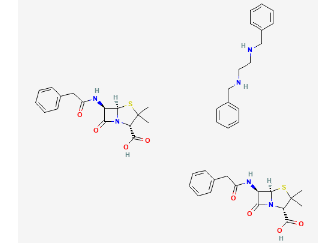
Benzathine benzylpenicillin
Developer(s)

|
Pfizer Originator
https://www.pfizer.com
United States of America Pfizer Inc. is an American multinational pharmaceutical and biotechnology company headquartered in Manhattan, New York City. Established in 1849 by two German entrepreneurs, the company has contributed to the development of several widely used medicines, including sildenafil (Viagra), sertraline (Zoloft), and atorvastatin (Lipitor). The organization has played a notable role in advancing treatment |
Drug structure
Structure of N,N'-dibenzylethane-1,2-diamine;bis((2S,5R,6R)-3,3-dimethyl-7-oxo-6-[(2-phenylacetyl)amino]-4-thia-1-azabicyclo[3.2.0]heptane-2-carboxylic acid)
https://pubchem.ncbi.nlm.nih.gov/compound/Penicillin-G-Benzathine-Anhydrous#section=2D-Structure
Drug information
Associated long-acting platforms
Aqueous drug particle suspension
Administration route
Intramuscular
Therapeutic area(s)
Use case(s)
Use of drug
Ease of administration
Frequency of administration
User acceptance
Dosage
Available dose and strength
600000 units/1mL; 1,200,000 units/2 mL; 240000 units/4 mL prefilled syringes
Maximum dose
240000 units/4 mL
Recommended dosing regimen
1) Upper Respiratory Infections (for example, pharyngitis): Adults—1,200,000 units bolus; older pediatric patients—900,000 units bolus; infants and pediatric patients (under 27 kg)—300,000 to 600,000 units. 2) Syphilis (Primary, secondary, and latent)—2,400,000 units bolus. (i) Late (tertiary and neurosyphilis)— 2,400,000 units weekly for three weeks. (ii) Congenital (<2 years of age)— 50,000 units/kg/body weight; ages 2 to 12 years: adjust dosage based on adult dosage schedule. 3) Treatment of Yaws, Bejel, and Pinta—1,200,000 units bolus 4) Prophylaxis for rheumatic fever and glomerulonephritis. Following an acute attack, penicillin G benzathine 1,200,000 units Q1M (or) 600,000 units Q2W.
Additional comments
Not provided
Drug information
Drug's link(s)
Generic name
Brand name
Compound type
Drug class/category
Summary
Approval status
Regulatory authorities
Safety
Efficacy
Evidence Summary
Delivery device(s)
Not provided
Scale-up and manufacturing prospects
Scale-up prospects
The cost of Bicillin L- A is USD $80–$150 per vial. There is a shortage of benzathine benzylpenicillin which has been extended until 30 November 2026.
Tentative equipment list for manufacturing
1) Round bottom flask - Multi-neck; Ca-Cl₂ drying tube fitted 2) Dropping funnel (500 mL capacity) 3) Hydrogenation apparatus - H2 absorbed at 45 min; 175 mm Hg 4) Vaccum fractionator (Distils 160–175°C / 0.5 mm Hg; n=1.5621) 5) Crystallination vessel ( 95% ethanol; recryst. hot alcohol; M.P. 110–112°C) 6) Suction filter (Vacuum applied; white needle crystals collected) 7) Jacketed mixing vessel 8) Mechanical stirrer 9) Suction filter 10) Spread-layer dryer
Manufacturing
1) ISO Class 5 (Grade A) for aseptic filling, ISO Class 7 (Grade B) as background for aseptic processing, and ISO Class 8 (Grade C/D) for pharmaceutical manufacturing support areas 2) Manufacturing process includes: Step 1 — Prepare the Diamine salt (DBED Diacetate) in 95% EtOH Step 2 — React with sodium penicillin G in cold water (0-4 celsius) Step 3 — Filter, wash, and dry Step 4 — Add excipeints and formulate pre-filled syringe
Specific analytical instrument required for characterization of formulation
1) Refractometer 2) FTIR spectrometer 3) H-NMR spectrometer 4) RP-HPLC system 5) Laser diffraction 6) Light microscope 7) SEM 8) DSC 9) X-ray diffratometer 10) Viscometer 11) Karl Fischer titrator
Clinical trials
B8441001
Identifier
NCT03612557
Link
https://clinicaltrials.gov/study/NCT03612557
Phase
Phase I
Status
Completed
Sponsor
Pfizer
More details
This will be an open label study to investigate the pharmacokinetics (PK) and safety of a single intramuscular injection of penicillin G benzathine in Japanese healthy subjects.
Purpose
A Study of Benzathine Benzylpenicillin Intramuscular Injection in Japanese Healthy Subjects
Interventions
Intervention 1
Countries
Sites / Institutions
Not provided
Trials dates
Anticipated Start Date
Not provided
Actual Start Date
2018-08-20
Anticipated Date of Last Follow-up
2018-10-08
Estimated Primary Completion Date
Not provided
Estimated Completion Date
Not provided
Actual Primary Completion Date
2018-10-02
Actual Completion Date
2018-10-02
Studied populations
Age Cohort
- Adults
Genders
- Female
Accepts pregnant individuals
Unspecified
Accepts lactating individuals
Unspecified
Accepts healthy individuals
Yes
Comments about the studied populations
Inclusion Criteria: * Healthy female subjects (of childbearing or nonchildbearing potential) and/or male subjects * Body mass index (BMI) of 17.5 to 30.5 kg/m2; and a total body weight \>50 kg and \<100 kg. Exclusion Criteria: • Evidence or history of clinically significant hematological, renal, endocrine, pulmonary, gastrointestinal, cardiovascular, hepatic, psychiatric, neurological, or allergic disease (history of penicillin hypersensitivity and/or a history of sensitivity to allergens).
Health status
Not provided
Study type
Interventional (clinical trial)
Enrollment
8
Allocation
Not provided
Intervention model
Single group assignment
Intervention model description
Not provided
Masking
Open label
Masking description
Not provided
Frequency of administration
Studied LA-formulation(s)
Studied route(s) of administration
Use case
Treatment
Key resources
PRESERvE
Identifier
NCT07189208
Link
https://clinicaltrials.gov/study/NCT07189208
Phase
Phase II
Status
Recruiting
Sponsor
University of California, Los Angeles
More details
The goal of this clinical trial is to learn if benzathine penicillin works to prevent maternal syphilis. It will also learn about the safety of benzathine penicillin. The main questions it aims to answer are: * Does benzathine penicillin lower the rate of syphilis in pregnancy? * What medical problems do participants have when taking benzathine penicillin? Researchers will compare benzathine penicillin to routine care to see if benzathine penicillin works to prevent syphilis. Participants will: * Take benzathine penicillin or receive routine care during the third trimester of pregnancy * Visit the clinic once a month for injections and tests * Report any reactions to benzathine penicillin to the study team
Purpose
Evaluation of Antimicrobial Prophylaxis to Prevent Syphilis in Pregnancy in Patients at Risk in Rio de Janeiro, Brazil
Interventions
Intervention 1
Intervention 2
Countries
Sites / Institutions
Not provided
Trials dates
Anticipated Start Date
Not provided
Actual Start Date
2025-11-01
Anticipated Date of Last Follow-up
2025-11-16
Estimated Primary Completion Date
2030-01-31
Estimated Completion Date
2030-01-31
Actual Primary Completion Date
Not provided
Actual Completion Date
Not provided
Studied populations
Age Cohort
- Adults
Genders
- Female
Accepts pregnant individuals
Yes
Accepts lactating individuals
Unspecified
Accepts healthy individuals
Yes
Comments about the studied populations
Inclusion Criteria: 1. Uncomplicated, viable pregnancy 2. Elevated risk for syphilis acquisition (one or more of the following): 1. Prior history of STIs last 3 years 2. HIV infection 3. Age \< 21 years 4. In a sexual partnership of \< 3 mo., or \> 3 sexual partners in the last 6 mo. 5. Late initiation of prenatal care (\> 14 weeks of pregnancy) 6. Residence in area where syphilis prevalence is 10% or higher. 3. Ability to provide written informed consent 4. No allergy to penicillin 5. Prenatal care at one of the sites participating in the study 6. Ongoing sexual activity during study period. 7. Negative rapid treponemal test at baseline. Exclusion Criteria: 1. Non-viable pregnancy 2. Very high risk pregnancy 3. Inability to provide written informed consent 4. Allergy
Health status
Not provided
Study type
Interventional (clinical trial)
Enrollment
500
Allocation
Randomized
Intervention model
Parallel Assignment
Intervention model description
Not provided
Masking
Open label
Masking description
Not provided
Frequency of administration
Studied LA-formulation(s)
Studied route(s) of administration
Not provided
Use case
Treatment
Key resources
GOAL
Identifier
NCT03346525
Link
https://clinicaltrials.gov/study/NCT03346525
Phase
Phase II
Status
Unknown status
Sponsor
Children's National Research Institute
More details
Rheumatic heart disease (RHD) affects at least 32.9 million people, mostly children living in low-resource settings. Long-term intramuscular benzathine penicillin G (BPG) prophylaxis is proven to prevent progression of chronic valve changes in patients with established rheumatic heart disease (RHD) and to allow regression of valve changes in patients with a history of acute rheumatic fever (ARF) with mild RHD. However, in low-resource settings ARF is an elusive diagnosis, and most patients (85%) are diagnosed only when RHD is severe and irreversible, medications ineffective, and surgical intervention is expensive and/or unavailable. Identification of latent RHD might be an opportunity to substantially reduce RHD morbidity and mortality. However, detection of latent RHD is only important i
Purpose
Determining the Impact of Penicillin in Latent RHD: The GOAL Trial
Interventions
Intervention 1
Countries
Sites / Institutions
Not provided
Trials dates
Anticipated Start Date
Not provided
Actual Start Date
2018-06-26
Anticipated Date of Last Follow-up
2019-09-27
Estimated Primary Completion Date
2020-11-30
Estimated Completion Date
2020-11-30
Actual Primary Completion Date
Not provided
Actual Completion Date
Not provided
Studied populations
Age Cohort
- Children
Genders
- All
Accepts pregnant individuals
Unspecified
Accepts lactating individuals
Unspecified
Accepts healthy individuals
No
Comments about the studied populations
Inclusion Criteria: * Children will be eligible for study participation if they are (1) between the ages of 5-17 years and (2) have a new diagnosis of latent RHD detected through primary school echo screening and confirmed by blinded consensus review. All children will be recruited from schools in Gulu District in Uganda. Exclusion Criteria: * Patients will be excluded from the study for the following reasons: * Known history of ARF or RHD * Newly diagnosed RHD by echo screening consider to be "missed clinical RHD" as compared to true latent RHD including: \> mild pathological valvular regurgitation at the mitral valve or aortic valve, mitral stenosis (mean MV gradient ≥ 5mmHg) (WHF, definite B), aortic stenosis (mean AV gradient ≥ 20mmHg) * Structural or functional cardiac defec
Health status
Study type
Interventional (clinical trial)
Enrollment
807
Allocation
Randomized
Intervention model
Parallel Assignment
Intervention model description
Not provided
Masking
Single blind masking
Masking description
Not provided
Frequency of administration
Studied LA-formulation(s)
Studied route(s) of administration
Use case
Treatment
Key resources
Cares-1
Identifier
NCT06921213
Link
https://clinicaltrials.gov/study/NCT06921213
Phase
Phase II
Status
Not yet recruiting
Sponsor
London School of Hygiene and Tropical Medicine
More details
CARES-1 is a randomised, open-label, phase II pharmacokinetic (PK) and safety study of ambulatory antibiotics for the treatment of neonates with "all-risk" asymptomatic congenital syphilis.
Purpose
Comprehensive Ambulatory Antibiotics for the Treatment of Congenital Syphilis
Interventions
Intervention 1
Intervention 2
Intervention 3
Countries
Sites / Institutions
Not provided
Trials dates
Anticipated Start Date
2025-10-01
Actual Start Date
Not provided
Anticipated Date of Last Follow-up
2025-04-30
Estimated Primary Completion Date
2026-12-31
Estimated Completion Date
2027-06-30
Actual Primary Completion Date
Not provided
Actual Completion Date
Not provided
Studied populations
Age Cohort
- Children
Genders
- All
Accepts pregnant individuals
Unspecified
Accepts lactating individuals
Unspecified
Accepts healthy individuals
No
Comments about the studied populations
Inclusion Criteria: 1. Infants at risk of congenital syphilis at birth defined as: 1. an infant born to a mother who tests positive for syphilis in pregnancy using registered and licensed locally-available diagnostic tests for example but not limited to a Treponemal rapid POCT, an RPR or both. AND 2. the mother is untreated in the current pregnancy defined as: i. she tested positive at antenatal care and received no treatment OR ii. she was never tested during antenatal care OR iii. she tested negative at antenatal care and positive on re-testing at delivery OR c. the mother is inadequately treated in the current pregnancy defined as: i. Having received a non-penicillin based treatment regimen; and/or ii. Does not have documentation of 3 doses of IM Benzathine Pe
Health status
Study type
Interventional (clinical trial)
Enrollment
90
Allocation
Randomized
Intervention model
Parallel Assignment
Intervention model description
Not provided
Masking
Single blind masking
Masking description
Not provided
Frequency of administration
Not provided
Studied LA-formulation(s)
Studied route(s) of administration
Use case
Treatment
Key resources
AMOXSYP
Identifier
NCT06877351
Link
https://clinicaltrials.gov/study/NCT06877351
Phase
Phase III
Status
Not provided
Sponsor
Hospital de Niños R. Gutierrez de Buenos Aires
More details
The goal of this clinical trial is to learn if oral amoxicillin has comparable therapeutic response than penicillin G benzathine for the treatment of acquired pediatric syphilis. It will also learn about the adverse events and biomarkers of therapeutic response associated with oral amoxicillin. The main questions it aims to answer are: * Does comparable therapeutic response oral amoxicillin to penicillin G benzathine in the treatment of acquired pediatric syphilis? * Does adequate serologic response to treatment participants with syphilis when taking oral amoxicillin? Researchers will compare oral amoxicillin to intramuscular procaine benzathine penicillin to see if oral amoxicillin works similar to treat acquired pediatric syphilis. Participants will: * Take 40-50mg/kg oral amoxicillin
Purpose
Oral Amoxicillin Compared to Penicillin G Benzathine for the Treatment of Acquired Syphilis.
Interventions
Intervention 1
Intervention 2
Countries
Sites / Institutions
Not provided
Trials dates
Anticipated Start Date
Not provided
Actual Start Date
2024-08-14
Anticipated Date of Last Follow-up
2025-03-11
Estimated Primary Completion Date
2027-01-01
Estimated Completion Date
2027-06-01
Actual Primary Completion Date
Not provided
Actual Completion Date
Not provided
Studied populations
Age Cohort
- Children
- Adults
Genders
- All
Accepts pregnant individuals
Unspecified
Accepts lactating individuals
Unspecified
Accepts healthy individuals
No
Comments about the studied populations
Inclusion Criteria: 1. Age up to 18 years. 2. Diagnosis of primary, secondary, or early latent syphilis, based on national and international standards (16, 17, 18). 3. Signed informed consent and assent. 4. Ability to comply with the study protocol requirements. 5. For women of childbearing potential, use of a highly effective contraceptive method (e.g., abstinence, hormonal contraception, or intrauterine device (IUD) is required. Contraception must be maintained for 1 week after the completion of treatment. 6. Male participants are advised to use condoms during sexual intercourse to prevent the transmission of syphilis to their partners. Exclusion Criteria: * 1\. Known allergy or hypersensitivity to any of the investigational drugs or their excipients, particularly to penicillin, cepha
Health status
Study type
Interventional (clinical trial)
Enrollment
120
Allocation
Randomized
Intervention model
Parallel Assignment
Intervention model description
Not provided
Masking
Open label
Masking description
Not provided
Frequency of administration
Not provided
Studied LA-formulation(s)
Not provided
Studied route(s) of administration
Not provided
Use case
Not provided
Key resources
Trep-AB
Identifier
NCT05069974
Link
https://clinicaltrials.gov/study/NCT05069974
Phase
Phase III
Status
Not provided
Sponsor
Fundación FLS de Lucha Contra el Sida, las Enfermedades Infecciosas y la Promoción de la Salud y la Ciencia
More details
The Trep-AB clinical trial will test the efficacy of an investigational neuropenetrative drug, Linezolid (LZD), compared to standard treatment, Benzathine penicillin G (BPG), for early syphilis in humans. The overarching idea of the work proposed herein is to investigate the use of LZD to treat syphilis, conducting a randomized controlled clinical trial to evaluate this new indication of a known antibacterial agent.
Purpose
Alternative Antibiotics for Syphilis
Interventions
Intervention 1
Intervention 2
Countries
Sites / Institutions
Not provided
Trials dates
Anticipated Start Date
Not provided
Actual Start Date
2021-10-14
Anticipated Date of Last Follow-up
2025-07-17
Estimated Primary Completion Date
2026-04-01
Estimated Completion Date
2026-04-01
Actual Primary Completion Date
Not provided
Actual Completion Date
Not provided
Studied populations
Age Cohort
- Adults
- Older Adults
Genders
- All
Accepts pregnant individuals
Unspecified
Accepts lactating individuals
Unspecified
Accepts healthy individuals
No
Comments about the studied populations
Inclusion Criteria: 1. Age 18 years or older at baseline visit. 2. Primary, secondary or early latent syphilis diagnosis based on SEIMC/IUSTI Guidelines\* 1. Primary syphilis is defined as typical ulcer (chancre) and positive test using darkfield examination (DFE) or Polymerase chain reaction (PCR) detection of T.p. with/without positive serological test for syphilis. 2. Secondary syphilis is defined based on typical clinical symptoms with positive treponemal and non-treponemal tests. 3. Early latent syphilis is defined as positive serological treponemal and non-treponemal tests with no clinical evidence of infection, with a previous negative syphilis serology,or a four-fold increase in RPR titer of a non-treponemal test within the past 12 months.Serological tests for syphilis p
Health status
Not provided
Study type
Interventional (clinical trial)
Enrollment
224
Allocation
Randomized
Intervention model
Parallel Assignment
Intervention model description
Not provided
Masking
Single blind masking
Masking description
Not provided
Frequency of administration
Studied LA-formulation(s)
Studied route(s) of administration
Use case
Treatment
Key resources
Excipients
Proprietary excipients used
Not provided
Novel excipients or existing excipients at a concentration above Inactive Ingredients Database (IID) for the specified route of administration
1) Methyl hydroxybenzoate 2) Propyl hydroxybenzoate. 3) Lecithin 4) Polysorbate 80 5) Carmellose sodium 6) Sodium citrate, anhydrous 7) Povidone
Residual solvents used
Not provided
Patent info
There are either no relevant patents or these were not yet submitted to LAPaL
Supporting material
Publications
Gartlan WA, Rahman S, Pellegrini MV, et al. Benzathine Penicillin. [Updated 2024 Feb 12]. In: StatPearls [Internet]. Treasure Island (FL): StatPearls Publishing; 2026 Jan-. Available from: https://www.ncbi.nlm.nih.gov/books/NBK507723/
This activity delves into the multifaceted clinical applications of benzathine penicillin, a potent antibiotic derived from the reaction between penicillin G molecules and diphenylethylene diamine. With broad-spectrum activity against gram-positive bacteria, benzathine penicillin emerges as a formidable agent, effectively combating diverse strains such as β-hemolytic streptococci (groups A, B, C, G, H, L, and M). Its exceptional efficacy against Treponema pallidum and T. carateum positions benzathine penicillin as a cornerstone in treating syphilis and yaws. Importantly, its unparalleled record is underscored by the absence of reported resistance in Streptococcus pyogenes, solidifying its status as a reliable therapeutic tool for specific infections.
This educational initiative offers an in-depth exploration of benzathine penicillin, providing healthcare professionals with comprehensive insights into its indications, dosing regimens, administration modalities, potential adverse effects, and specific contraindications. By unraveling the robust mechanism of action against various bacterial species, this CME activity aims to empower healthcare professionals with an enhanced understanding of the clinical utility of benzathine penicillin. The goal is to foster informed decision-making and optimize therapeutic strategies, ensuring the effective management of bacterial infections susceptible to this antibiotic. Participants will gain valuable knowledge to navigate the nuances of benzathine penicillin therapy, ultimately contributing to improved patient outcomes.
Pharmacokinetics and Safety of Intramuscular Injectable Benzathine Penicillin G in Japanese Healthy Participants, Yinhua Li PhD, Akifumi Okayama MS, Toshiaki Hagi MS, Chieko Muto PhD, Susan Raber PharmD, MPH, Masahito Nagashima BS. 12 May 2024. https://doi.org/10.1002/jcph.2454
An intramuscular (IM) suspension of benzathine penicillin G (BPG) has been used as first-line therapy for the treatment of syphilis worldwide since its approval in the 1950s. However, there are limited reports about the pharmacokinetics of BPG. A Phase 1 study was conducted on eight Japanese healthy participants to investigate the pharmacokinetics (samples collected predose to 648 h post-dose) and safety of 2.4 million units of BPG after a single IM injection. Following administration, penicillin G, the active moiety of BPG, was absorbed slowly from the injection site with a median time to Cmax (tmax) of 48 h post-dose. After the achievement of Cmax, concentrations of penicillin G declined slowly in a monophasic fashion with a mean apparent terminal half-life of 189 h. Geometric mean AUCinf and Cmax were 50770 ng•h/mL and 259 ng/mL, respectively. Median time (range) above the well-accepted therapeutic concentration (18 ng/mL) for syphilis treatment was 561 h (439-608 h [18-25 days]), which reached and exceeded the necessary duration of 7-10 days for syphilis treatment. Two participants were underdosed with residual drug left in the syringe due to the high viscosity of the drug product. Only one (12.5%) participant reported a mild adverse event of nasopharyngitis, which was considered not related to the study treatment. The study results supported BPG approval in Japan as an option for syphilis treatment.
Additional documents
Useful links
Additional information
(2) Safety - Common side effects include: hypersensitivity, Jarisch-Herxheimer reaction, and injection-site pain. No TEAE; Mild AE in the phase 1 study, which was nasopharyngitis reported in 12% of participants