
|
Developed by 

|
Supported by 

|
Acoziborole
Developer(s)

|
Sanofi Originator
https://www.sanofi.com/en
France Sanofi was established in February 15, 1973 in France as a subsidiary of the oil company Elf Aquitaine,. It has merged with Synthélabo in 1999, then acquired Aventis in 2004, and later Genzyme in 2011. Sanofi Winthrop Industrie is a major pharmaceutical manufacturing subsidiary of the global French biopharmaceutical company Sanofi. It produces a wide range of medications, including small molecules |

|
Drugs for Neglected Diseases Initiative Originator
https://dndi.org/
Switzerland The Drugs for Neglected Diseases initiative (DNDi) is an international, not‑for‑profit research and development organization. It was established in 2003 through a partnership involving the Indian Council of Medical Research, the Oswaldo Cruz Foundation, KEMRI, the Malaysian Ministry of Health, and Institut Pasteur of France, together with the participation of WHO/TDR and Médecins Sans Frontières. |
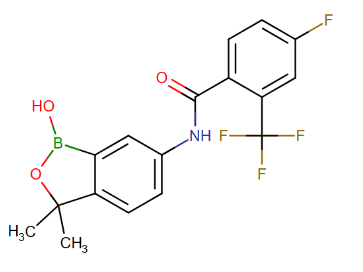
Drug structure
Structure of 4‑fluoro‑N‑(1‑hydroxy‑3,3‑dimethyl‑2,1‑benzoxaborol‑6‑yl)‑2‑(trifluoromethyl)benzamide - ACORIBOZOLE
https://go.drugbank.com/drugs/DB13086
Drug information
Associated long-acting platforms
Oral solid form
Administration route
Oral
Therapeutic area(s)
Use case(s)
Use of drug
Ease of administration
Frequency of administration
User acceptance
Dosage
Available dose and strength
320 mg tablet
Maximum dose
1200 mg
Recommended dosing regimen
Acoziborole Winthrop 960 mg (320 mg*3 as single dose) is indicated for use in adults and adolescents > 12 years of age weighing at least 40 kg to treat first-stage and second-stage (including severe second-stage) human African trypanosomiasis (sleeping sickness).
Additional comments
The listed dosage information is based on the documents submitted to EMA’s human medicines committee (CHMP) and published literature.
Drug information
Drug's link(s)
Generic name
Brand name
Compound type
Drug class/category
Lifecycle status
Summary
Approval status
Regulatory authorities
Safety
Efficacy
Evidence Summary
Delivery device(s)
No delivery device
Scale-up and manufacturing prospects
Scale-up prospects
Not provided
Tentative equipment list for manufacturing
Round-bottom flasks / reaction flasks, 20 mL scintillation vials, Magnetic stirrers / stir bars, Oil bath for heated reactions, Ice bath / cooling setup, Nitrogen / inert atmosphere setup, Sealed reaction vessels with rubber septa / Teflon screw caps, Büchi rotary evaporator for solvent removal under vacuum, Vacuum source / vacuum concentration setup, Drying / concentration setup.
Manufacturing
Acoziborole and related compounds can be manufactured in ISO Class 8 (equivalent to EU GMP Grade D “at rest”) by Sanofi Winthrop Industrie. Manufacturing process includes:- 1) Preparation the aryl-amine precursor 2) Install the boron functionality (boronylation) under Pd catalysis at controlled temperature 3) Aldehyde reduction and cyclize to the oxaborole ring 4) Debenzylate / deprotect to obtain the 6-amino oxaborole intermediate 5) Form the final amide (key finishing step for acoziborole-type molecules)
Specific analytical instrument required for characterization of formulation
1) HPLC, LCMS, NMR, Silica gel chromatography, 2) Flash chromatography using Teledyne ISCO CombiFlash / Companion systems, 3) Reverse-phase chromatography / Biotage C18 cartridges, 4) Prep-HPLC / Waters Prep LC systems, and 5) Crystallization / isolation after solvent remova
Clinical trials
OXA002
Identifier
NCT03087955
Link
https://clinicaltrials.gov/study/NCT03087955
Phase
Phase II/III
Status
Completed
Sponsor
Drugs for Neglected Diseases
More details
The goal of this study is to assess efficacy and safety of acoziborole in adult participants with Trypanosoma brucei gambiense (T.b. gambiense) HAT, either early- or intermediate-stage HAT (first arm) or late-stage HAT (second arm). Participants will receive 3 tablets of 320 mg as a single oral dose of acoziborole in the fasting state on Day 1. Participants will stay in the hospital for observation for 15 days. In total, participants will be followed for 18 months.
Purpose
Efficacy and Safety of Acoziborole (SCYX-7158) in Patients With Human African Trypanosomiasis Due to T.b. Gambiense
Interventions
Intervention 1
Countries
Sites / Institutions
Not provided
Trials dates
Anticipated Start Date
Not provided
Actual Start Date
2016-10-11
Anticipated Date of Last Follow-up
2025-08-28
Estimated Primary Completion Date
Not provided
Estimated Completion Date
Not provided
Actual Primary Completion Date
2020-09-08
Actual Completion Date
2020-09-08
Studied populations
Age Cohort
- Children
- Adolescents
- Adults
- Older Adults
Genders
- All
Accepts pregnant individuals
Unspecified
Accepts lactating individuals
Unspecified
Accepts healthy individuals
No
Comments about the studied populations
Inclusion Criteria: * Male or female patient * 15 years of age or older * Signed informed consent form (as well as assent from illiterate and under-age patients, and those unable to give consent) * Karnofsky Performance Status above 50 * Able to ingest oral tablets * Having a permanent address or being traceable by other persons * Able to comply with the schedule of follow-up visits and requirements of the study * Agreement to be hospitalised in order to receive treatment * For patients with late-stage HAT: * Confirmation of g-HAT by detection of the parasite in the blood and/or the lymph and/or the CSF, at the investigational centre * If trypanosomes are found in the blood or lymph, but not in the CSF, the CSF WBC, measured at the investigational centre, must be above 20/μL for the
Health status
Study type
Interventional (clinical trial)
Enrollment
208
Allocation
Not provided
Intervention model
Parallel Assignment
Intervention model description
Not provided
Masking
Open label
Masking description
Not provided
Frequency of administration
Studied LA-formulation(s)
Studied route(s) of administration
Use case
Treatment
Indication(s)
Sleeping sickness
Key resources
| Type | Title | Content | Link |
|---|---|---|---|
| Publication | Efficacy and safety of acoziborole in patients with human African trypanosomiasis caused by Trypanosoma brucei gambiense: a multicentre, open-label, single-arm, phase 2/3 trial. | BackgroundHuman African trypanosomiasis caused by Trypanosoma brucei gambiense (gambiense HAT) in patients with late-stage disease requires hospital admission to receive nifurtimox–eflornithine combination therapy (NECT). Fexinidazole, the latest treatment that has been recommended by WHO, also requires systematic admission to hospital, which is problematic in areas with few health-care resources. We aim to assess the safety and efficacy of acoziborole in adult and adolescent patients with gambiense HAT.MethodsThis multicentre, prospective, open-label, single-arm, phase 2/3 study recruited patients aged 15 years or older with confirmed gambiense HAT infection from ten hospitals in the Democratic Republic of the Congo and Guinea. Inclusion criteria included a Karnofsky score greater than 50, ability to swallow tablets, a permanent address or traceability, ability to comply with follow-up visits and study requirements, and agreement to hospital admission during treatment. Oral acoziborole was administered as a single 960 mg dose (3 × 320 mg tablets) to fasted patients. Patients were observed in hospital until day 15 after treatment administration then for 18 months as outpatients with visits at 3, 6, 12, and 18 months. The primary efficacy endpoint was the success rate of acoziborole treatment at 18 months in patients with late-stage gambiense HAT (modified intention-to-treat [mITT] population), based on modified WHO criteria. A complementary post-hoc analysis comparing the 18-month success rates for acoziborole and NECT (using historical data) was performed. This study is registered at ClinicalTrials.gov, NCT03087955.FindingsBetween Oct 11, 2016, and March 25, 2019, 260 patients were screened, of whom 52 were ineligible and 208 were enrolled (167 with late-stage and 41 with early-stage or intermediate-stage gambiense HAT; primary efficacy analysis set). All 41 (100%) patients with early-stage or intermediate-stage and 160 (96%) of 167 with late-stage disease completed the last 18-month follow-up visit. The mean age of participants was 34·0 years (SD 12·4), including 117 (56%) men and 91 (44%) women. Treatment success rate at 18 months was 95·2% (95% CI 91·2–97·7) reached in 159 of 167 patients with late-stage gambiense HAT (mITT population) and 98·1% (95·1–99·5) reached in 159 of 162 patients (evaluable population). Overall, 155 (75%) of 208 patients had 600 treatment-emergent adverse events. A total of 38 drug-related treatment-emergent adverse events occurred in 29 (14%) patients; all were mild or moderate and most common were pyrexia and asthenia. Four deaths occurred during the study; none were considered treatment related. The post-hoc analysis showed similar results to the estimated historical success rate for NECT of 94%.InterpretationGiven the high efficacy and favourable safety profile, acoziborole holds promise in the efforts to reach the WHO goal of interrupting HAT transmission by 2030.FundingBill & Melinda Gates Foundation, UK Aid, Federal Minis | https://doi.org/10.1016/S1473-3099(22)00660-0 |
OXA005
Identifier
NCT05433350
Link
https://clinicaltrials.gov/study/NCT05433350
Phase
Phase II/III
Status
Not provided
Sponsor
Drugs for Neglected Diseases
More details
Acoziborole has been studied in an open-label pivotal Phase II/III trial (DNDi-OXA-02-HAT) in the DRC and Guinea. As the numbers of reported cases diminish, resources for surveillance and specialised screening will also taper. This decrease, coupled with the loss of diagnostic skills and disease management expertise, will lead to a weak and less specialised HAT technical environment. The history of g-HAT has shown that outbreaks or re-emergence of the disease have already happened under different circumstances when surveillance was relaxed or simply because the populations at risk live in areas of political instability, limiting access to specialised care. Even with a steady decrease of reported incidence, no model can currently predict that HAT could not re-emerge. Although g-HAT is pred
Purpose
Pharmacokinetic, Efficacy, Safety and Tolerability Study of a Single Dose of Acoziborole in g-HAT Paediatric Patients
Interventions
Intervention 1
Countries
Sites / Institutions
Not provided
Trials dates
Anticipated Start Date
Not provided
Actual Start Date
2022-07-09
Anticipated Date of Last Follow-up
2025-07-04
Estimated Primary Completion Date
2026-03-31
Estimated Completion Date
2026-03-31
Actual Primary Completion Date
Not provided
Actual Completion Date
Not provided
Studied populations
Age Cohort
- Children
- Adolescents
Genders
- All
Accepts pregnant individuals
Unspecified
Accepts lactating individuals
Unspecified
Accepts healthy individuals
No
Comments about the studied populations
Inclusion Criteria: * Signed informed consent from one parent or from the legal representative * Assent from the paediatric patient (for paediatric patients \>6 years of age) to participate in the study, collected in the presence of an impartial witness * Between 1 and 14 years of age and between 10 and ≤40 kg (as per the requirements of step 1 and step 2) * Male or female * Evidence of trypanosomes in any body fluid (blood or lymph or CSF) * Having a permanent address and able to comply with the schedule of follow-up visits * Agreement to not take part in any other clinical trials during the participation in this study * For pubescent girls of childbearing potential must agree to have avoid getting pregnant during the screening period and up to 3 months after acoziborole dosing by using
Health status
Study type
Interventional (clinical trial)
Enrollment
35
Allocation
Not provided
Intervention model
Single group assignment
Intervention model description
Not provided
Masking
Open label
Masking description
Not provided
Frequency of administration
Studied LA-formulation(s)
Studied route(s) of administration
Use case
Treatment
Indication(s)
Sleeping sickness
Key resources
STROgHAT
Identifier
NCT06356974
Link
https://clinicaltrials.gov/study/NCT06356974
Phase
Phase III
Status
Not yet recruiting
Sponsor
Drugs for Neglected Diseases
More details
This protocol describes both the epidemiological study which aims at assessing whether over a three-year period a zero prevalence can be achieved when implementing a screen \& treat approach with acoziborole, as well as a nested clinical study aimed at generating further evidence on safety of acoziborole in gambiense human African trypanosomiasis (gHAT) seropositives individuals. The overall coordinator will be ITM. ITM will be fully responsible for the epidemiological study (study Part A), including cost effectiveness and evaluation of diagnostic tests. DNDi will be the legal sponsor of the nested safety clinical study (study Part B) and will ensure compliance with regulatory requirements and good clinical practices (GCP) for this part of the study. The investigators hypothesize that by
Purpose
Stop Transmission of Gambiense Human African Trypanosomiasis (STROgHAT)
Interventions
Intervention 1
Countries
Not provided
Sites / Institutions
Not provided
Trials dates
Anticipated Start Date
2024-04-08
Actual Start Date
Not provided
Anticipated Date of Last Follow-up
2024-04-04
Estimated Primary Completion Date
2026-12-30
Estimated Completion Date
2027-12-30
Actual Primary Completion Date
Not provided
Actual Completion Date
Not provided
Studied populations
Age Cohort
- Children
- Adolescents
- Adults
- Older Adults
Genders
- All
Accepts pregnant individuals
Unspecified
Accepts lactating individuals
Unspecified
Accepts healthy individuals
No
Comments about the studied populations
Inclusion Criteria: * • Participants able to give signed informed consent and assent form for adolescents, which includes willingness to comply with the schedule of follow-up visits and other requirements and restrictions listed in the informed consent form (ICF) and in this protocol * All sexes * 11 years of age or older at the start of the study and weight ≥30 kg at the screening of Part B * Participants who are CATT test or HAT RDT positive (information provided by the mobile team and included into TrypElim (see Part A) * Participants who are able to ingest oral tablets * Participants with known address and/or contact details provided * Participants who are able to comply with the schedule of follow-up visits and other requirements of the study * Participants must agree
Health status
Study type
Interventional (clinical trial)
Enrollment
2500
Allocation
Not provided
Intervention model
Single group assignment
Intervention model description
Not provided
Masking
Open label
Masking description
Not provided
Frequency of administration
Studied LA-formulation(s)
Studied route(s) of administration
Use case
Treatment
Indication(s)
Sleeping sickness
Key resources
DNDi-OXA-03-HAT
Identifier
NCT04270981
Link
https://clinicaltrials.gov/study/NCT04270981
Phase
Phase I
Status
Completed
Sponsor
Drugs for Neglected Diseases
More details
This is a single centre, open-label, single group, non-randomised, single oral dose study in healthy male subjects designed to assess the mass balance recovery, PK, metabolite profile and metabolite identification, and exploratory pharmacodynamics of acoziborole. It is planned to enrol 6 subjects. All subjects will receive an oral dose of 960 mg \[14C\] acoziborole on a single occasion as 4 capsules containing a small amount of radioactivity (not more than \[NMT\] 1000 nCi \[37 KBq\] 14C).
Purpose
ADME Study of Acoziborole in Healthy Subjects
Interventions
Intervention 1
Countries
Sites / Institutions
Not provided
Trials dates
Anticipated Start Date
Not provided
Actual Start Date
2020-02-05
Anticipated Date of Last Follow-up
2021-04-26
Estimated Primary Completion Date
Not provided
Estimated Completion Date
Not provided
Actual Primary Completion Date
2020-07-08
Actual Completion Date
2020-07-08
Studied populations
Age Cohort
- Adults
Genders
- Male
Accepts pregnant individuals
Unspecified
Accepts lactating individuals
Unspecified
Accepts healthy individuals
Yes
Comments about the studied populations
Inclusion Criteria: * Healthy Caucasian males. * Age 18 to 55 years of age at the time of signing informed consent. * Body mass index (BMI) of 18.0 to 30.0 kg/m2 as measured at screening. * Must be willing and able to communicate and participate in the whole study. * Must have regular bowel movements (i.e., average stool production of ≥1 and ≤3 stools per day). * Normal blood pressure (BP): Systolic BP between 90 and 140 (160 if \>45 years old) mmHg (inclusive), diastolic BP 45 to 90 mmHg (inclusive), measured after 10 min rest in supine position at screening and pre-dose. * A resting heart rate (HR) between 45 and 100 bpm (inclusive), measured after 10 min rest in supine position at screening and pre-dose. * ECG recording without clinically significant abnormality, including QTcF measure
Health status
Not provided
Study type
Interventional (clinical trial)
Enrollment
6
Allocation
Not provided
Intervention model
Single group assignment
Intervention model description
Not provided
Masking
Open label
Masking description
Not provided
Frequency of administration
Studied LA-formulation(s)
Studied route(s) of administration
Use case
Treatment
Indication(s)
Sleeping sickness
Key resources
OXA004
Identifier
NCT05256017
Link
https://clinicaltrials.gov/study/NCT05256017
Phase
Phase II/III
Status
Completed
Sponsor
Drugs for Neglected Diseases
More details
Human African trypanosomiasis (HAT) or sleeping sickness is a tropical disease which is endemic in sub-Saharan Africa. Most cases of HAT are due to the parasite Trypanosoma brucei gambiense (T.b. gambiense), which is transmitted by the bite of the tsetse fly. HAT can be fatal without diagnosis and treatment. Several treatment options are currently available to treat HAT caused by the T.b. gambiense parasite (g-HAT), but these treatments can be administered only after demonstrating via microscopy the presence of the parasite in a body fluid. However, there are factors such as low parasitaemia and the complexity and low sensitivity of parasitological methods that make such demonstration difficult. It has been demonstrated that a variable proportion (mainly depending on the prevalence) of suc
Purpose
Safety and Tolerability Study of Acoziborole in g-HAT Seropositive Subjects
Interventions
Intervention 1
Intervention 2
Countries
Sites / Institutions
Not provided
Trials dates
Anticipated Start Date
Not provided
Actual Start Date
2021-12-30
Anticipated Date of Last Follow-up
2025-02-27
Estimated Primary Completion Date
Not provided
Estimated Completion Date
Not provided
Actual Primary Completion Date
2023-08-03
Actual Completion Date
2023-08-03
Studied populations
Age Cohort
- Children
- Adolescents
- Adults
- Older Adults
Genders
- All
Accepts pregnant individuals
Unspecified
Accepts lactating individuals
Unspecified
Accepts healthy individuals
No
Comments about the studied populations
Inclusion Criteria: * Signed the informed consent form (ICF) * Male or female * 15 years of age or older * Card agglutination test for trypanosomiasis (CATT) test or HAT sero-K-set rapid diagnostic test (RDT) positive * Parasitology negative (in blood and/or lymph node aspirate \[if lymphadenopathy is present\]) * Karnofsky performance status above 70 * Able to ingest oral tablets * Known address and/or contact details provided * Able to comply with the schedule of follow-up visits and other requirements of the study * Agreement to be hospitalized upon enrolment for at least 5 days (in order to receive in-ward post-treatment observational follow-up through the first 5 days after treatment) * Agreement to not take part in any other clinical trials during the participation in this study * F
Health status
Study type
Interventional (clinical trial)
Enrollment
1208
Allocation
Randomized
Intervention model
Parallel Assignment
Intervention model description
Not provided
Masking
Quadruple-blind masking
Masking description
Not provided
Frequency of administration
Studied LA-formulation(s)
Studied route(s) of administration
Use case
Treatment
Indication(s)
Sleeping sickness
Key resources
OXA-07
Identifier
NCT05947604
Link
https://clinicaltrials.gov/study/NCT05947604
Phase
Phase I
Status
Completed
Sponsor
Drugs for Neglected Diseases
More details
To assess Drug drug interactions between Acoziborole and Dextromethorphan and Midazolam in healthy male volunteers.
Purpose
DDI Study of Single Oral Dose of Acoziborole With Sequential Co-administration of Midazolam and Dextromethorphan
Interventions
Intervention 1
Intervention 2
Intervention 3
Countries
Sites / Institutions
Not provided
Trials dates
Anticipated Start Date
Not provided
Actual Start Date
2023-02-09
Anticipated Date of Last Follow-up
2023-07-07
Estimated Primary Completion Date
Not provided
Estimated Completion Date
Not provided
Actual Primary Completion Date
2023-05-03
Actual Completion Date
2023-05-03
Studied populations
Age Cohort
- Adults
Genders
- Male
Accepts pregnant individuals
Unspecified
Accepts lactating individuals
Unspecified
Accepts healthy individuals
Yes
Comments about the studied populations
Inclusion Criteria: * Healthy males. * Have the ability to understand and sign a written informed consent form, which must be obtained prior to initiation of study procedures.. * Age 18 to 55 (inclusive) years of age at the time of signing informed consent. * Body mass index (BMI) of 18.0 to 30.0 kg/m2 as measured at screening. * Body weight not less than 50 kg. * Non-smokers (defined as has not used nicotine-containing products including e-cigarette for at least 3 months prior to the first dose as confirmed by cotinine test). * Must be willing and able to communicate and participate in the whole study. * Normal blood pressure (BP): Systolic BP (SBP) between 90 and 140 mmHg (inclusive), diastolic BP (DBP) between 45 and 90 mmHg (inclusive), measured after 10 min rest in supine position at
Health status
Not provided
Study type
Interventional (clinical trial)
Enrollment
20
Allocation
Not provided
Intervention model
Cross-over assignment
Intervention model description
Not provided
Masking
Open label
Masking description
Not provided
Frequency of administration
Studied LA-formulation(s)
Studied route(s) of administration
Use case
Treatment
Indication(s)
Sleeping sickness
Key resources
DNDiOXA001
Identifier
NCT01533961
Link
https://clinicaltrials.gov/study/NCT01533961
Phase
Phase I
Status
Completed
Sponsor
Drugs for Neglected Diseases
More details
This study is aimed at assessing the tolerability and pharmacokinetic parameters of SCYX-7158 in healthy volunteers. In animal models of both acute and chronic experimental Trypanosomiasis infections, SCYX-7158 shows highly promising efficacy.
Purpose
Human African Trypanosomiasis: First in Man Clinical Trial of a New Medicinal Product, the SCYX-7158
Interventions
Intervention 1
Intervention 2
Countries
Sites / Institutions
Not provided
Trials dates
Anticipated Start Date
Not provided
Actual Start Date
2012-02-01
Anticipated Date of Last Follow-up
2015-09-17
Estimated Primary Completion Date
Not provided
Estimated Completion Date
Not provided
Actual Primary Completion Date
2015-03-01
Actual Completion Date
2015-03-01
Studied populations
Age Cohort
- Adults
Genders
- Male
- Cisgender male
- Transgender female
Accepts pregnant individuals
Unspecified
Accepts lactating individuals
Unspecified
Accepts healthy individuals
Yes
Comments about the studied populations
Inclusion Criteria: * Male healthy volunteers 18 to 45 years of age, * All subjects to be of sub-Saharan African origins with both parents of Sub-Saharan African origins too, * Male subjects with a body mass index (BMI) calculated as weight in kg/(height in m2) from 18 to 28 kg/m2 at screening, * Able to communicate well with the Investigator and research staff and to comply with the requirements of the entire study, * Provision of written informed consent to participate as shown by a signature on the volunteer consent form, * Light smokers (less than 5 cigarettes per day) or subjects who are non-smokers. No smoking (or use of smoking substitute e.g. nicotine patch) is permitted from screening throughout the study, * Normal arterial blood pressure (BP) and pulse rate or, if abnormal, cons
Health status
Not provided
Study type
Interventional (clinical trial)
Enrollment
136
Allocation
Randomized
Intervention model
Single group assignment
Intervention model description
Not provided
Masking
Quadruple-blind masking
Masking description
Not provided
Frequency of administration
Studied LA-formulation(s)
Studied route(s) of administration
Use case
Treatment
Indication(s)
Sleeping sickness
Key resources
Excipients
Proprietary excipients used
Not provided
Novel excipients or existing excipients at a concentration above Inactive Ingredients Database (IID) for the specified route of administration
Not provided
Residual solvents used
No residual solvent used
Patent info
Description
Acoziborole compound and analogues
Brief description
This invention provides, among other things, novel compounds useful for treating protozoal infections, pharmaceutical compositions containing such compounds, as well as combinations of these compounds with at least one additional therapeutically effective agent.
Representative patent
WO2011019618
Category
Compound
Patent holder
ANACOR PHARMACEUTICALS, INC.
Exclusivity
Not provided
Expiration date
August 6, 2030
Status
Granted in: BW, GH, GM, KE, LR, LS, MW, MZ, NA, SD, SL, SZ, TZ, UG, ZM, ZW, IL, US, ZA Abandoned in IN
Supporting material
Publications
Betu Kumeso, V. K. — The Lancet Infectious diseases — 2023-01-01
Link: https://doi.org/10.1016/S1473-3099(22)00660-0
Summary: Given the high efficacy and favourable safety profile, acoziborole holds promise in the efforts to reach the WHO goal of interrupting HAT transmission by 2030.
Background
Human African trypanosomiasis caused by Trypanosoma brucei gambiense (gambiense HAT) in patients with late-stage disease requires hospital admission to receive nifurtimox–eflornithine combination therapy (NECT). Fexinidazole, the latest treatment that has been recommended by WHO, also requires systematic admission to hospital, which is problematic in areas with few health-care resources. We aim to assess the safety and efficacy of acoziborole in adult and adolescent patients with gambiense HAT.
Methods
This multicentre, prospective, open-label, single-arm, phase 2/3 study recruited patients aged 15 years or older with confirmed gambiense HAT infection from ten hospitals in the Democratic Republic of the Congo and Guinea. Inclusion criteria included a Karnofsky score greater than 50, ability to swallow tablets, a permanent address or traceability, ability to comply with follow-up visits and study requirements, and agreement to hospital admission during treatment. Oral acoziborole was administered as a single 960 mg dose (3 × 320 mg tablets) to fasted patients. Patients were observed in hospital until day 15 after treatment administration then for 18 months as outpatients with visits at 3, 6, 12, and 18 months. The primary efficacy endpoint was the success rate of acoziborole treatment at 18 months in patients with late-stage gambiense HAT (modified intention-to-treat [mITT] population), based on modified WHO criteria. A complementary post-hoc analysis comparing the 18-month success rates for acoziborole and NECT (using historical data) was performed. This study is registered at ClinicalTrials.gov, NCT03087955.
Findings
Between Oct 11, 2016, and March 25, 2019, 260 patients were screened, of whom 52 were ineligible and 208 were enrolled (167 with late-stage and 41 with early-stage or intermediate-stage gambiense HAT; primary efficacy analysis set). All 41 (100%) patients with early-stage or intermediate-stage and 160 (96%) of 167 with late-stage disease completed the last 18-month follow-up visit. The mean age of participants was 34·0 years (SD 12·4), including 117 (56%) men and 91 (44%) women. Treatment success rate at 18 months was 95·2% (95% CI 91·2–97·7) reached in 159 of 167 patients with late-stage gambiense HAT (mITT population) and 98·1% (95·1–99·5) reached in 159 of 162 patients (evaluable population). Overall, 155 (75%) of 208 patients had 600 treatment-emergent adverse events. A total of 38 drug-related treatment-emergent adverse events occurred in 29 (14%) patients; all were mild or moderate and most common were pyrexia and asthenia. Four deaths occurred during the study; none were considered treatment related. The post-hoc analysis showed similar results to the estimated historical success rate for NECT of 94%.
Interpretation
Given the high efficacy and favourable safety profile, acoziborole holds promise in the efforts to reach the WHO goal of interrupting HAT transmission by 2030.
Funding
Bill & Melinda Gates Foundation, UK Aid, Federal Minis
Tarral, A. — Clinical pharmacokinetics — 2023-01-01
Link: https://doi.org/10.1007/s40262-023-01216-8
Summary: This study showed that acoziborole could be safely assessed in patients as a potential single-dose oral cure for both stages of gambiense HAT.
Background and Objectives
Acoziborole is a novel boron-containing candidate developed as an oral drug for the treatment of human African trypanosomiasis (HAT). Results from preclinical studies allowed progression to Phase 1 trials. We aimed to determine the best dose regimen for all stages of HAT.
Methods
Acoziborole was assessed in 128 healthy adult males of sub-Saharan African origin living in France. The study included a single oral administration of a 20- to 1200-mg dose in a randomised double-blind study in cohorts of 8 (6 active, 2 placebo) to assess safety, tolerability, and pharmacokinetics. In three additional open cohorts of 6 participants, the effect of activated charcoal was evaluated, bioequivalence of capsules versus tablets was assessed, and safety in the 960-mg tablet cohorts was monitored.
Results
Acoziborole was well tolerated at all doses tested; no dose-related adverse events were observed. The drug appeared rapidly in plasma (at 1 h), reached tmax between 24 and 72 h, and remained stable for up to 96 h, after which a slow decrease was quantifiable until 14 weeks after dosing. Charcoal had little impact on the enterohepatic recirculation effect, except for the 20-mg dose. Bioequivalence between capsule and tablet formulations was demonstrated. The therapeutic single dose for administration under fasted conditions was fixed to 960 mg. The maximum administered dose was 1200 mg.
Conclusions
This study showed that acoziborole could be safely assessed in patients as a potential single-dose oral cure for both stages of gambiense HAT.
Trial Registration
The study was registered with ClinicalTrials.gov: NCT01533961
Additional documents
No documents were uploaded