
|
Developed by 

|
Supported by 


|
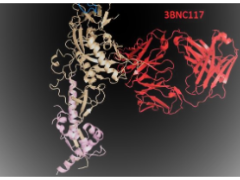
3BNC117 (parent of TAB)
Developer(s)
|
|

|
|

|
Drug structure
3BNC117
CPHI
Drug information
Associated long-acting platforms
Monoclonal antibodies and antibody drug conjugates
Administration route
Intravenous
Therapeutic area(s)
Use case(s)
Use of drug
Ease of administration
Frequency of administration
User acceptance
Dosage
Available dose and strength
Investigational. Doses studied: 1, 3, 10 and 30 mg/kg IV, single or repeated.
Maximum dose
30 mg/kg IV per infusion
Recommended dosing regimen
No approved or established regimen. Phase 2 treatment-interruption studies used repeated 30 mg/kg IV infusions of 3BNC117, alone or with 10-1074.
Additional comments
Pharmacokinetics are shortened in viraemic individuals (half-life 9.6 days versus 17.6 days without HIV), consistent with antigen-mediated clearance. Pre-screening of participant virus for 3BNC117 sensitivity was used in several trials.
Dosage link(s)
Not provided
Drug information
Drug's link(s)
Not provided
Generic name
Brand name
Compound type
Drug class/category
Lifecycle status
Summary
Approval status
Regulatory authorities
Safety
Efficacy
Evidence Summary
Delivery device(s)
Not provided
Scale-up and manufacturing prospects
Scale-up prospects
Not provided
Tentative equipment list for manufacturing
Not provided
Manufacturing
Not provided
Specific analytical instrument required for characterization of formulation
Not provided
Clinical trials
ABT-3BNC117_203
Identifier
NCT04560569
Link
https://clinicaltrials.gov/study/NCT04560569
Phase
Phase II
Status
Completed
Sponsor
Frontier Biotechnologies Inc.
More details
The primary objectives are to assess the antiviral activity, clinical safety and tolerability parameters of albuvirtide/3BNC117 combination therapy in reducing HIV-1 viral load during the 1-week induction period treatment period.
Purpose
Albuvirtide in Combination With 3BNC117 in Patients With Multi-Drug Resistant (MDR) HIV-1 Infection
Interventions
Intervention 1
Intervention 2
Countries
Sites / Institutions
Not provided
Trials dates
Anticipated Start Date
2021-11-30
Actual Start Date
Not provided
Anticipated Date of Last Follow-up
2021-09-28
Estimated Primary Completion Date
2022-11-01
Estimated Completion Date
2022-12-01
Actual Primary Completion Date
Not provided
Actual Completion Date
Not provided
Studied populations
Age Cohort
- Adults
- Older Adults
Genders
- All
Accepts pregnant individuals
Unspecified
Accepts lactating individuals
Unspecified
Accepts healthy individuals
No
Comments about the studied populations
Inclusion Criteria: 1. Males and females, age ≥ 18 years; 2. HIV-1 seropositive with documented HIV-1 infection by official, signed, written history (e.g. Laboratory report) 3. Receiving a combination antiretroviral therapy (cART) (failing regimen) for at least 8 weeks before Screening and are willing to continue on the failing regimen during the Screening Phase and up to Day 14 of the Treatment Phase, OR have failed in the past 8 weeks of Screening, are off therapy and are willing to stay off therapy until Day 14 of the Treatment Phase; 4. Plasma HIV-1 RNA ≥ 1000 copies/mL at the Screening Visit and documented detectable viral load (HIV-1 RNA \>200 copies/ml) within the last 3 months prior to the Screening Visit; 5. Highly treatment-experienced HIV-infected patients with genotypic and/or
Health status
Not provided
Study type
Interventional (clinical trial)
Enrollment
20
Allocation
Randomized
Intervention model
Parallel Assignment
Intervention model description
Not provided
Masking
Open label
Masking description
Not provided
Frequency of administration
Studied LA-formulation(s)
Studied route(s) of administration
Use case
Treatment
Key resources
TITAN
Identifier
NCT03837756
Link
https://clinicaltrials.gov/study/NCT03837756
Phase
Phase II
Status
Completed
Sponsor
University of Aarhus
More details
This study is designed to evaluate the safety and efficacy of lefitolimod and 3BNC117/10-1074 in HIV-1-infected individuals on ART and during ATI as intervention to reduce the HIV-1 reservoir
Purpose
Combining TLR9 Agonist With bNAbs for Reservoir Reduction and Immunological Control of HIV
Interventions
Intervention 1
Intervention 2
Intervention 3
Countries
Sites / Institutions
Not provided
Trials dates
Anticipated Start Date
Not provided
Actual Start Date
2019-05-06
Anticipated Date of Last Follow-up
2023-05-22
Estimated Primary Completion Date
Not provided
Estimated Completion Date
Not provided
Actual Primary Completion Date
2022-07-01
Actual Completion Date
2023-05-01
Studied populations
Age Cohort
- Adults
- Older Adults
Genders
- All
Accepts pregnant individuals
Unspecified
Accepts lactating individuals
Unspecified
Accepts healthy individuals
No
Comments about the studied populations
Inclusion Criteria: * Documented HIV-1 infection * Adults age 18-65 years * On ART for a minimum of 18 months. * CD4+ T cell count \>500 at screening * HIV-1 RNA plasma level of \< 50 copies/mL by standard assays for at least 15 months (a single viral load measurement \> 50 but \< 500 copies/mL during this time period is allowable). * Able to give informed consent * Viral reservoir sensitivity to 3BNC117 and 10-1074. (Sensitivity of the viral reservoir to neutralization by 3BNC117 and 10-1074 will be tested following the screening visit (i.e. prior to randomization)). Sensitivity of the viral reservoir to neutralization by 3BNC117 and 10-1074 will be tested following the screening visit (i.e. prior to enrollment and randomization). Isolated PBMCs will be analyzed using the PhenoSense HIV
Health status
Not provided
Study type
Interventional (clinical trial)
Enrollment
47
Allocation
Randomized
Intervention model
Factorial assignment
Intervention model description
Not provided
Masking
Double-blind masking
Masking description
Not provided
Frequency of administration
Not provided
Studied LA-formulation(s)
Studied route(s) of administration
Use case
Treatment
Key resources
eCLEAR
Identifier
NCT03041012
Link
https://clinicaltrials.gov/study/NCT03041012
Phase
Phase II
Status
Completed
Sponsor
Aarhus University Hospital
More details
To evaluate the effect of early viral reactivation by latency reversing agents (LRA) and/or administration of potent broadly neutralizing antibodies (bNAb) on the size of the latent HIV-1 reservoir in treatment naïve HIV-1 patients initiating antiretroviral therapy (ART)
Purpose
Early Administration of Romidepsin and 3BNC117 in Treatment-naïve HIV Patients Starting ART
Interventions
Intervention 1
Intervention 2
Intervention 3
Countries
Sites / Institutions
Not provided
Trials dates
Anticipated Start Date
Not provided
Actual Start Date
2017-01-20
Anticipated Date of Last Follow-up
2025-04-15
Estimated Primary Completion Date
Not provided
Estimated Completion Date
Not provided
Actual Primary Completion Date
2021-08-20
Actual Completion Date
2022-12-30
Studied populations
Age Cohort
- Adults
- Older Adults
Genders
- All
Accepts pregnant individuals
Unspecified
Accepts lactating individuals
Unspecified
Accepts healthy individuals
No
Comments about the studied populations
Inclusion Criteria: * Documented HIV-1 infection * CD4+ T cell count \>200/µL on last visit prior to study entry * ART naïve * Able to give informed consent Exclusion Criteria: * Any significant acute medical illness (not including primary HIV infection) in the past 8 weeks * Any evidence of an active AIDS-defining opportunistic infection * Active alcohol or substance use that, in the Investigator's opinion, will prevent adequate compliance with study therapy * The following laboratory values at screening, but the values can be repeated within the screening period, but test results must be available before baseline (day 0) and checked for eligibility: * Hepatic transaminases (AST or ALT) ≥3 x upper limit of normal (ULN) * Serum total bilirubin ≥3 ULN * Estimated glomerular filtra
Health status
Not provided
Study type
Interventional (clinical trial)
Enrollment
60
Allocation
Randomized
Intervention model
Factorial assignment
Intervention model description
Not provided
Masking
Open label
Masking description
Not provided
Frequency of administration
Not provided
Studied LA-formulation(s)
Studied route(s) of administration
Use case
Treatment
Key resources
ROADMAP
Identifier
NCT02850016
Link
https://clinicaltrials.gov/study/NCT02850016
Phase
Phase II
Status
Completed
Sponsor
Rockefeller University
More details
The aim of this protocol is to evaluate the effects of romidepsin plus 3BNC117 or romidepsin alone on delaying or preventing viral rebound in ART-treated HIV-1-infected individuals during an analytical interruption of ART.
Purpose
Romidepsin Plus 3BNC117 Phase 2a Study
Interventions
Intervention 1
Intervention 2
Countries
Sites / Institutions
Not provided
Trials dates
Anticipated Start Date
Not provided
Actual Start Date
2017-01-06
Anticipated Date of Last Follow-up
2022-07-12
Estimated Primary Completion Date
Not provided
Estimated Completion Date
Not provided
Actual Primary Completion Date
2020-12-31
Actual Completion Date
2020-12-31
Studied populations
Age Cohort
- Adults
- Older Adults
Genders
- All
Accepts pregnant individuals
Unspecified
Accepts lactating individuals
Unspecified
Accepts healthy individuals
No
Comments about the studied populations
Inclusion Criteria: * Adults age 18-65 years with documented HIV-1 infection * CD4+ T-cell count \>500 cells/mm3 at screening * On ART for a minimum of 24 months and HIV-1 RNA plasma level of \< 50 copies/ml by standard assays for at least 18 months (a single viral load measurement \> 50 but \< 500 copies/ml during this time period is allowable). * Individuals on protease inhibitor or NNRTI-based regimens, or regimens containing cobicistat must be willing to switch to an integrase-inhibitor-based regimen (raltegravir or dolutegravir) prior to enrollment. Exclusion Criteria: * Use of systemic corticosteroids, immunosuppressive anti-cancer, or other medications considered significant by the investigators within the last 6 months * Pregnancy as determined by a positive urine or serum beta-
Health status
Not provided
Study type
Interventional (clinical trial)
Enrollment
48
Allocation
Randomized
Intervention model
Parallel Assignment
Intervention model description
Not provided
Masking
Open label
Masking description
Not provided
Frequency of administration
Not provided
Studied LA-formulation(s)
Not provided
Studied route(s) of administration
Not provided
Use case
Not provided
Key resources
MCA-0965
Identifier
NCT03526848
Link
https://clinicaltrials.gov/study/NCT03526848
Phase
Phase I
Status
Completed
Sponsor
Rockefeller University
More details
The proposed study is a phase 1, open label, randomized study to evaluate the safety and antiretroviral activity of seven infusions of 3BNC117 and 10-1074, administered intravenously at 30 mg/kg dose level, in human immunodeficiency virus (HIV)-infected individuals on combination antiretroviral therapy (ART) and during an analytical interruption of ART.
Purpose
3BNC117 and 10-1074 in ART-treated Individuals
Interventions
Intervention 1
Intervention 2
Intervention 3
Countries
Sites / Institutions
Not provided
Trials dates
Anticipated Start Date
Not provided
Actual Start Date
2018-06-05
Anticipated Date of Last Follow-up
2025-09-25
Estimated Primary Completion Date
Not provided
Estimated Completion Date
Not provided
Actual Primary Completion Date
2021-09-30
Actual Completion Date
2022-02-11
Studied populations
Age Cohort
- Adults
- Older Adults
Genders
- All
Accepts pregnant individuals
Unspecified
Accepts lactating individuals
Unspecified
Accepts healthy individuals
No
Comments about the studied populations
Inclusion Criteria: * Male and females, age 18 to 65. * Confirmed HIV-1 infection. * On antiretroviral therapy with plasma HIV-1 RNA levels of \< 50 copies/ml for at least 12 months, and \< 20 copies/ml at screening. Note: a single viral load measurement \> 50 but \< 500 copies/ml during this time period is allowed. * Current CD4+ T cell counts \> 500 cells/μl and CD4+ T cell count nadir of \> 200 cells/μl. * If on an NNRTI-based regimen, willing to switch to an integrase inhibitor-based regimen for at least 4 weeks prior to discontinuing ART * If sexually active male or female, participating in sexual activity that could lead to pregnancy and of reproductive potential, agrees to follow the contraception requirements outlined Section 6.12.12 Family Planning Counseling. Participants should
Health status
Not provided
Study type
Interventional (clinical trial)
Enrollment
26
Allocation
Randomized
Intervention model
Parallel Assignment
Intervention model description
Not provided
Masking
Open label
Masking description
Not provided
Frequency of administration
Not provided
Studied LA-formulation(s)
Not provided
Studied route(s) of administration
Not provided
Use case
Not provided
Key resources
MCA-0994
Identifier
NCT04250636
Link
https://clinicaltrials.gov/study/NCT04250636
Phase
Phase I
Status
Completed
Sponsor
Rockefeller University
More details
Not provided
Purpose
Evaluate the antiviral activity, pharmacokinetics and safety of single intravenous infusions of the bNAbs 3BNC117-LS and 10-1074-LS in HIV-infected individuals who are not currently receiving ART.
Interventions
Intervention 1
Intervention 2
Countries
Sites / Institutions
Not provided
Trials dates
Anticipated Start Date
Not provided
Actual Start Date
2020-10-13
Anticipated Date of Last Follow-up
Not provided
Estimated Primary Completion Date
Not provided
Estimated Completion Date
Not provided
Actual Primary Completion Date
2022-01-21
Actual Completion Date
2022-02-11
Studied populations
Age Cohort
- Adults
- Older Adults
Genders
- All
Accepts pregnant individuals
No
Accepts lactating individuals
No
Accepts healthy individuals
No
Comments about the studied populations
Study participants are individuals with HIV-1 infection who have not received antiretroviral therapy (either by choice, intolerance or ART-naïvety) for at least 28 days prior to study enrolment with plasma HIV-1 RNA levels between 500 - 100,000 copies/mL and CD4+ T cell counts > 300 cells/μl.
Health status
Study type
Interventional (clinical trial)
Enrollment
6
Allocation
Not provided
Intervention model
Single group assignment
Intervention model description
Not provided
Masking
Open label
Masking description
None (Open Label)
Frequency of administration
Studied LA-formulation(s)
Studied route(s) of administration
Use case
Treatment
Key resources
BEAT-2
Identifier
NCT03588715
Link
https://clinicaltrials.gov/study/NCT03588715
Phase
Phase I
Status
Completed
Sponsor
Luis Montaner
More details
This study will evaluate the safety, tolerability and innate immune mechanisms activation following administration of the combination of Pegylated Interferon alpha 2b (peg-IFN-α2b) with two broadly neutralizing antibodies (3BNC117 and 10-1074) in the setting of well-controlled HIV infection with antiretroviral treatment and a monitored analytical treatment interruption. The current proposal builds on previous experience using interferon alpha, 3BNC117 and 10-1074 alone in separate clinical trials that included a closely monitored analytical treatment interruption. The hypothesis is that the joint administration of peg-IFN-α2b with 3BNC117 and 10-1074 will be more effective than either intervention separately in suppressing HIV viremia during 8 weeks of analytical treatment interruption (St
Purpose
Peg-Interferon Alpha 2b Combined With Two Intravenous Broadly HIV-1 Neutralizing Antibodies 3BNC117 and 10-1074 (BEAT-2)
Interventions
Intervention 1
Intervention 2
Countries
Sites / Institutions
Not provided
Trials dates
Anticipated Start Date
Not provided
Actual Start Date
2020-06-18
Anticipated Date of Last Follow-up
2021-06-22
Estimated Primary Completion Date
2021-12-31
Estimated Completion Date
2022-10-30
Actual Primary Completion Date
Not provided
Actual Completion Date
Not provided
Studied populations
Age Cohort
- Adults
- Older Adults
Genders
- All
Accepts pregnant individuals
Unspecified
Accepts lactating individuals
Unspecified
Accepts healthy individuals
No
Comments about the studied populations
Inclusion Criteria: * HIV-1 infection, documented by any licensed rapid HIV test or HIV enzyme or chemiluminescence immunoassay (E/CIA) test kit at any time prior to study entry and confirmed by a licensed Western blot or a second antibody test by a method other than the initial rapid HIV and/or E/CIA, or by HIV-1 antigen, plasma HIV-1 RNA VL * Ability and willingness of participant to provide informed consent * Men and women aged ≥18 years * Clinically stable on their first or second ART regimen that includes a boosted protease inhibitor or an integrase inhibitor. The current regimen should be stable for 4 weeks at the time of entry. Changes while the patient HIV viral load is undetectable does not count toward the number of ART regimens used, (for example an individual switching from an
Health status
Not provided
Study type
Interventional (clinical trial)
Enrollment
15
Allocation
Not provided
Intervention model
Parallel Assignment
Intervention model description
Not provided
Masking
Open label
Masking description
Not provided
Frequency of administration
Not provided
Studied LA-formulation(s)
Studied route(s) of administration
Not provided
Use case
Treatment
Key resources
Excipients
Proprietary excipients used
Not provided
Novel excipients or existing excipients at a concentration above Inactive Ingredients Database (IID) for the specified route of administration
Not provided
Residual solvents used
Not provided
Patent info
There are either no relevant patents or these were not yet submitted to LAPaL
Supporting material
Publications
Yihong Zhou — BMC Infect Dis. — 2026-03-28
Background
Albuvirtide (ABT), a fusion inhibitor, and 3BNC117, a broadly neutralizing antibody, were evaluated for efficacy and safety in combination with an optimized background regimen (OBR) in adults with multidrug-resistant (MDR) HIV-1.
Methods
In this phase 2 trial conducted in China via an international collaborative screening effort, we enrolled MDR HIV-1 patients with prior treatment failures and baseline viral loads > 1000 copies/mL. After a 6-day control period on existing therapy, participants received 3BNC117 on day 7 and ABT on days 7–9. On day 14, eligible patients were randomized 1:1 to Group A (ABT once weekly and 3BNC117 once every two weeks) or Group B (ABT and 3BNC117 once every two weeks), each with an OBR containing at least one fully active drug, for 24 weeks. The primary endpoint was the proportion with ≥ 0.5 log10 viral load reduction from day 7 to 14.
Results
Sixteen patients completed the study. Baseline mean viral load was 4.47 log10 copies/mL, and mean CD4 + T-cell count was 165 cells/µL. By day 14, 62.5% showed a ≥ 0.5 log10 reduction from day 7 (p = 0.012 vs. control), with a mean drop of 1.05 log10. At end of treatment (EOT), the mean decrease was 2.82 log10, and 87.5% had viral load < 50 copies/mL. Viral load < 50 copies/mL was seen in 75% of Group A and 100% of Group B. No deaths or serious ABT+3BNC117-related adverse events were reported.
Conclusions
In patients with MDR HIV-1 infection who have limited treatment therapeutic options, the combination of ABT+3BNC117 plus an OBR was observed to have significant antiviral activity during a 34-week study period.
Susceptibility to 3BNC117 and 10-1074 in ART suppressed chronically infected persons
Pablo Tebas — AIDS — 2023-07-01
Objective:
The aim of this study was to assess the susceptibility of HIV to two HIV monoclonal antibodies (bnAbs), 3BNC117 and 10-1074, in individuals with chronically antiretroviral therapy (ART) suppressed HIV infection.
Design:
The susceptibility of bnAbs was determined using the PhenoSense mAb Assay, which is a cell-based infectivity assay designed to assess the susceptibility of luciferase-reporter pseudovirions. This assay is the only Clinical Laboratory Improvement Ammendment (CLIA)/College of American Pathologist (CAP) compliant screening test specifically developed for evaluating bnAb susceptibility in people with HIV infection.
Method:
The susceptibility of luciferase-reporter pseudovirions, derived from HIV-1 envelope proteins obtained from peripheral bloodmononuclear cells of 61 ART-suppressed individuals, to 3BNC117 and 10-1074 bnAbs was assessed using the PhenoSense mAb assay. Susceptibility was defined as an IC90 of <2.0 μg/ml and 1.5 μg/ml for 3BNC117 and 10-1074, respectively.
Results:
About half of the individuals who were chronically infected and virologically suppressed were found to harbor virus with reduced susceptibility to one or both of the tested bnAbs.
Conclusions:
The reduced combined susceptibility of 3BNC117 and 10-1074 highlights a potential limitation of using only two bnAbs for pre-exposure prophylaxis or treatment. Further studies are needed to define and validate the clinical correlates of bnAb susceptibility.
Jesper D. Gunst — Nature Medicines — 2022-10-17
Attempts to reduce the human immunodeficiency virus type 1 (HIV-1) reservoir and induce antiretroviral therapy (ART)-free virologic control have largely been unsuccessful. In this phase 1b/2a, open-label, randomized controlled trial using a four-group factorial design, we investigated whether early intervention in newly diagnosed people with HIV-1 with a monoclonal anti-HIV-1 antibody with a CD4-binding site, 3BNC117, followed by a histone deacetylase inhibitor, romidepsin, shortly after ART initiation altered the course of HIV-1 infection (NCT03041012). The trial was undertaken in five hospitals in Denmark and two hospitals in the United Kingdom. The coprimary endpoints were analysis of initial virus decay kinetics and changes in the frequency of CD4+ T cells containing intact HIV-1 provirus from baseline to day 365. Secondary endpoints included changes in the frequency of infected CD4+ T cells and virus-specific CD8+ T cell immunity from baseline to day 365, pre-ART plasma HIV-1 3BNC117 sensitivity, safety and tolerability, and time to loss of virologic control during a 12-week analytical ART interruption that started at day 400. In 55 newly diagnosed people (5 females and 50 males) with HIV-1 who received random allocation treatment, we found that early 3BNC117 treatment with or without romidepsin enhanced plasma HIV-1 RNA decay rates compared to ART only. Furthermore, 3BNC117 treatment accelerated clearance of infected cells compared to ART only. All groups had significant reductions in the frequency of CD4+ T cells containing intact HIV-1 provirus. At day 365, early 3BNC117 + romidepsin was associated with enhanced HIV-1 Gag-specific CD8+ T cell immunity compared to ART only. The observed virological and immunological effects of 3BNC117 were most pronounced in individuals whose pre-ART plasma HIV-1 envelope sequences were antibody sensitive. The results were not disaggregated by sex. Adverse events were mild to moderate and similar between the groups. During a 12-week analytical ART interruption among 20 participants, 3BNC117-treated individuals harboring sensitive viruses were significantly more likely to maintain ART-free virologic control than other participants. We conclude that 3BNC117 at ART initiation enhanced elimination of plasma viruses and infected cells, enhanced HIV-1-specific CD8+ immunity and was associated with sustained ART-free virologic control among persons with 3BNC117-sensitive virus. These findings strongly support interventions administered at the time of ART initiation as a strategy to limit long-term HIV-1 persistence.
Viraemia suppressed in HIV-1-infected humans by broadly neutralizing antibody 3BNC117
Marina Caskey — Nature — 2016-03-23
HIV-1 immunotherapy with a combination of first generation monoclonal antibodies was largely ineffective in pre-clinical and clinical settings and was therefore abandoned. However, recently developed single-cell-based antibody cloning methods have uncovered a new generation of far more potent broadly neutralizing antibodies to HIV-1. These antibodies can prevent infection and suppress viraemia in humanized mice and nonhuman primates, but their potential for human HIV-1 immunotherapy has not been evaluated. Here we report the results of a first-in-man dose escalation phase 1 clinical trial of 3BNC117, a potent human CD4 binding site antibody, in uninfected and HIV-1-infected individuals. 3BNC117 infusion was well tolerated and demonstrated favourable pharmacokinetics. A single 30 mg kg−1 infusion of 3BNC117 reduced the viral load in HIV-1-infected individuals by 0.8–2.5 log10 and viraemia remained significantly reduced for 28 days. Emergence of resistant viral strains was variable, with some individuals remaining sensitive to 3BNC117 for a period of 28 days. We conclude that, as a single agent, 3BNC117 is safe and effective in reducing HIV-1 viraemia, and that immunotherapy should be explored as a new modality for HIV-1 prevention, therapy and cure.
Additional documents
No documents were uploaded
Useful links
- 3BNC117 drug info from clinicalinfo.hiv.gov — clinicalinfo.hiv.gov, 2026-03-01
- 3BNC117, A Novel Broad-Spectrum HIV Neutralizing Antibody — Biospace, 2017-07-25