
|
Developed by 

|
Supported by 


|
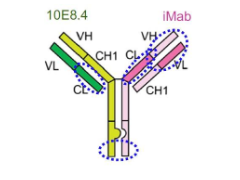
10E8.4/iMab
Developer(s)

|
Drug structure
Bispecific 10E8.4/iMab antibody
Parsons et al.
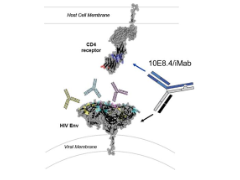
Schematic of bispecific antibody binding to cell and virus
Parsons et al.
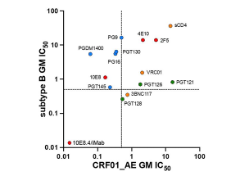
10E8.4/iMab Neutralization Potency
Parsons et al.
Drug information
Associated long-acting platforms
Monoclonal antibodies and antibody drug conjugates
Administration route
Intravenous, Route of administration is being determined in the clinical program, Subcutaneous
Therapeutic area(s)
Use case(s)
Use of drug
Ease of administration
Frequency of administration
User acceptance
Dosage
Available dose and strength
Not provided
Maximum dose
Not provided
Recommended dosing regimen
Not provided
Additional comments
bispecific monoclonal antibody, potentially to be used alone or in combination with VRC07-523LS. It is tested for prevention (IV) as well as for treatment of HIV
Dosage link(s)
Not provided
Drug information
Drug's link(s)
Not provided
Generic name
Brand name
Compound type
Drug class/category
Lifecycle status
Summary
Approval status
Regulatory authorities
Safety
Efficacy
Evidence Summary
Delivery device(s)
No delivery device
Scale-up and manufacturing prospects
Scale-up prospects
Not reported. Clinical supply was manufactured to GMP and shipped to sites from a designated GMP storage facility. Bispecific CrossMab formats add chain-pairing and purification complexity relative to conventional IgG.
Tentative equipment list for manufacturing
Not reported for this product. Standard mAb train assumed, with additional analytics for correct heavy-heavy and heavy-light chain pairing in the bispecific format.
Manufacturing
Recombinant bispecific IgG produced in mammalian cell culture. Knob-into-hole substitutions in the heavy chains drive heterodimerisation; CL/CH1 domain crossover in one arm ensures correct heavy-light pairing. Process details not published.
Specific analytical instrument required for characterization of formulation
Reported bioanalytical methods: ELISA for unbound antibody concentration; electrochemiluminescence bridging assay (MSD) for anti-drug antibodies with epitope mapping by competition; modified TZM.bl neutralisation assay for functional ADA inhibition; quantitative flow cytometry for CD4 receptor occupancy.
Clinical trials
AAAS1239
Identifier
NCT03875209
Link
https://clinicaltrials.gov/study/NCT03875209
Phase
Phase I
Status
Completed
Sponsor
David Ho
More details
Many HIV-infected individuals mount a broad neutralizing serologic response 2-3 years after infection. Broadly neutralizing antibodies might play an important role in protection from acquisition of HIV infection because they can protect macaques from infection, and the presence of anti-HIV antibodies was the only positive correlate of protection in an HIV vaccine efficacy trial (RV144 trial). HIV neutralizing antibodies also have the potential to alter the course of HIV infection in humans. Therefore, these antibodies might be useful to both prevent and treat HIV-1 infection. This is a phase 1 dose escalating clinical trial to evaluate the safety, tolerability, pharmacokinetics and the antiretroviral effects of a novel bispecific monoclonal antibody 10E8.4/iMab in HIV-infected and HIV-uni
Purpose
10E8.4/iMab Bispecific Antibody in HIV-uninfected and HIV-infected Adults
Interventions
Intervention 1
Countries
Sites / Institutions
Not provided
Trials dates
Anticipated Start Date
Not provided
Actual Start Date
2019-04-08
Anticipated Date of Last Follow-up
2023-03-06
Estimated Primary Completion Date
Not provided
Estimated Completion Date
Not provided
Actual Primary Completion Date
2022-03-23
Actual Completion Date
2022-03-23
Studied populations
Age Cohort
- Adults
Genders
- All
Accepts pregnant individuals
Unspecified
Accepts lactating individuals
Unspecified
Accepts healthy individuals
Yes
Comments about the studied populations
Inclusion Criteria for HIV uninfected volunteers: Arms 1, 2 and 4: * Healthy volunteers born male and female as assessed by medical history and physical examination * Aged \>18 and \<60 years at the time of screening * Ability and willingness to provide written informed consent * Willingness to comply with protocol schedule * Willingness to undergo HIV-1 testing * Non-reactive 4th generation point of care HIV-1 test at screening * Hepatitis B Surface antigen negative * Hepatitis C antibody negative, or if reactive, Hepatitis C RNA undetectable in plasma * Volunteers born female of reproductive potential, sexually active with a male sex partner must agree to use one effective method of contraception from the time of signing the consent to completion of the study and agree to pregnancy test
Health status
Not provided
Study type
Interventional (clinical trial)
Enrollment
54
Allocation
Randomized
Intervention model
Parallel Assignment
Intervention model description
Not provided
Masking
Triple-blind masking
Masking description
Not provided
Frequency of administration
Studied LA-formulation(s)
Studied route(s) of administration
Use case
Not provided
Key resources
| Type | Title | Content | Link |
|---|---|---|---|
| Link | Bispecific 10E8.4/iMab broadly neutralizing antibody in people with or without HIV-1: a partially randomized phase 1 trial | https://www.nature.com/articles/s41591-026-04472-w#citeas |
AAAU5207
Identifier
NCT05890963
Link
https://clinicaltrials.gov/study/NCT05890963
Phase
Phase I
Status
Active, not recruiting
Sponsor
David Ho
More details
This is an open-label phase 1b clinical trial enrolling people living with HIV (PLWH) who are antiretroviral therapy (ART)-naïve or have not been on ART for \> 24 weeks. This study will enroll PLWH to assess the safety, tolerability, and antiviral effect of bispecific and long-acting bNAbs, alone and in combination. The study will be conducted as a single center study at National Institute for Medical Research-Mbeya Medical Research Center (NIMR-MMRC) in Mbeya, Tanzania. 20 PLWH will be sequentially enrolled into one of 5 arms, each arm comprised of 4 participants. Sequential enrollment will occur in the following order: * Arm 1 will receive standard daily oral ART. * Arm 2 will receive a single dose of 10E8.4/iMab 600mg intravenous injection (IV). * Arm 3 will receive a single dose of 1
Purpose
10E8.4/iMab Bispecific Antibody and VRC07-523LS Monoclonal Antibody in HIV-infected Adults
Interventions
Intervention 1
Intervention 2
Intervention 3
Countries
Sites / Institutions
Not provided
Trials dates
Anticipated Start Date
Not provided
Actual Start Date
2023-11-28
Anticipated Date of Last Follow-up
2026-05-29
Estimated Primary Completion Date
2026-04-01
Estimated Completion Date
2027-05-01
Actual Primary Completion Date
2026-04-14
Actual Completion Date
Not provided
Studied populations
Age Cohort
- Adults
Genders
- All
Accepts pregnant individuals
Unspecified
Accepts lactating individuals
Unspecified
Accepts healthy individuals
No
Comments about the studied populations
Inclusion Criteria: 1. Able to read and write in Kiswahili and/or English 2. Able and willing to provide written informed consent 3. Passes Test of Understanding (TOU) 4. Aged 18-50 years, inclusive 5. Antiretroviral Therapy (ART)-naïve or no ART for \> 24 weeks at the time of screening 6. HIV RNA 1,000-100,000 copies/mL 7. CD4 ≥ 500 cells/mm3 8. Laboratory criteria at screening within protocol-specified limits for blood, chemistry and urinalysis 9. Willing and able to participate in study visits and procedures for up to 50 weeks 10. Willing and able to begin ART as directed during the study 11. Willing and able to use barrier protection during sex with partners without HIV or partners with unknown HIV status throughout Step 1 and until viral suppression \<200 copies/mL is confirmed in St
Health status
Not provided
Study type
Interventional (clinical trial)
Enrollment
20
Allocation
Not provided
Intervention model
Sequential assignment
Intervention model description
Not provided
Masking
Open label
Masking description
Not provided
Frequency of administration
Studied LA-formulation(s)
Studied route(s) of administration
Use case
Treatment
Key resources
Excipients
Proprietary excipients used
Not provided
Novel excipients or existing excipients at a concentration above Inactive Ingredients Database (IID) for the specified route of administration
Not provided
Residual solvents used
Not provided
Patent info
Description
CrossMAb bispecific antibody capable of neutralizing HIV, covering 10E8.4/iMab specifically
Brief description
Not provided
Representative patent
WO2019135921
Category
Not provided
Patent holder
AARON DIAMOND AIDS RESEARCH CENTER
Exclusivity
Not provided
Expiration date
December 20, 2038
Status
Granted: JP Not in force: AU, CA, CN, EP, US
Description
CrossMAb bispecific antibody capable of neutralizing HIV, covering 10E8.4/iMab and analogues broadly
Brief description
In various embodiments, the present invention relates generally to using bispecific antibodies in the prevention and treatment of HIV.
Representative patent
WO2015084859
Category
Compound
Patent holder
AARON DIAMOND AIDS RESEARCH CENTER
Exclusivity
Not provided
Expiration date
December 2, 2034
Status
Not in force: AU, CA, CN, EP, JP, US To be confirmed: ZA
Supporting material
Publications
Deborah A. Theodore — Nature Medicines — 2026-07-07
Broadly neutralizing antibodies (bnAbs) are a promising tool for HIV prevention and treatment. Here we conducted a first-in-human, phase 1 trial of the bispecific 10E8.4/iMab antibody, which consists of a 10E8.4 arm binding the HIV-1 envelope glycoprotein membrane-proximal external region and an ibalizumab (iMab) arm binding the human CD4 molecule. 10E8.4/iMab was administered intravenously (IV) or subcutaneously (SC). Safety/tolerability within 2 weeks of 10E8.4/iMab administration (primary outcome) and the pharmacokinetics (PK), antiviral activity, induction of anti-10E8.4/iMab antibodies, longitudinal CD4+ and CD8+ T cell counts and long-term safety (secondary outcomes) were evaluated. 54 participants living with HIV (PLWH) or without HIV (PLWoH) received 10E8.4/iMab or placebo. In arm 1, PLWoH received 10E8.4/iMab 0.3 mg kg−1 IV, 1 mg kg−1 SC, or 1 mg kg−1 IV (n = 3 each). In arm 2, PLWoH received 10E8.4/iMab 3 mg kg−1 IV, 10 mg kg−1 IV or 30 mg kg−1 IV (n = 6 each). In arms 3/3a, PLWH received 10E8.4/iMab 10 mg kg−1 IV (n = 3) or 30 mg kg−1 IV (n = 6). In arm 4, PLWoH were randomized to receive 10E8.4/iMab or placebo 2.5 mg kg−1 SC or 10 mg kg−1 SC (n = 9 each). Participants in arms 1–3 were not randomized. No treatment-related serious adverse events (AEs) or AEs ≥ grade 3 were reported. The most common solicited AEs were tenderness (10/54, 18.5%), fatigue (18/54, 33.3%) and headache (12/54, 22.2%). Related grade 2 local and systemic solicited AEs occurred in one and six participants, respectively. Three of nine PLWH developed a generalized rash 8–12 days after infusion that resolved within 9–16 days. The primary objective of the study to evaluate the safety/tolerability of 10E8.4/iMab was met. These data support further study of 10E8.4/iMab to expand HIV treatment and prevention options.
Engineered bispecific antibodies with exquisite HIV-1-neutralizing activity
Huang Y. — Cell — 2016-06-01
While the search for an efficacious HIV-1 vaccine remains elusive, emergence of a new generation of virus-neutralizing monoclonal antibodies (mAbs) has re-ignited the field of passive immunization for HIV-1 prevention. However, the plasticity of HIV-1 demands additional improvements to these mAbs to better ensure their clinical utility. Here, we report engineered bispecific antibodies that are the most potent and broad HIV-neutralizing antibodies to date. One bispecific antibody, 10E8V2.0/iMab, neutralized 118 HIV-1 pseudotyped viruses tested with a mean 50% inhibitory concentration (IC50) of 0.002 μg/mL. 10E8V2.0/iMab also potently neutralized 99% of viruses in a second panel of 200 HIV-1 isolates belonging to clade C, the dominant subtype accounting for ∼50% of new infections worldwide. Importantly, 10E8V2.0/iMab reduced virus load substantially in HIV-1-infected humanized mice and also provided complete protection when administered prior to virus challenge. These bispecific antibodies hold promise as novel prophylactic and/or therapeutic agents in the fight against HIV-1.
Additional documents
- 10E8.4/iMab Bispecific Antibody for Immunoprophylaxis Against High-Dose Intravenous SHIV Exposure — Matthew S. Parsons, 2024-02-14
Useful links
- Bispecific 10E8.4/iMab broadly neutralizing antibody in people with or without HIV-1: a partially randomized phase 1 trial — Nature Medicines, 2026-07-07